Overview
Waymo, the autonomous driving subsidiary of Alphabet (NASDAQ: GOOGL), has secured a $5 bn term loan to finance its expanding robotaxi operations in the United States and international markets. The transaction represents the company’s first entry into debt financing and follows a $16 bn equity investment completed earlier in 2026.
The financing brings together major institutional lenders, with PIMCO, Blackstone and Sixth Street taking lead roles in the syndication. Capital Group, Loomis Sayles and T. Rowe Price participated as significant lenders.
Other participants included Apollo, Blue Owl, Diameter Capital Partners, Franklin Templeton, Fidelity Management & Research Company, HPS Investment Partners and Oaktree. Goldman Sachs served as the sole lead bookrunner.
- Waymo secured a $5 bn term loan from institutional lenders led by PIMCO, Blackstone and Sixth Street, marking its first debt financing following a $16 bn equity round.
- The Alphabet-owned robotaxi operator has expanded to 15 U.S. cities and aims to reach 1 mn paid rides per week across 20 cities worldwide by the end of 2026.
- Waymo was valued at $126 bn in February, approximately 3% of Alphabet’s market capitalization, while Alphabet’s Other Bets segment reported a $1.8 bn operating loss in Q2 2026.
Waymo said the proceeds would support the continued expansion of its fully autonomous ride-hailing network, strengthen its balance sheet and provide additional financial flexibility as the company develops larger commercial operations.
The new debt complements the $16 bn equity financing completed in February, which valued Waymo at approximately $126 bn after the investment.
The company began negotiating the borrowing arrangement in early September, initially seeking more than $3 bn. Goldman Sachs was involved from the outset, with the financing expected to close shortly after negotiations began. The final amount increased to $5 bn.
Early reports indicated that lenders were expected to receive a spread exceeding 500 basis points above the benchmark interest rate, with the loan anticipated to carry no credit rating. Those were reported terms during negotiations rather than confirmed final pricing.
Waymo’s move into debt markets follows an approach previously adopted by other ride-hailing companies. Uber Technologies raised $1.15 bn from leveraged loan investors in 2016, ahead of its initial public offering.
Waymo expands robotaxi services to 15 U.S. cities
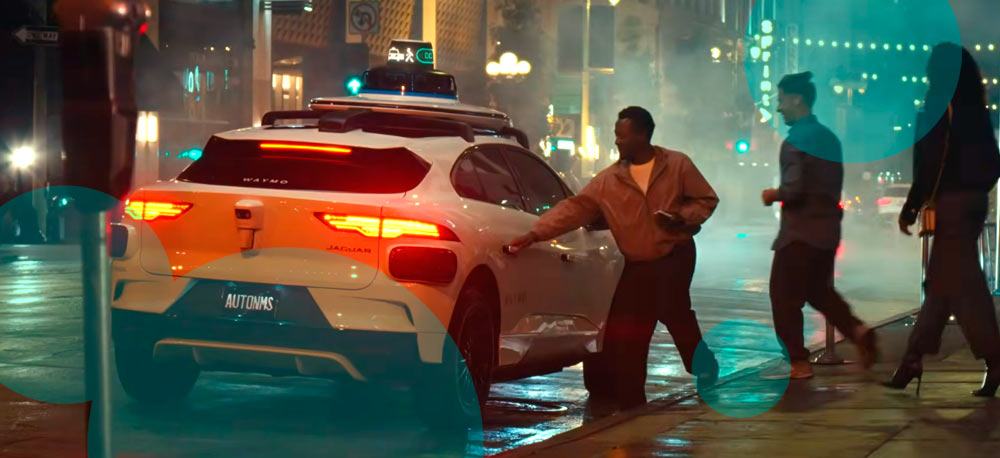
The financing comes as Waymo accelerates the geographical expansion of its driverless taxi business.
The company launched operations in its fifteenth U.S. city in September and has announced plans to enter international markets. It is conducting autonomous vehicle testing in London and Tokyo, with commercial launches planned for both cities.
Waymo opened its service to the general public in Dallas in early August and in Houston later that month. Both cities had initially been available to riders selected from an interest list beginning in February.
The company subsequently began providing rides to its first public passengers in Denver, San Diego and Tampa during September. Las Vegas followed on September 14.
These launches followed an earlier phase in which fully driverless operations in San Diego, Las Vegas, Tampa and Denver were initially restricted to employees before being extended to public riders.
As of May 2026, Waymo operated approximately 4,000 vehicles in domestic service, using both fifth- and sixth-generation autonomous driving platforms.
The expansion requires additional vehicles, supporting infrastructure and operational capacity as Waymo attempts to increase the number of paying passengers across its network.
Waymo targets 1 mn autonomous rides per week
Waymo has established an ambitious operating target of 1 mn paid rides per week across 20 cities worldwide by the end of 2026.
The company has already recorded substantial growth in passenger volumes, although reaching that objective will require another major increase before December 31.
In early February, when announcing its $16 bn financing round, Waymo reported providing more than 400,000 rides each week.
During Alphabet’s first-quarter earnings call in late April, CEO Sundar Pichai said Waymo had exceeded 500,000 fully autonomous rides per week, describing the increase as “doubling in less than a year.”
By early September, Waymo was completing more than 500,000 fare-paying trips weekly across 14 cities.
The company has not disclosed a substantially higher weekly total since the spring, making it difficult to determine how quickly recent launches are contributing to passenger growth.
Reaching 1 mn weekly rides would require roughly doubling the volume reported in April within approximately eight months.
The latest city launches provide additional capacity, but their contribution will depend on the pace of public adoption and the number of vehicles deployed.
Consequently, there is uncertainty over whether Waymo can reach its year-end objective. A shortfall would indicate a slower expansion than management targeted, although it would not necessarily alter the longer-term financial significance of the business to Alphabet.
Waymo’s $126 bn valuation represents around 3% of Alphabet
Despite its position in commercial autonomous driving, Waymo remains a relatively small component of Alphabet’s overall valuation.
The February equity financing valued Waymo at $126 bn, equivalent to approximately 3% of its parent company’s market capitalization.
Even if Waymo’s valuation doubled from that level, it would still account for a single-digit percentage of Alphabet’s total market value, assuming the parent’s valuation remained unchanged.
This distinction matters for investors comparing Alphabet with Tesla (NASDAQ: TSLA) and Uber Technologies (NYSE: UBER) as potential ways to gain exposure to autonomous transportation.
Alphabet provides indirect exposure to Waymo’s expansion through a larger company whose established operations generate substantial profits. Investors are therefore less dependent on the commercial performance of its robotaxi business than they would be through a more concentrated investment.
The financial cost of expanding Waymo is reflected in Alphabet’s Other Bets segment, which generates revenue primarily from autonomous ride-hailing and internet services.
Other Bets reported an operating loss of $1.8 bn in the second quarter of 2026, compared with approximately $1.2 bn in the corresponding quarter of 2025.
The loss narrowed from $2.1 bn in the first quarter of 2026, although it remained considerably higher than a year earlier as Waymo continued adding cities and expanding operations.
Alphabet’s consolidated operating income, by comparison, reached $40.8 bn in Q2 2026, an increase of 30% year over year.
The difference illustrates the financial resources available to support Waymo’s development. Alphabet’s established businesses generate operating earnings that substantially exceed the losses reported by Other Bets.
Alphabet shares trade at approximately 23 times forward earnings
Alphabet’s valuation provides another consideration for investors assessing the financial implications of Waymo’s expansion.
The company’s trailing earnings have benefited from gains on its investment portfolio, making historical price-to-earnings comparisons less representative of its underlying operating performance.
Based on analysts’ earnings estimates for the following year, Alphabet shares trade at approximately 23 times forward earnings.
That valuation sits alongside a 30% year-over-year increase in consolidated operating income during the second quarter, suggesting that Alphabet’s established operations continue to generate substantial earnings growth.
For investors seeking exposure to autonomous vehicles without making a concentrated bet on robotaxi economics, Alphabet offers an alternative to investing directly in companies whose valuations may depend more heavily on transportation-related developments.
Waymo’s $5 bn loan adds another source of financing to the $16 bn already raised through equity investment. Together, those transactions provide capital for expanding its autonomous vehicle network as the company works toward its target of 1 mn weekly paid rides.
The principal operational test remains the pace at which Waymo can convert new city launches into paying passenger volumes. For Alphabet shareholders, the financial impact will also depend on whether the robotaxi business can eventually generate sufficient revenue and profitability to offset the substantial costs of its expansion.