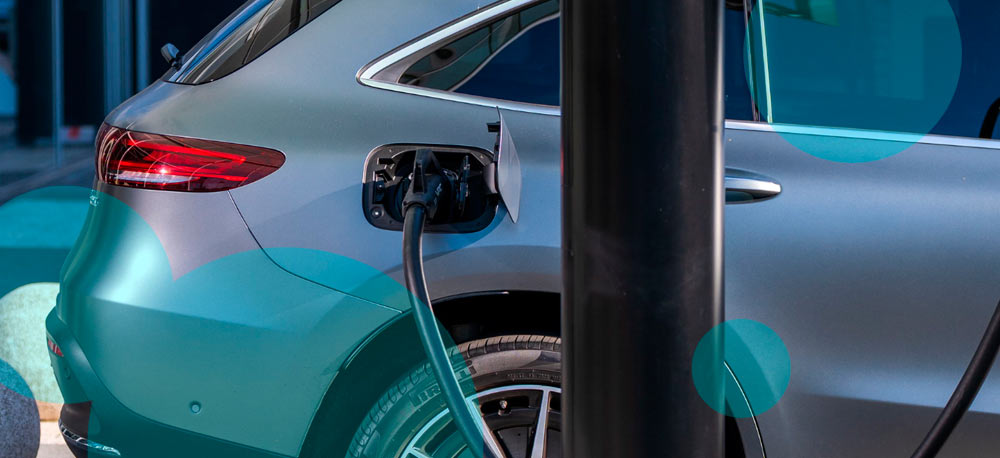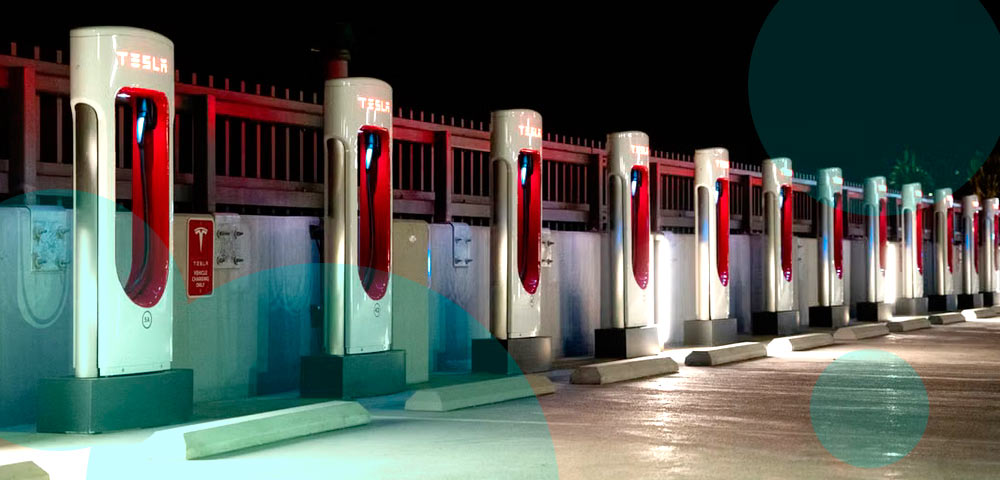
- Tesla has submitted plans for a $3.5 mn Supercharger hub in Thurgoona, Albury, with 37 charging bays, potentially making it Australia’s largest public EV charging station.
- The development would feature Tesla V4 chargers and solar canopies capable of generating up to 100 kW, targeting long-distance drivers on the Sydney-Melbourne corridor.
- Tesla’s Australian network surpassed 1,000 charging stalls in June 2026, with further expansions proposed in Euroa and Kaniva as EV sales increase.
Tesla has submitted plans to develop Australia’s largest public electric vehicle charging station, proposing a 37-stall Supercharger hub in Albury, near the New South Wales-Victoria border, at an estimated cost of $3.5 mn.
The development application, lodged with Albury City Council, covers a vacant 1,300-square-metre site in Thurgoona, approximately 2.5 kilometres from the Hume Highway. If approved, the facility would become the country’s largest public EV charging hub by the number of charging bays, according to ABC News.
EV consideration in Australia rose to 31% in 2026 as lower running costs, wider model choice and charging access reshape household buying decisions. As electric vehicles (EVs) gain popularity, the insurance industry is also adapting to meet the unique requirements of eco-conscious drivers.
The proposed station would primarily accommodate long-distance motorists travelling between Sydney and Melbourne, one of Australia’s principal interstate transport corridors.
Planning documents show 37 parking bays equipped with Tesla’s V4 charging technology. Solar panels installed on canopies above the bays would provide up to 100 kW of electricity generation capacity.
The site is positioned beside a gym and opposite a supermarket complex, giving motorists access to nearby facilities during charging stops. The development remains subject to council approval, and Tesla has been approached for comment.
The Thurgoona proposal would substantially increase Tesla’s charging capacity in Albury, where a 16-stall Supercharger has operated in the central business district since December 2023.
That facility was previously Tesla’s largest Australian charging location until August 2025, when the company opened a 20-stall V4 Supercharger site on Lockyer Street in Goulburn, near the Big Merino.
Tesla Australia and New Zealand country director Thom Drew described the Goulburn installation at the time as the largest in the southern hemisphere.
With 37 stalls, the proposed Thurgoona facility would provide almost twice the charging capacity of Goulburn’s newer station and more than double the number of stalls at Albury’s existing Supercharger.
Goulburn also retains its original eight-stall Supercharger site, adding further capacity along the Hume Highway.
Tesla’s V4 hardware supports charging rates of up to 250 kW per vehicle at the Goulburn installation, which is accessible to other electric vehicles using the CCS2 charging standard.
The proposed Albury development forms part of a wider expansion of EV charging infrastructure across regional Australia, particularly on major interstate routes.
In Victoria, Tesla has applied to upgrade its Euroa Supercharger, one of the company’s oldest Australian installations, replacing six V2 charging stalls with 10 V4 stalls. The proposed upgrade would also make the location accessible to electric vehicles from other manufacturers.
Further west, Tesla is considering nearly doubling the number of charging stalls in Kaniva, a town on the Melbourne–Adelaide route.
Meanwhile, Wagga Wagga councillors considered on October 12 whether to seek expressions of interest for additional EV chargers at the Tarcutta truck-stop site, another important stopping point between Sydney and Melbourne.
Tesla reached 1,000 Supercharger stalls in Australia in June 2026 with the activation of a new charging location in Byron Bay.
The company said its network covered more than 10,000 kilometres of major highway corridors. More than half of its Australian charging locations now accept CCS2-compatible electric vehicles manufactured by other brands.
The rollout comes as industry specialists assess whether investment in public charging infrastructure can continue to match Australia’s expanding electric vehicle fleet.
Vehicle Charging Solutions Australia director Ross De Rango told ABC Victorian Statewide Mornings that charging developments near major highways were increasingly attractive commercial opportunities.
He argued that state governments should also participate in developing charging infrastructure outside major transport corridors, where commercial investment may be less competitive.
In a time where the rate of EV cars being on the road has gone up by a factor of three, the amount of charging infrastructure has gone up by a factor of 12. So, we’re not just keeping up, we’re running ahead of the curve.
Vehicle Charging Solutions Australia director Ross De Rango
University of Melbourne associate professor Milad Haghani offered a more cautious assessment, warning that sustained growth in electric vehicle sales could create additional pressure on charging infrastructure.
“If even a fraction of this demand continues into the future, that means that the infrastructure has some catching up to do,” Haghani told the ABC.
RACV motoring editor Terry Martin also pointed to growing EV interest and the importance of expanding public charging capacity as more electric vehicles enter the Australian market.
As RACV runs its own public charging sites, we know it’s important that Australia’s EV charging network continues to grow, keeping pace with fast-rising sales of electric cars.
RACV motoring editor Terry Martin
“More than 180,000 EVs have been sold this year, and a lot of those will be hitting the highway over summer”, Terry Martin says.
Recent charging utilisation data indicates that regional EV charging stations generally experience limited congestion during normal operating periods. Demand can nevertheless rise sharply during public holidays and other peak travel periods, creating queues at locations serving major highways.
Such fluctuations make additional charging capacity particularly relevant to interstate routes, where traffic volumes can increase substantially during holiday seasons.
The proposed Thurgoona station would add 37 simultaneous charging positions near the Hume Highway, providing an alternative to Tesla’s existing Albury CBD facility.
Albury City Council’s public notification period for the development remains open until October 21, 2026. A council assessment report is expected by the end of November.
Construction remains dependent on planning approval, with no confirmed opening date announced for the proposed charging hub.