Tesla plans to wind down production of its Cybertruck electric pickup at its Texas Gigafactory around the middle of 2027, CEO Elon Musk announced on Friday, following years of disappointing sales.
Musk said the decision would free manufacturing capacity at the Austin facility for increased production of Cybercab, Tesla’s purpose-built autonomous vehicle.
- Tesla plans to wind down Cybertruck production at its Texas Gigafactory around mid-2027 to make room for increased Cybercab manufacturing.
- US Cybertruck sales fell 48% to 20,237 vehicles in 2025, substantially below Elon Musk’s earlier target of 250,000 annual deliveries.
- It remains unclear whether Cybertruck production will cease entirely or move elsewhere, while Tesla’s Cybercab programme continues to face regulatory scrutiny.
The announcement represents a significant change in direction for the Cybertruck, which Musk previously positioned as a competitor to conventional pickup trucks produced by Ford and General Motors.
However, Tesla has not confirmed whether the vehicle will be discontinued entirely or whether production could move to another factory.
The company’s Austin facility is currently the only known Tesla plant equipped to manufacture the Cybertruck’s specialised stainless-steel components.
Tesla did not immediately respond to a Reuters request for additional comment.
Cybertruck sales fall far below Musk’s original targets
Tesla began delivering the Cybertruck to customers in late 2023, four years after unveiling the electric pickup.
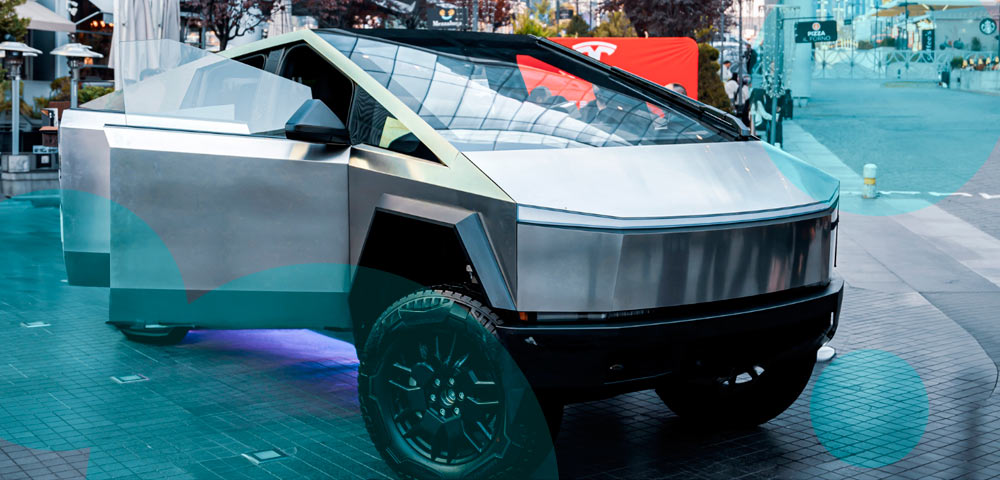
The model attracted substantial attention because of its angular design, stainless-steel body and unconventional appearance. However, the vehicle struggled to achieve the sales volumes Musk had originally anticipated.
Around the start of production in 2023, Musk predicted that annual Cybertruck sales could reach 250,000 units.
Actual demand has remained considerably below that level. According to Kelley Blue Book, Tesla sold 20,237 Cybertrucks in the United States during 2025, down 48% from 38,965 vehicles in 2024. The figures indicate that sales declined sharply after the model’s first full year on the market.
Tesla does not separately disclose Cybertruck deliveries in its regular financial reports, instead including the vehicle within its broader Other Models category.
The company’s Other Models deliveries also declined during 2026, falling from 12,364 vehicles in the second quarter to 8,295 in the third.
Former Aston Martin CEO Andy Palmer said Reuters continuing production would be difficult to justify when a vehicle consistently failed to meet its commercial targets. He argued that the Cybertruck’s relatively limited sales contribution meant a production wind-down was unlikely to have a substantial direct impact on Tesla’s overall financial performance.
Tesla’s aerospace affiliate SpaceX was also a significant Cybertruck customer.
According to SpaceX’s initial public offering filing, the company purchased Cybertrucks worth approximately $131 mn from Tesla in 2025, calculated at list prices.
Cybertruck faces recalls, pricing challenges and regulatory barriers
The Cybertruck generated considerable interest when Musk first presented the vehicle in November 2019. Tesla initially reported approximately 146,000 orders during the early stages of the project’s development. However, the unveiling attracted criticism after a demonstration intended to show the strength of the vehicle’s windows resulted in two panes cracking when struck by metal balls.
The production version retained the pickup’s distinctive shape and stainless-steel exterior, dividing opinion among consumers. The vehicle also encountered quality-control problems.
According to the National Highway Traffic Safety Administration (NHTSA), the Cybertruck has been subject to 11 recalls since deliveries began in late 2023.
Some issues required physical repairs, while others were addressed through over-the-air software updates. One recall in 2025 affected more than 46,000 vehicles because of concerns that exterior trim components could detach.
Although Tesla initially sought to make the Cybertruck accessible to a broader pickup market, more expensive configurations have remained costly.
By 2026, the high-performance Cyberbeast version was priced at approximately $102,000. The Cybertruck’s unusual construction has also restricted its potential in overseas markets.
Safety specialists have raised concerns about the vehicle’s rigid stainless-steel body and sharp-edged design, particularly in jurisdictions with strict pedestrian-protection requirements.
Palmer argued that those characteristics made approval in European markets especially difficult. However, automotive analyst Felipe Munoz noted that weak Cybertruck demand should be viewed within the wider electric pickup market.
Electric trucks from Ford and other manufacturers have also struggled to achieve strong sales in the United States, suggesting that limited consumer demand extends beyond Tesla’s particular design.
Tesla shifts manufacturing capacity towards Cybercab
Musk’s decision to prioritise Cybercab reflects his wider strategy of transforming Tesla from a conventional electric vehicle manufacturer into a business focused increasingly on artificial intelligence, autonomous driving and robotics.
Cybercab is a two-seat autonomous vehicle designed without traditional driver controls. The model features butterfly doors but no steering wheel, pedals or conventional side mirrors.
Musk has described Cybercab as a central component of Tesla’s planned global robotaxi network.
Production began earlier in 2026, with Tesla subsequently launching a limited paid ride service using Cybercabs in Austin in September.
The company has listed installed Cybercab production capacity exceeding 125,000 vehicles annually.
According to Texas Department of Motor Vehicles data cited by Reuters, approximately 570 of the more than 1,200 Tesla robotaxis operating in the state are Cybercabs.
Most of the remaining vehicles are modified Model Y cars. This suggests that Cybercab is unlikely to replace lost Cybertruck production volumes immediately, even if manufacturing capacity expands.
Tesla has also indicated that it intends to begin selling Cybercabs directly to customers, although commercial deployment will depend partly on regulatory requirements.
Cybercab faces federal safety certification review
The expansion of Cybercab production comes as Tesla faces questions from US safety regulators over the autonomous vehicle’s compliance with federal standards.
The NHTSA opened an audit in September to examine the basis on which Tesla self-certified Cybercab as meeting applicable Federal Motor Vehicle Safety Standards.
The review is particularly significant because the vehicle lacks traditional controls normally required under existing automotive safety regulations.
Tesla has been asked to provide additional information explaining its certification approach. The regulatory process could influence the company’s ability to expand Cybercab production and commercial deployment. Tesla has repeatedly revised its autonomous driving timelines in previous years, making the pace of Cybercab expansion an important consideration for investors.
Cybertruck lead engineer Wes Morrill indicated that technology developed for the electric pickup would continue to play a role in Tesla’s future products.
He described Cybertruck as a development platform whose engineering advances would carry forward into Cybercab.
Musk calls Cybertruck wind-down the end of an era
Despite the production decision, Musk continued to defend the Cybertruck’s design and engineering.
Responding to comments from Tesla enthusiasts on X, he described it as the company’s best vehicle and characterised the manufacturing wind-down as the “end of an era.”
He also indicated that existing Cybertruck vehicles would remain in use for many years.
The model has been closely associated with Musk’s personal vision for Tesla, from its controversial 2019 unveiling to its eventual commercial launch. However, limited demand, production complexity and regulatory constraints have prevented it from becoming a high-volume product.
The decision also comes during a difficult week for Musk’s broader business interests.
Following the US midterm elections, in which most Republican candidates supported by Musk failed to win, the billionaire faced renewed scrutiny over political expenditure approaching $500 mn.
His businesses were on course to lose more than $370 bn in combined market capitalisation during the week amid a wider sell-off in technology stocks.
Will Tesla discontinue the Cybertruck entirely?
Tesla has confirmed plans to wind down Cybertruck manufacturing at its Texas Gigafactory around mid-2027, but the company’s intentions beyond that point remain uncertain.
Moving manufacturing could be complicated by the specialised equipment required to produce the Cybertruck’s stainless-steel body.
For now, Tesla’s priority is increasing Cybercab output as the company seeks to expand its autonomous vehicle business.
The production shift underscores the growing importance of robotics and self-driving technology to Musk’s strategy, while leaving open the question of whether the Cybertruck will remain part of Tesla’s future vehicle lineup.