At least seven people were killed and more than 110 injured when two passenger trains collided in Egypt’s Giza province on Sunday, November 8, 2026, prompting a government investigation into the cause of the crash.
The collision occurred in the Al-Ayyat district south of Cairo, between Kafr Ammar and Al-Raqqa railway stations. According to the Egyptian National Railways Authority, train No. 134, travelling from Giza to Fayoum, struck the rear of train No. 2010, operating on the Cairo-Aswan route.
- Seven people were killed when a Giza-Fayoum passenger train struck the rear of a stationary Cairo-Aswan train in the Al-Ayyat district south of Cairo.
- Egypt’s Health Ministry reported 112 injuries, with 45 people discharged from hospital. Prosecutors separately issued a preliminary estimate of 114 injured.
- President Abdel Fattah el-Sisi ordered an investigation as emergency crews worked to clear derailed carriages and restore railway services.
The public prosecutor’s office said its initial inspection established that the Cairo-Aswan train was stationary on the same track when the other train hit its last carriage.
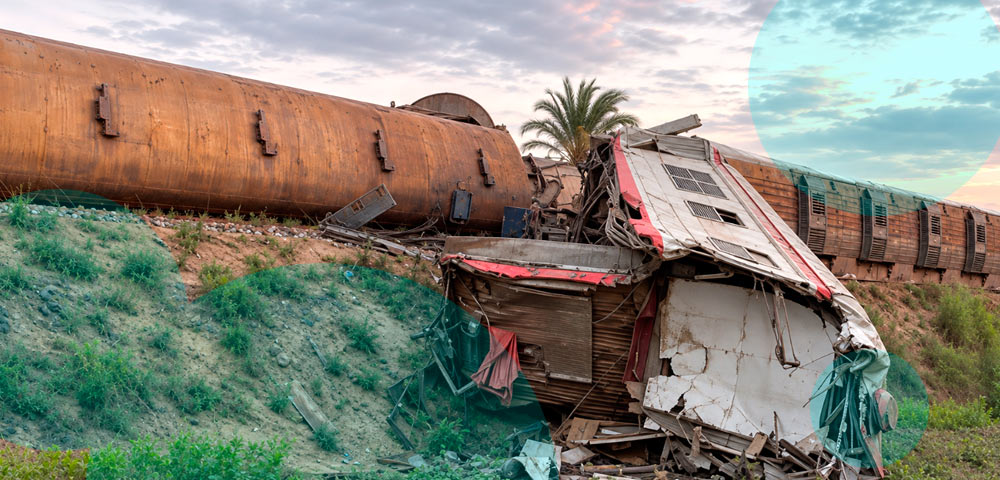
Several carriages derailed following the impact. The Health Ministry reported seven deaths and 112 injuries. In a separate preliminary assessment, prosecutors put the number of injured at 114.
The driver of the Giza-Fayoum train was among those killed, according to the prosecutor’s office.
How the two trains collided in Egypt’s Giza province
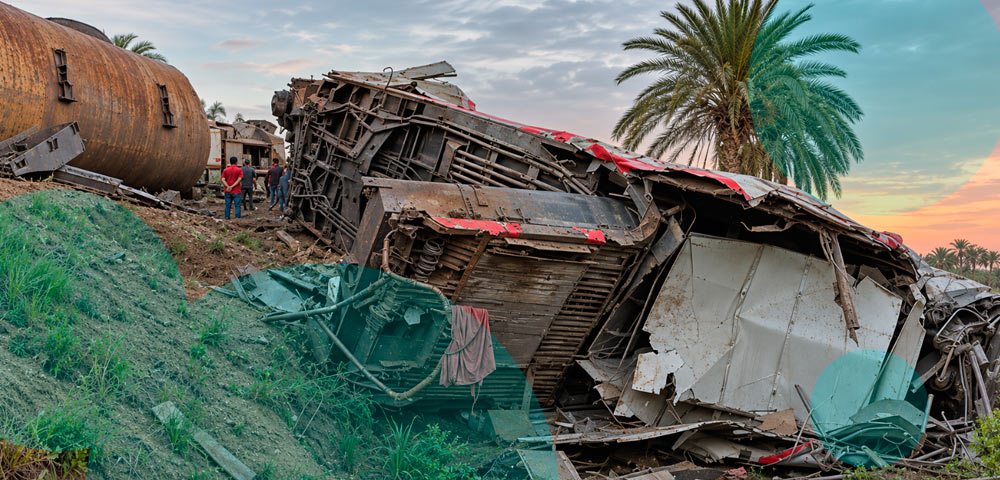
The accident occurred near the Gerza junction in Al-Ayyat, on the railway corridor connecting Cairo with southern Egypt.
Investigators determined that the Giza-Fayoum train collided with the final carriage of the Cairo-Aswan service, which had stopped on the same track. Both trains were oriented in the same direction at the time of the collision.
The impact caused several passenger carriages to leave the tracks, disrupting services on the Cairo-Upper Egypt railway line.
The cause of the crash has not been established. Egypt’s public prosecution service dispatched investigators to the scene and ordered a specialized technical committee to examine the damaged carriages, railway tracks and operating procedures.
The investigation will assess whether failures in railway operations or safety requirements contributed to the collision.
Seven killed and 112 injured, Health Ministry reports
Egypt’s Ministry of Health and Population confirmed seven fatalities and 112 injuries in its latest medical update.
The prosecutor’s office separately reported a preliminary injury count of 114, with final figures still being assessed. The Health Ministry said 72 ambulances participated in rescue and evacuation operations.
Patients were transported to three hospitals:
- Al-Wasta Central Hospital: 72 injured people
- Al-Ayyat Central Hospital: 33 injured people
- Atfih Central Hospital: 7 injured people
Authorities reported that 45 patients had been discharged after receiving treatment and showing improvement.
Seven additional patients were being considered for discharge, while others remained under medical observation. Reported injuries included bruises, abrasions, fractures involving limbs, the pelvis and spine, head and facial wounds, and chest injuries.
Health Minister Khaled Abdel-Ghaffar ordered medical facilities in Giza and Beni Suef governorates to increase readiness and provide treatment to the injured.
Local residents helped rescue passengers
People living near the crash site were among the first to respond. Ayman Gamal, a resident of Kafr Girza in Al-Ayyat, said local residents rushed to the damaged carriages, helped remove survivors and contacted emergency services. He estimated that he saw approximately 80 injured people transported to nearby hospitals.
Some passengers had been trapped inside a carriage of the stationary train and were found dead when rescuers reached them, he said.
Emergency teams continued working at the site while investigators examined the damaged trains.
Egypt’s president orders investigation into train collision
President Abdel Fattah el-Sisi directed authorities to conduct a prompt investigation and identify those responsible for the accident. He also instructed government agencies to provide medical assistance to the injured and support to victims’ families.
Prime Minister Mostafa Madbouly reviewed the emergency response with the ministers responsible for health, transportation and social solidarity.
The Egyptian Railway Authority deployed recovery teams and cranes to remove damaged carriages and clear the tracks.
Railway officials said they were working to restore normal operations on the Cairo-Upper Egypt line but did not provide a confirmed completion time.
Egypt’s railway safety record faces renewed scrutiny
The collision follows other railway accidents in the Al-Ayyat district. In September 2026, two freight trains collided in the same area, injuring a driver and his assistant.
Egypt’s railway system, among the oldest in Africa and the Middle East, has experienced repeated fatal accidents despite government investment in modernization.
- In 2019, a train crash and subsequent fire at Cairo’s Ramses railway station killed 25 people.
- A 2017 collision near Alexandria killed more than 40.
- The country’s deadliest railway disaster occurred in 2002, when a fire spread through an overcrowded passenger train travelling from Cairo to southern Egypt, killing more than 300 people.
Investigators are now examining the circumstances of the November 8 collision, including why the Giza-Fayoum service struck the stationary Cairo-Aswan train and whether railway operating procedures were followed.