War risk insurance premiums for merchant vessels operating in the Black Sea have reached as much as 20% of a ship’s value on certain high-risk voyages, surpassing peak rates recorded during the Iran-Iraq Tanker War in the 1980s.
The highest quotations concern selected vessels calling at the Caspian Pipeline Consortium terminal in Novorossiysk. Most insurance rates remain substantially lower, but renewed threats to civilian shipping have increased costs across the region.
- War risk premiums have reached 20% of vessel value for selected Black Sea voyages, exceeding historical peaks during the 1980s Tanker War.
- Renewed reports of attacks on merchant ships near Ukraine and Romania have increased uncertainty for maritime underwriters.
- Rising insurance expenses and limited reinsurance capacity are adding costs to grain exports and other regional shipping operations.
The escalation follows reports of attacks near Ukrainian and Romanian waters, while shipping companies have begun passing additional war risk expenses to cargo owners through higher freight charges.
Black Sea insurance costs exceed historical wartime peaks
The latest quotations represent an exceptional increase in the cost of covering vessels exposed to military activity.
During the Iran-Iraq Tanker War, premiums reportedly reached 7.5% of ship value and occasionally exceeded 10%. Current pricing for the highest-risk Black Sea voyages has moved beyond those levels.
A war risk premium of 20% would cost $8 mn for a vessel insured at $40 mn, although such quotations apply only to specific high-risk operations.
More broadly, insurance costs for certain voyages have climbed to approximately 10-20% of vessel value, compared with 0.25%-0.35% before Russia’s full-scale invasion of Ukraine in 2022.
The increase has changed the economics of shipping through the region, particularly for vessels transporting commodities with relatively narrow trading margins.
Reports of attacks increase uncertainty for underwriters
New reports of attacks on merchant shipping emerged on November 7-8, adding to concerns over the safety of commercial navigation.
Russia’s Ministry of Defense claimed it had struck dry-cargo and container vessels near Odesa and Chornomorsk. The reports have not been independently verified, and the ships involved have not been identified.
There is no confirmed information about casualties, while uncertainty remains over whether the reported incidents involved separate vessels.
The absence of independently verified details makes it difficult to establish the extent of the reported attacks or assess their direct impact on commercial shipping.
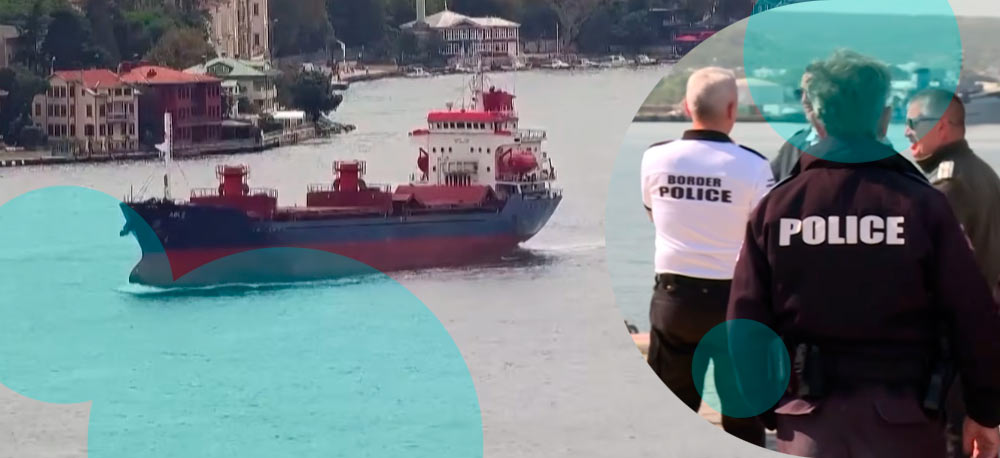
Bulgarian authorities are separately investigating an October incident involving the chemical tanker Wine Trader, which was brought to Varna after reportedly sustaining damage off Romania’s coast.
The incidents have reinforced concerns about maritime security along routes serving several Black Sea countries.
Shipping surcharges increase costs for cargo owners
Container carriers are introducing additional charges to recover expenses associated with heightened security risks.
CMA CGM implemented a war risk surcharge of $35 per twenty-foot equivalent unit (TEU), covering shipments to and from countries in the Black Sea region.
The charge applies to cargo moving through ports including Constanța, Varna, Burgas and Poti.
For bulk shipping, the financial effect can be considerably larger. Based on a reported insurance premium of $4 mn for a vessel valued at $40 mn, war risk coverage would add approximately $67 per tonne to grain transportation costs under the assumptions used in the estimate.
Higher insurance expenses are being transferred into freight costs, reducing the competitiveness of exports transported through affected routes.
Limited reinsurance capacity constrains Black Sea trade
Access to international insurance remains restricted for certain voyages involving Russian ports, leaving shipowners dependent on a narrower group of coverage providers.
The Russian National Reinsurance Company (RNRC) provides an alternative mechanism, but its reported capacity is limited to approximately 50-70 vessels simultaneously.
That constraint may restrict the number of ships able to obtain suitable cover, particularly during periods of elevated export demand.
Analysts estimate that war risk premiums would need to decline to around 2% of vessel value to support a broader recovery in Black Sea shipping activity.
Restoring international insurance participation would require a sustained reduction in maritime security risks, which analysts link to political agreements affecting navigation in the region.