Convr AI heads into the new year calling out a milestone: ten years building and refining what it sees as the commercial insurance sector’s deepest submission ontology.
The company has been pulling structured signals from that framework since 2016, feeding its underwriting workbench with data that would otherwise sit scattered across documents, systems, and inconsistent processes.
The workbench runs on a commercial P&C insurance ontology that centralizes customer data, logic and workflows in a single connected environment.
It blends internal datasets with enriched submission inputs and broader risk intelligence, then pipes the results into downstream systems while keeping a record of historical changes.
For clients, this means one schema that tracks what was submitted, what was enriched, and why decisions shifted over time.
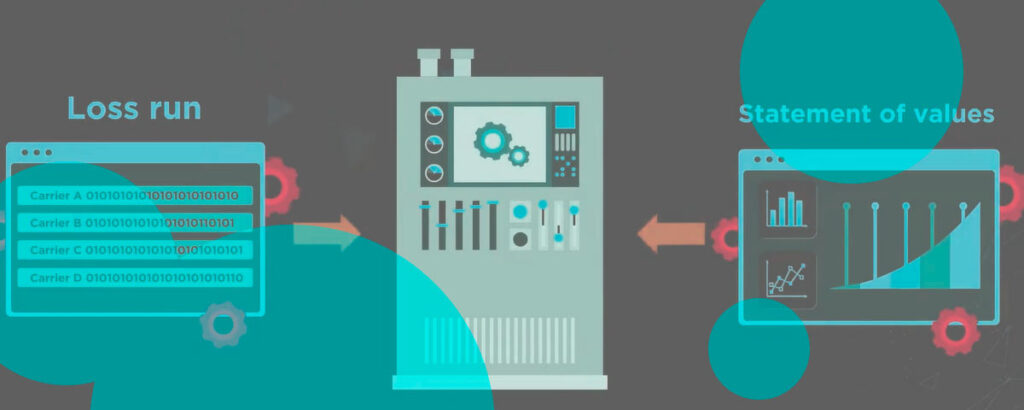
The submission ontology itself acts as a unifying layer that ties together disparate data, logic and actions. It’s a domain-specific schema built for commercial lines, outputting JSON that downstream systems can digest without custom engineering.
John Stammen, Convr’s CEO, said it’s far more than a shiny add-on; he called it the backbone for faster and more consistent underwriting across commercial P&C.
And honestly, anyone who has tried stitching together underwriting data from half a dozen sources knows why that message lands.
It’s not just another tech laye. It’s the backbone for smarter, faster, and more consistent underwriting in the commercial P&C insurance domain.
John Stammen, Chief Executive Officer at Convr
According to Beinsure, the ontology’s decade of development reflects the needs of roughly 80% of written premium in the commercial market.
Convr ships it out-of-the-box, no customer-side build required, which gives carriers, MGAs and brokers a quick on-ramp without the usual integration slog. It slots into standard and specialty lines and supports the lifecycle from submission through rate, quote and bind.
Essential enrichments are wired directly into the workflow so teams aren’t juggling third-party tools or manual processing steps.
Stammen said the point is to spare clients from the tech debt of maintaining document analysis engines or continuously updating ontologies.
Convr handles that work and pushes improvements to all customers automatically. Updates land without extra cost or operational fuss, which, for many users, feels like a relief compared with the usual patch-and-break cycle that plagues legacy underwriting systems.
Convr’s leadership frames this anniversary as a marker of where the industry is heading: from manual underwriting and toward infrastructure built around smart data, automation, and repeatable logic.
Convr’s workbench now supports a broad mix of carriers, MGAs, brokers and reinsurers across the commercial P&C market, and the company argues the next decade will lean heavily on the type of standardisation its ontology now delivers out of the box.