A tanker struck a docked river cruise ship on the Mississippi River in New Orleans on November 13, 2026, causing the passenger vessel to take on water and capsize. Thirty-two people were taken to hospital, but authorities confirmed there were no fatalities or critical injuries.
The Atlantic Asphalt tanker hit American Cruise Lines’ American Heritage at approximately 12:30 p.m. local time near the Port of New Orleans. The cruise ship had arrived about two hours earlier to begin disembarking passengers following an eight-day voyage.
- The Atlantic Asphalt tanker struck the stationary American Heritage river cruise ship at the Port of New Orleans on November 13, causing it to capsize.
- Thirty-two people were hospitalised, including two harbour police officers involved in the rescue. No deaths or critical injuries were reported.
- Investigators are examining a possible steering failure aboard the tanker, while the US Coast Guard and National Transportation Safety Board lead the investigation.
Officials reported that everyone aboard was accounted for after an emergency evacuation involving the US Coast Guard, harbour police, firefighters, tugboat crews and nearby vessels. Early estimates of the number of passengers and crew varied between approximately 180 and 197 people.
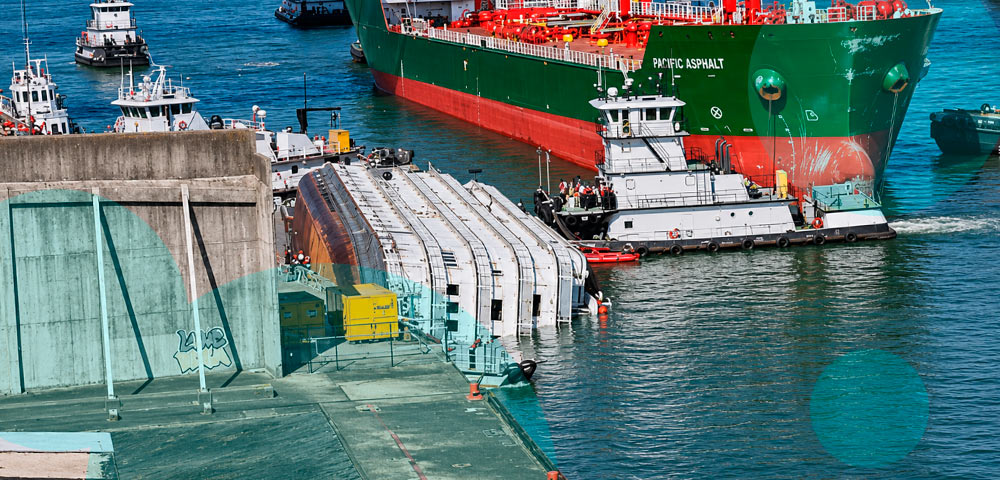
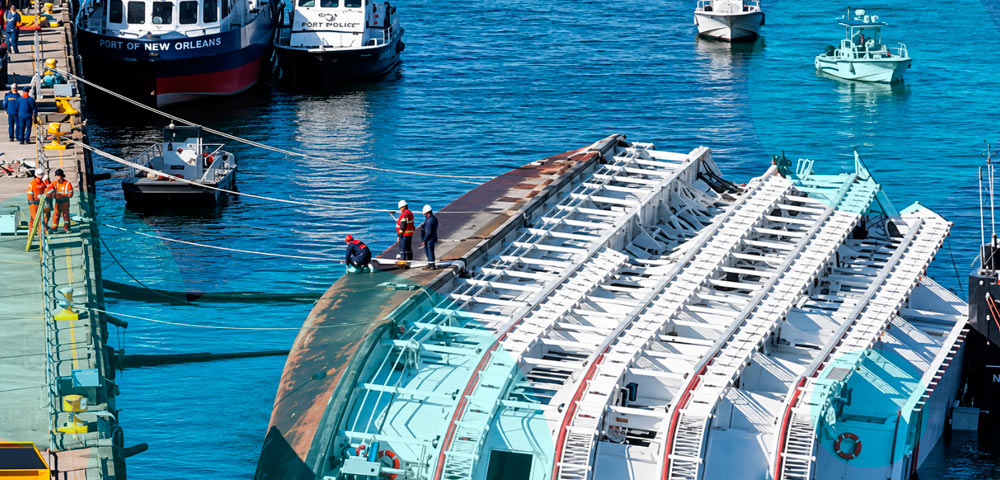
The American Heritage began sinking shortly after the impact and eventually rolled onto its side, sending passengers and rescue personnel into the Mississippi River.
How the New Orleans boat crash happened
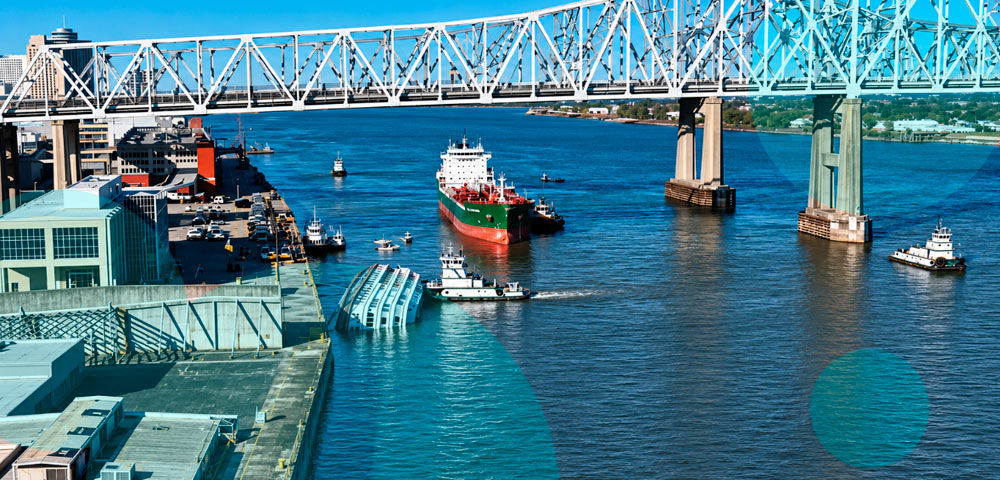
The American Heritage was moored outside the Port of New Orleans administration building at 1350 Port of New Orleans Place when the much larger tanker approached while travelling upriver.
Video footage showed Atlantic Asphalt veering towards the docked passenger vessel after passing the Crescent City Connection bridge, striking it broadside.
The incident is technically classified as an allision, a maritime term describing a moving vessel striking a stationary object or ship. Water entered the American Heritage following the impact. The five-deck river cruiser began listing within minutes and eventually overturned alongside the dock.
New Orleans Mayor Helena Moreno said passengers were already leaving the ship when the accident occurred.
Emergency responders managed to evacuate approximately 87 people before the vessel capsized. Others entered the water or held onto the exposed side of the ship.
American Cruise Lines said Captain Leonard Stewart remained on the bridge as the vessel overturned, calling for assistance and keeping the ship alongside the dock as long as possible.
The American Heritage, built in 2015, operates Mississippi River cruises with capacity for approximately 150 passengers.
The ship was completing a voyage through destinations in Louisiana and Mississippi when the accident occurred.
Rescue operation saves all passengers and crew
Police, firefighters, port workers, tugboat operators and crews from nearby commercial vessels responded immediately.
Rescuers pulled passengers from the river, where the water temperature was approximately 66°F (19°C). Two harbour police officers who were aboard the cruise ship during the evacuation also entered the water when it overturned.
Both officers were subsequently treated at local hospitals and released.
Survivors were taken to the nearby Port of New Orleans administration building, where emergency personnel and cruise line representatives conducted a roll call to establish that no one remained missing.
Many passengers lost personal belongings, including phones, identification documents and car keys. The cruise operator arranged hotel accommodation and assistance with return travel.
American Cruise Lines said it would cooperate with the authorities during the investigation and subsequent salvage operations.
Investigators examine possible tanker steering failure
The US Coast Guard is investigating what caused Atlantic Asphalt to strike the stationary cruise vessel.
Initial observations suggest the tanker may have experienced steering problems shortly before impact, although investigators have not established a definitive cause.
Coast Guard Captain Melanie Burnham said the ship appeared to have suffered “some type of loss of steering.”
Maritime law specialist Martin Davies of Tulane University said the vessel had already navigated the difficult Algiers Point bend before suddenly changing course.
The tanker was travelling upstream against the Mississippi River current, which would ordinarily limit its speed.
Investigators have not confirmed whether the apparent loss of control resulted from mechanical failure, navigation problems, human error or another cause.
The National Transportation Safety Board also opened an investigation and arranged to send investigators to New Orleans.
The team’s travel was initially delayed by a nationwide grounding of aircraft following air traffic control communications problems.
The investigation will examine the tanker’s navigation, steering and propulsion systems, crew actions and the circumstances leading to the impact.
Mississippi River reopens as salvage operations continue
The US Coast Guard initially closed the Mississippi River between mile markers 93 and 96, disrupting commercial vessel movements near the Port of New Orleans.
On November 14, the river reopened to navigation, with one-way traffic restrictions between mile markers 95.5 and 96.5 and a 500-foot safety zone around the damaged American Heritage.
The recovery timetable for the capsized cruise ship has not been announced.
Atlantic Asphalt tanker operator confirms investigation
OSM Thome, the company managing Atlantic Asphalt, confirmed that all tanker crew members were safe and accounted for.
The operator said the vessel had separated from American Heritage and was stable at anchor while damage assessments continued.
Atlantic Asphalt is a 17,764-deadweight-ton asphalt tanker built in 2017 and registered in the Marshall Islands. Its registered owner is Nave Shipping SA of Liberia. OSM Thome said it had activated its emergency response team and would cooperate with US authorities.
Investigators have not established whether the tanker was carrying cargo at the time of the accident or whether any hazardous materials entered the Mississippi River.