Qover and Helvetia are tightening their alliance with a broader framework that goes beyond automotive coverage into new product lines and geographies.
The move, announced as an expansion of their existing partnership, aims to build a stronger presence in embedded and omnichannel insurance at a time when customer habits are shifting fast.
The collaboration merges Qover’s tech-driven digital platform with Helvetia’s international reach, creating integrated solutions that can scale across Europe.
Industry forecasts set the embedded insurance market at $30 bn by 2030, while EY projects more than 30% of insurance transactions will be embedded by 2028. Both firms want a bigger share of that pie.
Results already show traction. In 2024, Qover and Helvetia supported over 80,000 policyholders across 10 programmes.
That progress sets the stage for expansion in 2025, with Qover pushing into new regions and sharpening customer experience across multiple channels.
Qover CEO and co-founder Quentin Colmant said the long-running partnership combines “cutting-edge technology with pan-European scalability” to deliver seamless and intuitive coverage across platforms.
Helvetia’s head of international automotive, Tilo Schroiff, called Qover a “key platform partner” inside the group’s broader ecosystem, noting the collaboration enables a wider set of integrated products while driving internationalisation within the European Economic Area.
With this long-standing partnership with Helvetia, we are combining cutting-edge technology with pan-European scalability to deliver solutions that meet consumer needs
Quentin Colmant, Qover chief executive and co-founder
“We are proud to work with Helvetia to create intuitive and seamless insurance experiences across multiple platforms,” Quentin Colmant said.
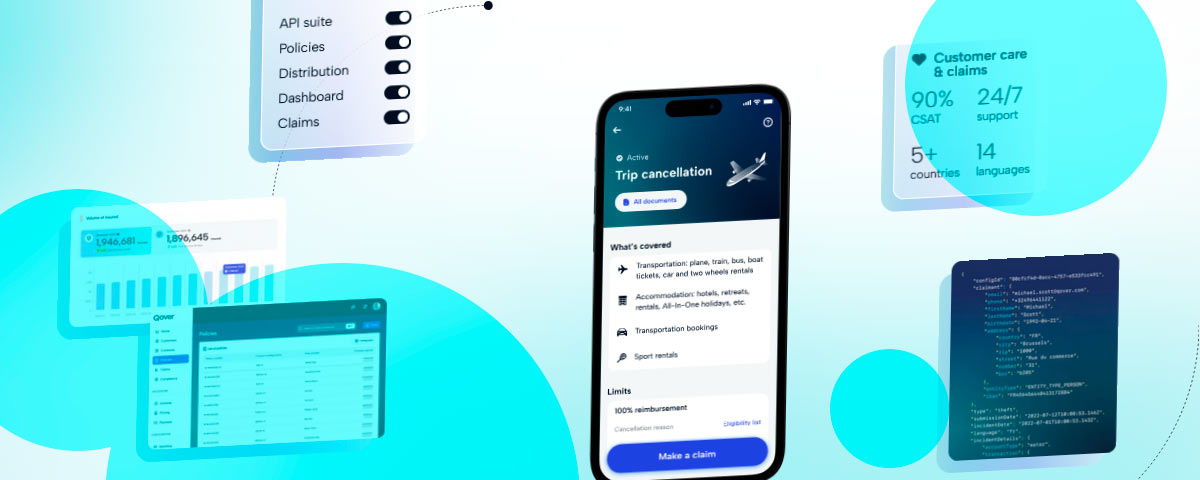
- Qover’s specialty lies in powering embedded coverage through flexible APIs that slot into partner ecosystems.
- Helvetia, headquartered in Switzerland, brings a broad insurance and pension portfolio with operations across Europe.
Together, they’re betting that embedded and omnichannel delivery becomes the default way consumers interact with insurance—frictionless, integrated, and invisible until needed.