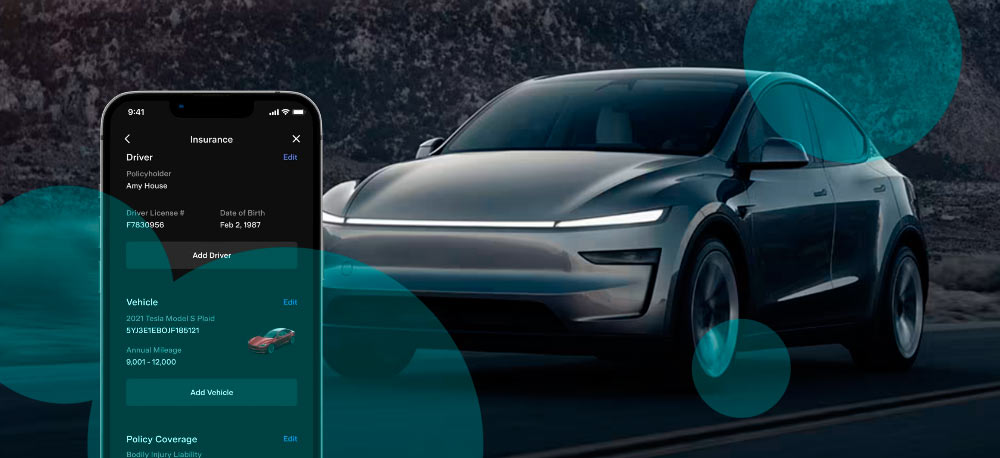
Tesla’s effort to launch a new personal auto insurance program in New York has run into a regulatory barrier after state officials rejected a filing built around coverage for Tesla vehicles.
The New York Department of Financial Services rejected the proposal from Tesla General Insurance, which planned to determine program eligibility through vehicle identification numbers.
The filing would have restricted enrollment to qualifying Tesla vehicles rather than offering the insurance program across multiple vehicle manufacturers.
According to S&P, DFS raised concerns under Section 2324 of New York Insurance Law before reaching the actuarial portions of Tesla’s filing. The provision governs rebates, inducements and insurance arrangements tied to other products or benefits.
The filing was submitted July 17 with a requested effective date of December 31, 2026, according to regulatory records reviewed by S&P.
New York disapproved the filing on August 3, delaying Tesla’s attempt to begin writing personal auto coverage in one of the largest US insurance markets.
Tesla’s proposed eligibility structure represented the immediate problem. The program was designed around Tesla vehicles whose data the insurer receives directly through the automaker’s connected-car technology, rather than an insurance product available across a broader range of vehicles.
DFS has previously taken the position that insurance sold in New York must comply with restrictions covering tie-in arrangements. Section 2324 generally prohibits property and casualty insurers from offering certain benefits or inducements outside the insurance contract, and the department has applied the provision to arrangements linking insurance with another product or service.
New York regulators also objected to an insurance structure limited to one manufacturer’s vehicles, according to reporting on the filing.
Tesla’s built-in telematics technology collects driving information directly from its cars, leaving owners of other vehicle brands without a comparable route into the proposed program.
DFS hasn’t rejected telematics itself. New York already permits usage-based insurance programs, and state consumer guidance lists telematics among methods insurers use to calculate discounts based on driving behavior or mileage.
The distinction leaves Tesla with a structural problem rather than a rejection of its underlying insurance technology. A program relying on manufacturer vehicle data would need an alternative method for drivers of other eligible vehicles, such as a smartphone application or separate telematics device, according to regulatory analysis of the filing.
Tesla General Insurance is already admitted to write several property and casualty lines in New York. DFS records list the company as part of the Tesla Inc. insurance group, though admission alone doesn’t approve a specific personal auto product, rating plan or eligibility structure.
The New York setback comes during a period of rapid growth for Tesla’s insurance business. Tesla insurance entities generated $644.2 mn in direct written premiums during the first half of 2026, according to S&P Global Market Intelligence data.
California accounted for $477.8 mn of that total, making it by far Tesla’s largest insurance market. Texas generated $60.4 mn, followed by Nevada with $23.3 mn and Maryland with $15 mn.
New York generated no direct written premium during the period despite Tesla-affiliated insurance companies holding state licenses. Entering the market would give Tesla access to another large pool of drivers, but its current product structure doesn’t satisfy the state’s requirements.
Tesla’s insurance operation has expanded quickly over the past several years as the company moved more underwriting onto affiliated carriers. Direct written premiums reached $1.37 bn in 2025, up 40.7%.
Tesla-affiliated insurers directly wrote 75.9% of the company’s insurance premiums in 2025, compared with 32.6% a year earlier. Premium written through managing general agents fell as Tesla transferred more policies onto its own insurance balance sheets.
California generated $725 mn in Tesla direct written premiums during 2025, almost 70% of business written by the company’s affiliated insurers. Texas contributed $125.6 mn, while Nevada produced $42.5 mn.
Tesla also entered several additional states during the year. Its affiliated insurers began writing business in Arizona, Ohio, Illinois and Florida as the company expanded the geographic reach of its insurance operation.
The strategy gives Tesla greater control over underwriting, pricing and claims economics. It also places more insurance risk directly on Tesla-affiliated carriers rather than external insurers that previously supplied much of the capacity behind the program.
Tesla launched its insurance business partly to address the cost and availability of coverage for its vehicle owners. Some traditional insurers have charged higher premiums for electric vehicles because repair expenses and claim severity differ from conventional internal-combustion vehicles.
Tesla’s telematics model draws on factors such as driving behavior rather than relying entirely on conventional rating variables. The New York filing reportedly included annualized mileage, Safety Score information and use of Full Self-Driving Supervised among the data involved in the proposed rating structure.
Usage-based insurance itself fits within New York’s existing regulatory framework. DFS guidance recognizes telematics programs using mileage, time of day, acceleration patterns and braking behavior when insurers calculate premiums or discounts.
New York has also encouraged insurers to develop approved telematics programs. Earlier DFS guidance specifically identified usage-based insurance and vehicle technology as areas insurers should consider when developing pricing incentives.
The issue facing Tesla is therefore the connection between the insurance program and Tesla ownership. Zawacki said New York regulation doesn’t permit an insurer to restrict the product solely to one manufacturer’s vehicles, creating a barrier for a business model built around Tesla-specific vehicle data.
Tesla’s increasing premium volume hasn’t yet produced consistent underwriting profitability. S&P reported that the company’s insurance operations recorded a $182.7 mn net loss during 2025, compared with a smaller loss a year earlier.
The overall direct loss ratio improved to 100.4% in 2025, down 2.9 percentage points from 2024. A loss ratio above 100% means incurred claims and related loss expenses exceeded earned premiums before other underwriting expenses are included.
Results differed substantially across Tesla’s insurance subsidiaries. Tesla Insurance Co., which wrote business in California and Illinois, recorded a direct loss ratio of 115.6%, while Tesla Property & Casualty Inc. reported 66.7%. Tesla General Insurance posted a 76.4% direct loss ratio.
Tesla attributed the larger 2025 loss to higher-than-expected private passenger auto losses, commission expenses and higher underwriting costs associated with growth. Its increasing reliance on affiliated insurers also means more of those results now remain within Tesla’s own insurance entities.
The New York filing would have extended that direct underwriting strategy into another large state market. Instead, Tesla now faces a regulatory design issue involving who qualifies for the product and how telematics data is collected.