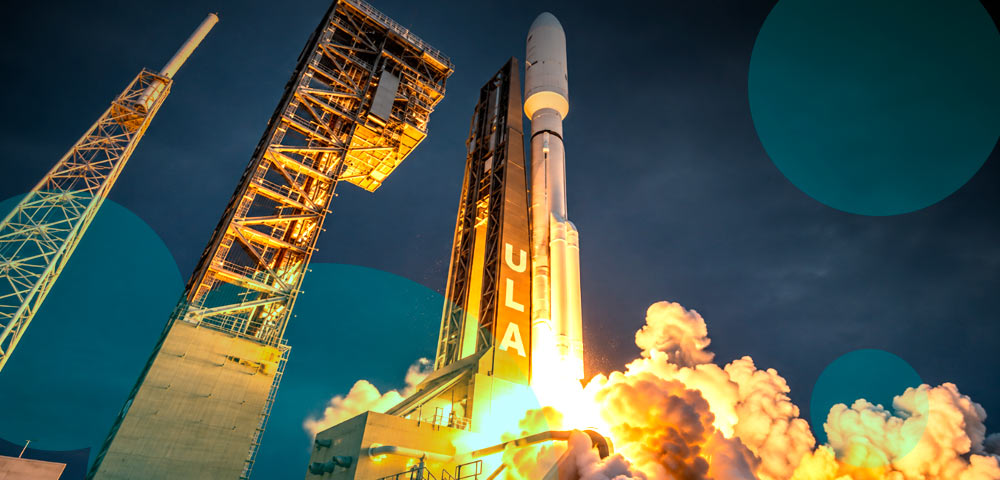
United Launch Alliance’s Vulcan rocket failed approximately 10 minutes after lifting off from Cape Canaveral Space Force Station in Florida on Sunday, November 15, 2026. The rocket launched at 12:40:30 p.m. Eastern Standard Time (17:40:30 UTC), with the failure occurring around 12:50 p.m. EST.
The incident destroyed 40 Amazon Leo broadband satellites and marked the first complete mission failure in ULA’s 20-year history.
- Vulcan’s fifth flight ended without reaching orbit, breaking ULA’s record of successful mission deliveries since its formation in 2006.
- Amazon has 37 additional Vulcan launches booked as it works to build a satellite internet network capable of competing with SpaceX’s Starlink.
- A prolonged grounding could restrict US military launch capacity and increase reliance on SpaceX.
The failed flight threatens to disrupt Amazon’s satellite internet expansion and US national security missions. ULA, a joint venture between Boeing and Lockheed Martin, faces another technical investigation after a series of delays affecting its flagship launch vehicle.
What caused the ULA Vulcan rocket launch failure?
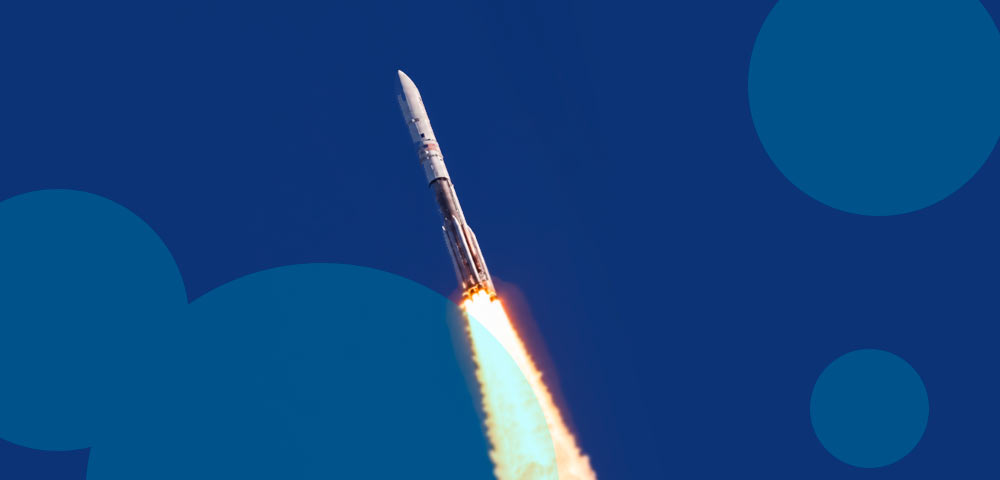
The rocket lifted off from Space Launch Complex 41 at 12:40 p.m. Eastern Time. Its six solid rocket boosters appeared to operate normally during the initial ascent, but flight data subsequently indicated unusual behavior involving the main booster stage.
Vulcan’s two BE-4 engines, manufactured by Blue Origin, continued operating for at least 30 seconds beyond their expected shutdown time. The rocket then appeared to begin spinning shortly before its Centaur V upper stage separated.
Telemetry shown during ULA’s live broadcast indicated that the upper stage’s two RL10 engines ignited and adjusted their thrust direction, apparently attempting to correct the vehicle’s trajectory.
The exact cause remains undetermined. Sources familiar with the launch indicated that the problem originated in the booster stage, although investigators have not established whether the BE-4 engines, propellant systems or another component was responsible.
ULA confirmed the loss of the mission:
“Based on data received by our Launch Director, we confirm that the Vulcan vehicle launched from Space Launch Complex 41 suffered an anomaly 10 minutes into the flight and failed to deliver the Amazon mission to orbit.”
The company said engineers would examine flight data, identify the failure mechanism and implement corrective measures before returning Vulcan to service. Blue Origin is also participating in the investigation.
Vulcan’s technical problems threaten its launch schedule
Sunday’s mission was the rocket’s first in nine months and its fifth since entering service in 2024.
Technical concerns had already interrupted Vulcan’s operations. Anomalies involving its strap-on solid rocket boosters occurred during two earlier missions, including a February 2026 launch for the US Space Force. Both flights reached their intended orbits, but the incidents prompted investigations and delayed subsequent launches.
Separately, Blue Origin experienced a ground-test explosion involving its New Glenn rocket in May. Investigators attributed that incident to a problem with a BE-4 engine valve, leading to modifications to engines supplied to ULA.
There is currently no confirmed connection between that incident and Vulcan’s latest failure.
The new investigation could keep Vulcan grounded for months, delaying missions already assigned to the rocket. Unlike its previous booster anomalies, this incident resulted in the complete loss of the payload.
Amazon Leo satellite deployment faces further delays
Amazon had booked 38 Vulcan missions to help establish its low-Earth-orbit broadband network, with Sunday’s LV-01 flight representing the first launch under that program.
Before the failure, Amazon had deployed approximately 398 Leo satellites through 14 launches since 2025, equivalent to around 12% of the 3,236 spacecraft needed for its planned global service coverage.
The company has also manufactured hundreds of satellites that remain awaiting launch opportunities. Its long-term deployment plans depend on securing sufficient capacity from several rocket operators.
Amazon acknowledged the risks associated with the mission:
“ULA has been a trusted partner for Amazon, and we believe they’ll learn from this mission and deliver on their long-term plans for Vulcan.”
Amazon has contracts with Arianespace and Blue Origin in addition to its ULA commitments. It has reserved 24 Ariane 6 launches following an expansion of its agreement with the European operator, while Blue Origin’s New Glenn remains affected by its own technical setbacks.
The company also secured Falcon 9 launches from SpaceX, its principal competitor in the satellite broadband market. Ten of those missions remain booked, but SpaceX is no longer accepting new Falcon 9 reservations as it prepares to transition toward Starship.
These constraints complicate Amazon’s effort to challenge Starlink, which operates more than 11,000 satellites and serves millions of customers worldwide.
US Space Force and NASA missions face potential disruption
Vulcan is a central component of the US military’s launch strategy and is contracted to carry approximately half of its national security space missions over the coming years.
The Space Force had not yet cleared the rocket to resume national security launches following its earlier booster problems. The Amazon mission was expected to provide additional operational evidence supporting that decision.
Military officials had already reassigned six national security missions from ULA to SpaceX because of Vulcan delays. Further transfers may become necessary if the investigation extends the rocket’s grounding.
The situation also raises questions about US launch capacity. SpaceX’s Falcon 9 and Falcon Heavy currently handle a substantial share of national security missions, while the company’s next-generation Starship has not yet completed the certification process required for such payloads.
Blue Origin’s New Glenn was added as a third national security launch provider in 2025, but its return-to-flight schedule remains uncertain.
NASA’s Artemis lunar exploration program could face indirect consequences as well. New Glenn has missions planned to support Blue Origin’s lunar lander development, and any investigation identifying a shared BE-4 engine problem could affect the timing of those flights.
For ULA, the priority is establishing why Vulcan failed and demonstrating that corrective measures can restore its reliability. The outcome will determine when the rocket can resume carrying commercial satellites and national security payloads.