- From Mars exploration to commercial microgravity research
- Tumbleweed develops modular laboratories for orbital experiments
- Oasis Alpha demonstrates commercial demand for microgravity services
- Tumbleweed seeks launch partnerships beyond SpaceX
- Oasis Beta to introduce orbital sample return in 2028
- Tumbleweed employees invest in the company’s funding rounds
Austrian spacetech startup Tumbleweed has raised €6.9 mn in the country’s largest seed funding round for a space technology company, four months after launching Austria’s first commercial satellite.
The investment was led by PactVC, with participation from Vanagon Ventures, existing investor Prototype Capital, EWOR and international investors and angel backers.
- Tumbleweed secured €6.9 mn in Austria’s largest spacetech seed funding round, led by PactVC with participation from Vanagon Ventures, Prototype Capital and EWOR.
- Its Oasis Alpha mission launched aboard SpaceX Transporter-17 in July 2026, carrying experiments for four first-time space customers. The company offers microgravity research services starting at €15,000.
- Tumbleweed plans three missions in 2027 and is developing Oasis Beta, a spacecraft scheduled for 2028 that will return experimental samples from orbit to Earth.
Founded in 2024, Tumbleweed operates in Vienna and Delft, developing modular laboratory Pods that allow researchers and businesses to conduct experiments in microgravity without building or operating their own space infrastructure.
The Pods are hosted aboard Oasis, the company’s free-flying orbital platform, which provides access to microgravity for pharmaceutical companies, biotechnology researchers, manufacturers and research institutions.
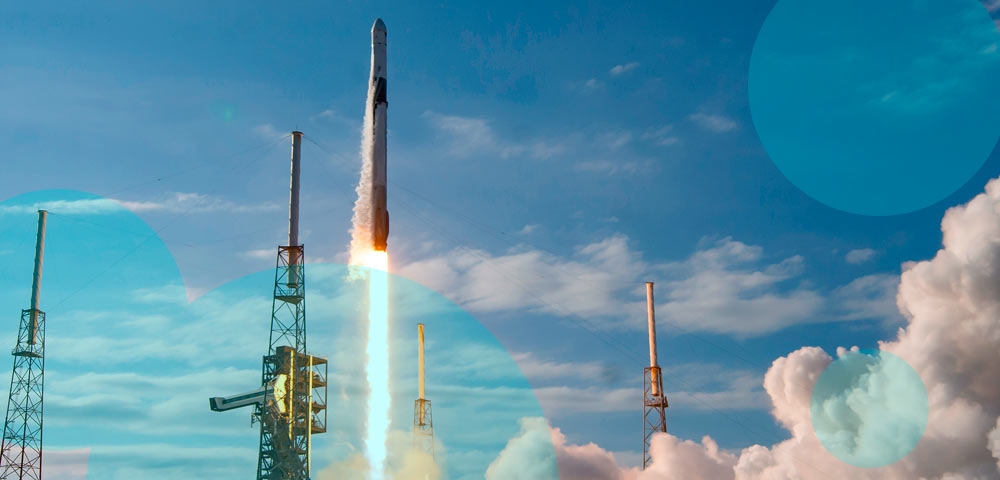
Tumbleweed launched its first mission, Oasis Alpha, aboard SpaceX Transporter-17 on July 7, 2026. The spacecraft carried experiments for four customers, none of whom had previously conducted research in space.
The mission was fully booked a year before launch, with all customers paying upfront.
From Mars exploration to commercial microgravity research
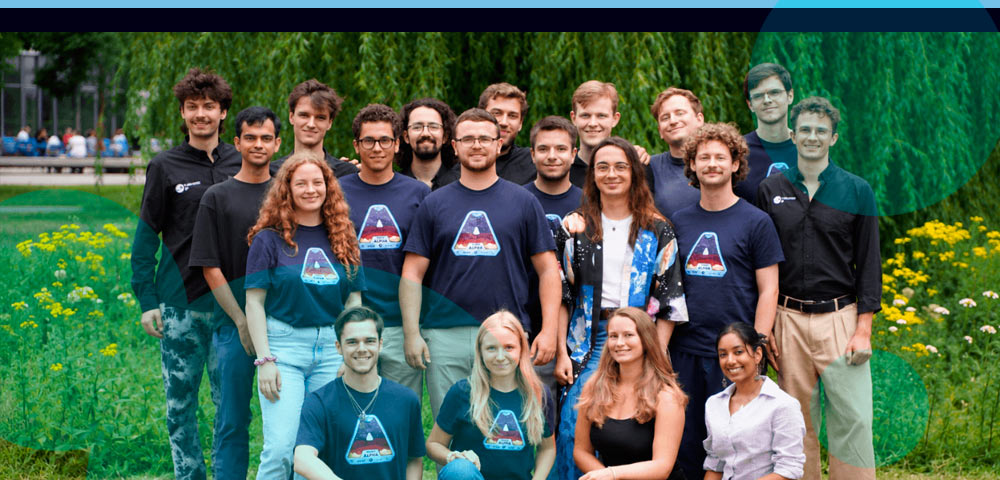
Tumbleweed CEO and co-founder Julian Rothenbuchner began developing technology at an early age, growing up in a family with backgrounds in music and entrepreneurship. His mother taught cello, while his father trained as a classical violinist before establishing a cybersecurity business.
He started building drones at approximately eight years old. Although interested in physics, chemistry and mathematics, he preferred practical engineering projects to academic competitions.
At 16, Rothenbuchner and two friends developed a concept for exploring Mars at approximately one-hundredth of the conventional landing cost.
Inspired by tumbleweeds rolling across landscapes in Western films, they proposed a wind-driven rover that could provide a less expensive approach to Martian exploration and infrastructure development.
The project won a space competition and received funding from the European Space Agency (ESA).
Rothenbuchner subsequently joined forces with two colleagues from the research network to establish Tumbleweed, shifting their focus toward commercially accessible microgravity research.
Tumbleweed develops modular laboratories for orbital experiments
Although more companies are developing spacecraft capable of transporting payloads to orbit and returning them to Earth, Rothenbuchner believes the main obstacle for researchers is the complexity of accessing microgravity.
What we’ve realised is that the bigger challenge isn’t necessarily the vehicle itself. It’s the entire process of accessing microgravity. For most pharmaceutical and biotechnology companies, the existing process is incredibly difficult.
Julian Rothenbuchner, Tumbleweed CEO and co-founder
Preparing experiments for launch involves payload development, safety certification, regulatory approvals and mission operations. These requirements can add years to research programmes and often demand specialist engineering expertise.
Tumbleweed aims to reduce those barriers through pre-certified, application-specific laboratory Pods.
Each fault-isolated container includes power, data connectivity and the technical infrastructure required to conduct experiments in orbit.
Customers receive a laboratory module, integrate their equipment and test the system at their own facilities before transferring it to Tumbleweed for launch.
Once deployed, the Pods can be controlled remotely through onboard computers, allowing researchers to monitor experiments and receive data without directly operating the spacecraft.
Rothenbuchner compares the experience to accessing remote computing infrastructure through a cloud provider such as Amazon Web Services.
Oasis Alpha demonstrates commercial demand for microgravity services
Tumbleweed developed Oasis Alpha in nine months, which the company says is approximately five times faster than the industry standard.
The mission provided an initial demonstration of its commercial model, allowing organisations without previous space experience to conduct microgravity experiments within three to four months for approximately €30,000.
Customer involvement also influenced the design and development of the company’s laboratory hardware.
Feedback from customers helped the company identify technical and operational problems during development, including hardware design, certification and mission requirements that could otherwise have emerged later.
Rothenbuchner considers the total cost and time required to complete an experiment more relevant than launch pricing alone.
Beyond the spacecraft and payload hardware, customers must account for certification, engineering support and orbital operations, which can significantly increase the overall cost of space research.
Tumbleweed’s €15,000 offering includes the laboratory Pod, development assistance, launch services and mission operations. Researchers can remotely access their experiments and receive data while the mission is underway.
The company currently offers lead times of approximately two to three months and is working to reduce them further.
Early commercial results indicate demand beyond established space industry customers. Tumbleweed reports a customer conversion rate of approximately 40%, with around two-thirds of customers originating from inbound inquiries.
The company is now targeting a wider range of research institutions and industrial customers.
Three Tumbleweed missions are planned for 2027, with payloads already attracting interest from medical research, biotechnology and agricultural technology laboratories.
The company expects those missions to serve more than 10 customers.
Tumbleweed seeks launch partnerships beyond SpaceX
Access to launch capacity remains a constraint for commercial microgravity services as demand for orbital missions continues to exceed available supply.
Tumbleweed is negotiating with launch providers in the US, Europe and Asia-Pacific, adapting spacecraft designs and mission requirements to accommodate different launch opportunities.
Although Oasis Alpha launched aboard SpaceX Transporter-17, the company does not intend to rely exclusively on US providers. Tumbleweed can also use suborbital flights for early-stage research.
These missions provide shorter periods of microgravity than orbital flights and are unsuitable for certain industrial experiments. They can nevertheless help researchers test concepts and validate experimental designs before committing to longer missions.
The company views this flexibility as an important part of making microgravity research accessible while orbital launch capacity remains limited.
Oasis Beta to introduce orbital sample return in 2028
Tumbleweed plans to expand its capabilities with Oasis Beta, a spacecraft scheduled for 2028 that will allow physical experimental samples to be returned from orbit.
The company’s current service allows customers to operate experiments remotely and receive transmitted data. Re-entry capability would enable researchers to recover materials for further laboratory analysis on Earth.
Rothenbuchner believes competition in commercial microgravity research will depend on the overall accessibility and economics of experimentation rather than spacecraft performance alone.
Developing a spacecraft capable of returning payloads presents additional engineering challenges, particularly because a complete end-to-end test requires an expensive space mission.
The company ultimately aims to make orbital research practical for organisations that have never previously considered using space infrastructure.
Tumbleweed is combining computer simulations with targeted physical testing to validate its engineering models before attempting an operational return mission.
Tumbleweed employees invest in the company’s funding rounds
The startup has also attracted financial participation from its own employees.
More than one-third of Tumbleweed’s 25 staff members have invested personal funds in the company, collectively contributing a six-figure amount across its financing rounds.
According to Rothenbuchner, the investment initiative originated with employees rather than management.
Rothenbuchner described the participation as evidence of employees’ willingness to take ownership of the business.
The €6.9 mn seed round follows Tumbleweed’s first fully booked commercial mission and comes ahead of its planned expansion to three orbital missions in 2027 and the introduction of sample-return capability in 2028.