- Billionaire investor Ron Baron predicts SpaceX could reach a valuation of $20 tn to $50 tn within 10 years, compared with its current market capitalization of approximately $2.06 tn.
- Baron estimates Starlink alone could be worth $14 tn to $15 tn by 2036, with orbital data centers potentially becoming an even larger business.
- SpaceX’s valuation forecasts remain highly speculative, particularly given the company’s capital requirements and Elon Musk’s history of ambitious Tesla projections that have not materialized on schedule.
Billionaire investor Ron Baron believes SpaceX (NASDAQ: SPCX) could reach a market capitalization of $50 tn within the next decade, potentially making Elon Musk’s aerospace company worth more than 20 times its current valuation.
Baron, founder, chairman and CEO of Baron Capital, outlined his forecast in an interview published by Columbia Business School on October 13, 2026. A longtime investor in Musk-led companies, including Tesla and SpaceX, Baron expects satellite broadband and space-based computing infrastructure to drive substantial long-term growth.
“In 10 years, I think it’s going to be thousands of dollars a share. I think it’ll be worth $20 tn, $30 tn, $50 tn,” Baron said.
He added that Musk considers even those estimates conservative.
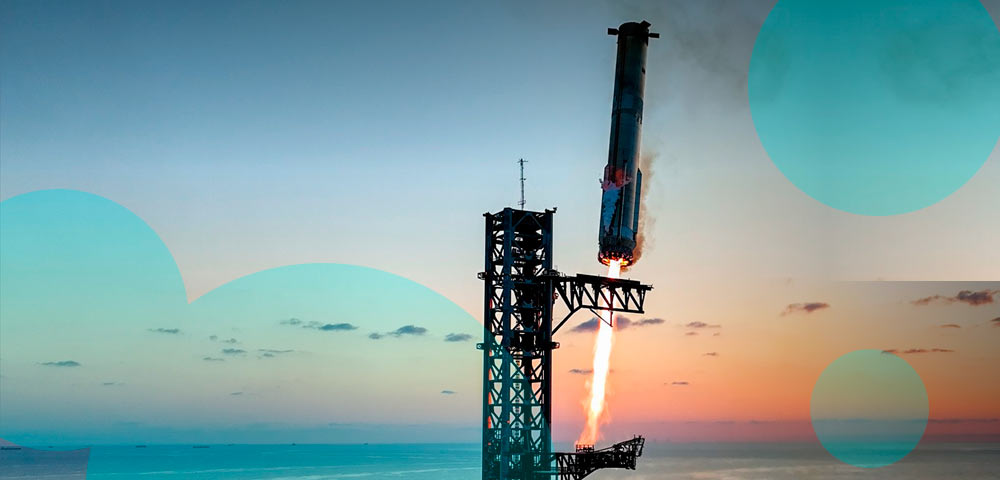
SpaceX, which went public in June 2026, had a market capitalization of approximately $2.06 tn, according to Yahoo Finance. Its shares closed October 13 at $156.54, down 4.21% for the session.
Starlink and orbital data centers drive Baron’s $50 tn forecast
Baron’s investment thesis centers on two businesses: Starlink, SpaceX’s satellite communications network, and the potential development of data centers operating in orbit. He estimates that Starlink alone could reach a valuation of $14 tn to $15 tn over the next decade, arguing that the business remains in the early stages of its commercial expansion.
Space-based computing represents an even larger potential opportunity in his assessment. Baron believes orbital data centers could eventually become several times more valuable than Starlink, although the commercial economics of such infrastructure remain uncertain.
He suggested that investors could generate returns of at least 20 to 30 times their initial investment if the company’s expansion proceeds as he expects.
The forecast goes considerably beyond conventional Wall Street price targets and depends on SpaceX developing businesses that remain at an early stage.
ARK Invest CEO Cathie Wood has also expressed confidence in SpaceX’s long-term prospects, arguing that its approximately $1.75 tn IPO valuation could eventually appear attractive relative to its future value.
Elon Musk sees SpaceX becoming worth more than global GDP
Musk has offered an even more ambitious assessment of SpaceX’s potential. In a recent post on X, he suggested the company could eventually become worth orders of magnitude more than the current global economy.
World Bank figures place global GDP above $118 tn in 2025, approximately 54 times SpaceX’s market capitalization of $2.06 tn.
The comparison illustrates the extraordinary scale of Musk’s projection, although GDP measures annual economic output rather than the market value of assets or companies.
Musk has previously made similarly ambitious predictions about Tesla (NASDAQ: TSLA), whose market capitalization stands around $1.5 tn despite a forward price-to-earnings multiple exceeding 450.
Tesla’s valuation has long depended on expectations for autonomous driving, robotics and energy storage rather than its existing automotive earnings alone.
In October 2022, Musk suggested Tesla could eventually exceed the combined market capitalization of Apple and Saudi Aramco, then approximately $4 tn.
At Tesla’s 2024 shareholder meeting, he estimated that the Optimus humanoid robot business alone could add $25 tn to the company’s market value.
Wood has also issued aggressive Tesla price forecasts. ARK Invest’s 2023 projections included a $2,000 base-case target for 2027, with scenarios ranging from $1,400 to $2,500. In 2024, ARK extended its forecast horizon to 2029 and raised its base-case target to $2,600, with bearish and bullish scenarios of $2,000 and $3,100.
SpaceX valuation faces execution and financial risks
Musk’s previous operating forecasts provide reasons to distinguish long-term ambitions from achievable financial targets.
Tesla has withdrawn its former objective of producing 20 mn vehicles annually by 2030 and has moved away from its earlier expectation of 50% annual delivery growth.
Musk also predicted that Tesla would have 1 mn robotaxis operating by 2020, a target that remains far from realization six years later. His repeated forecasts for full vehicle autonomy have similarly experienced delays.
Tesla’s energy business provides another example. In 2019, Musk suggested it could eventually exceed the automotive division in size, later clarifying that the comparison concerned gigawatt-hours deployed rather than revenue.
SpaceX faces its own execution challenges. Its valuation depends partly on future revenue from Starlink, continued investment in launch infrastructure and the development of capital-intensive AI computing operations in space.
The possibility of a future Tesla-SpaceX merger has also attracted speculation, but there is no established transaction on which investors can base a combined-company valuation.
Baron’s $20 tn to $50 tn forecast therefore represents an aggressive long-term investment scenario rather than a conventional earnings-based valuation.
For SpaceX shareholders, the question is whether growth in satellite connectivity and future computing services can generate sufficient earnings and cash flow to justify a market capitalization already exceeding $2 tn.