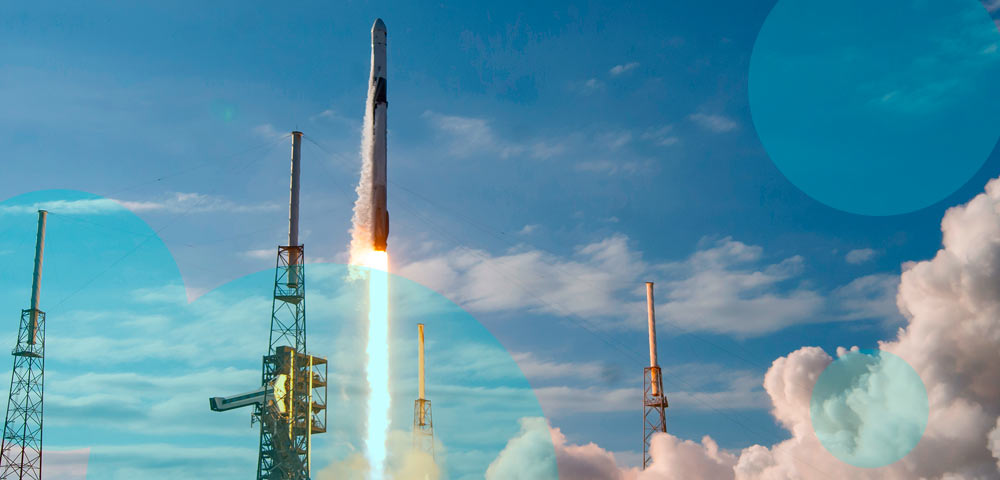
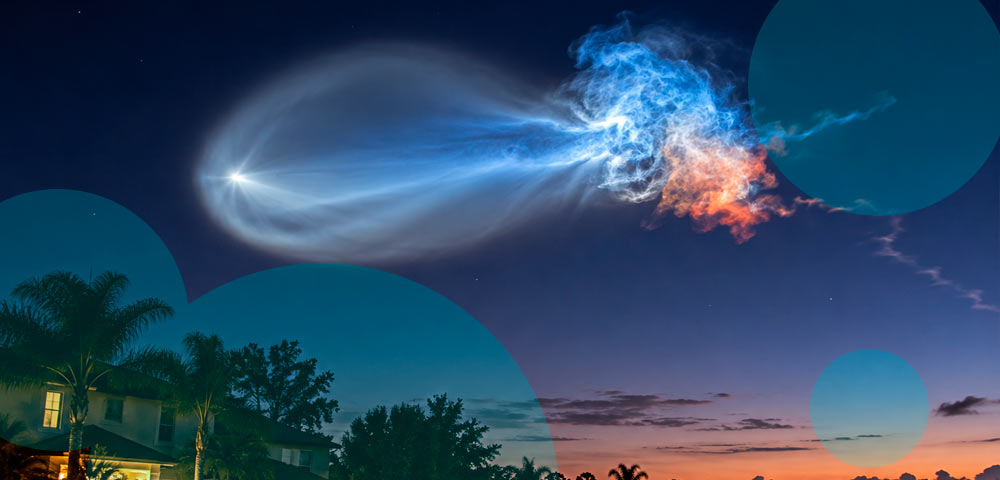
- A SpaceX Falcon 9 rocket launched from Cape Canaveral at 6:33 a.m. EDT on October 13, 2026, creating a glowing “space jellyfish” visible across Florida and as far north as Virginia.
- The phenomenon occurs when rocket exhaust expands in the thin upper atmosphere and catches sunlight before sunrise, forming an illuminated cloud with trailing plumes.
- The mission carries more than 6,300 pounds of scientific equipment and supplies to the International Space Station, including solar arrays and experiments involving artificial retinas and heart tissue.
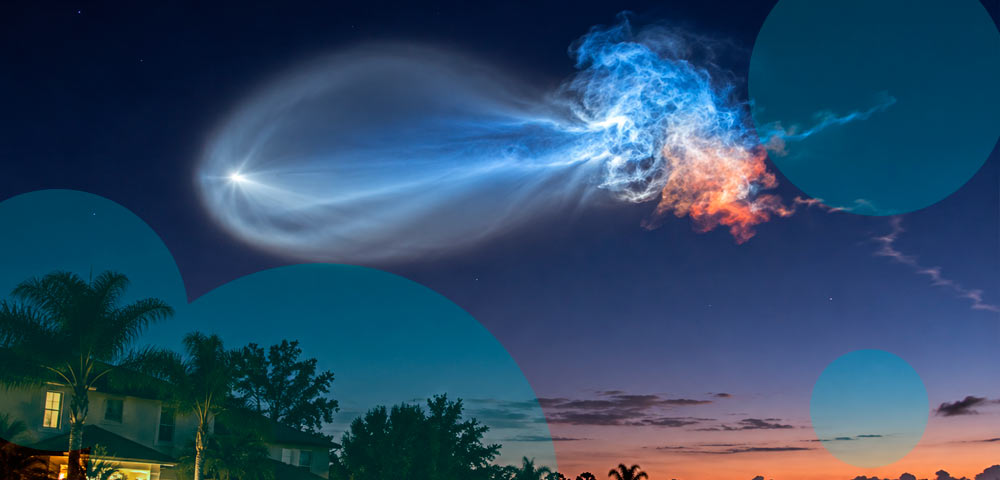
A SpaceX Falcon 9 rocket created a spectacular “space jellyfish” across the early morning sky on October 13, 2026, as it launched a cargo mission to the International Space Station (ISS) from Cape Canaveral, Florida.
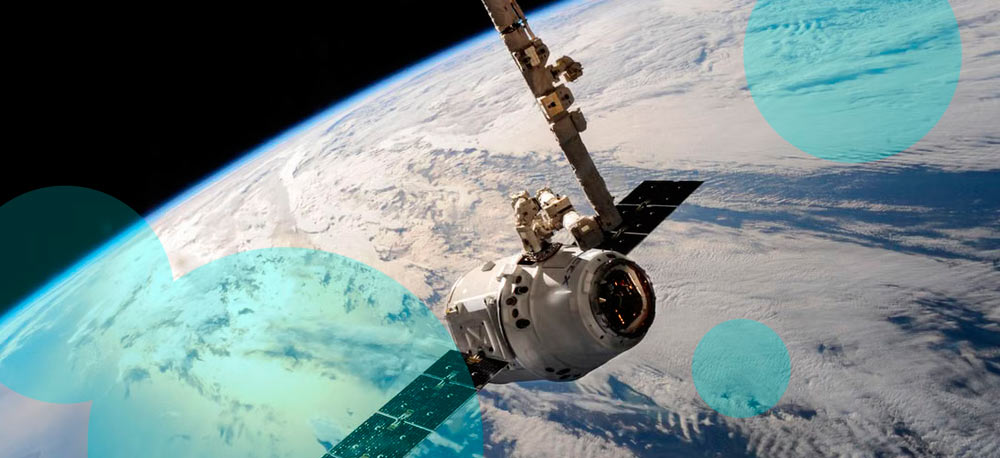
The rocket lifted off at 6:33 a.m. EDT from Space Launch Complex 40 at Cape Canaveral Space Force Station, carrying a Dragon spacecraft on NASA’s 35th commercial resupply mission operated by SpaceX.
Residents across Central Florida, including Orlando, Oviedo and Davenport, reported seeing a luminous, jellyfish-shaped cloud spreading across the sky shortly before sunrise. The unusual formation was also visible farther north, including parts of Virginia.
The phenomenon was caused by sunlight illuminating the rocket’s expanding exhaust plume high above Earth.
What causes the SpaceX ‘space jellyfish’ effect?
A space jellyfish forms when a rocket launches shortly before sunrise or after sunset, creating conditions in which the ground remains relatively dark while sunlight reaches the upper atmosphere.
As the rocket climbs, its exhaust enters progressively thinner air. With less surrounding atmospheric pressure, the gases expand rapidly, spreading into a broad cloud.
Although the Sun has not yet risen for observers on the ground, the exhaust plume at higher altitudes can already receive direct sunlight.
That light illuminates the expanding gases and particles, creating a bright, rounded formation with long, diffuse trails that resemble a jellyfish and its tentacles.
The appearance depends on launch timing, altitude, atmospheric conditions and the observer’s position relative to the Sun.
Space jellyfish formations are particularly visible during twilight launches because the illuminated exhaust contrasts sharply with the darker sky below.
The effect is a normal consequence of rocket propulsion and atmospheric conditions, rather than an unusual spacecraft maneuver.
SpaceX Dragon delivers scientific equipment to the ISS
The October 13 launch is part of NASA’s Commercial Resupply Services program, through which private aerospace companies transport equipment, experiments and supplies to the orbiting laboratory.
The Dragon spacecraft is carrying more than 6,300 pounds of cargo, including the final pair of International Space Station Roll-Out Solar Arrays.
Once installed, the arrays will increase the station’s available electrical power, supporting scientific research, routine operations and preparations for its eventual controlled deorbit.
The mission also carries equipment for several experiments investigating the effects of microgravity on biological materials. Among them are technologies intended to manufacture artificial retinas that could eventually support treatments for vision loss on Earth.
Other research includes three-dimensional heart tissue models for drug testing, materials used to study glass formation in microgravity and brain organoids that could help identify potential treatments for Alzheimer’s disease, Parkinson’s disease and multiple sclerosis.
NASA confirmed that Dragon separated from the Falcon 9 rocket’s second stage approximately nine minutes after launch.
The spacecraft is scheduled to dock autonomously with the space-facing port of the station’s Harmony module at approximately 11 a.m. EDT on Thursday, October 15.
Dragon is expected to remain at the ISS until mid-November before returning scientific samples and other cargo to Earth, with splashdown planned off the California coast.
For observers across the southeastern United States, the mission’s first visible result was the illuminated exhaust cloud, a temporary atmospheric display produced by the interaction between rocket propulsion and sunlight.