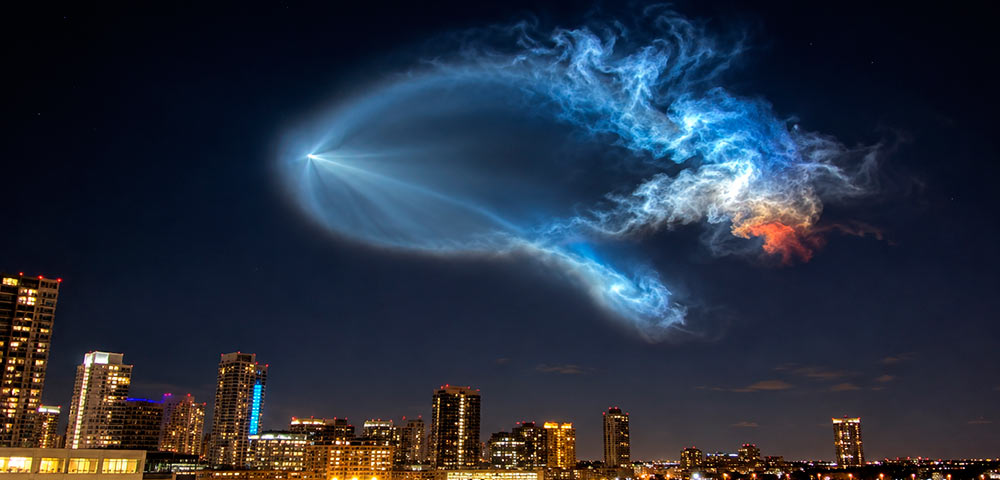
- SpaceX’s CRS-35 mission produced a glowing “space jellyfish” visible across the Tampa Bay area during its predawn launch on October 13, 2026.
- The phenomenon occurs when sunlight illuminates expanding rocket exhaust at high altitude while the ground remains dark.
- NASA and SpaceX had not specifically predicted the display, which depends on launch timing, trajectory, sunlight and atmospheric conditions.
A SpaceX Falcon 9 launch created a luminous “space jellyfish” across the Tampa Bay sky early Tuesday, October 13, 2026, attracting the attention of dozens of residents who photographed the unusual atmospheric display.
The rocket lifted off at 6:33 a.m. ET from Cape Canaveral Space Force Station in Florida, carrying a Dragon spacecraft on SpaceX’s 35th Commercial Resupply Services (CRS-35) mission to the International Space Station.
The glowing formation appeared as the rocket climbed into the upper atmosphere shortly before sunrise.

The effect develops when a rocket reaches an altitude where its exhaust plume is illuminated by sunlight, even though observers on the ground remain in darkness. As exhaust gases expand in the thinner atmosphere, they form a bright cloud resembling a jellyfish with trailing tentacles.

Similar displays can occur during launches near sunrise or sunset, when lighting conditions create a strong contrast between illuminated exhaust and the darker sky.
Neither NASA nor SpaceX specifically forecast the phenomenon for CRS-35. Its visibility depends on the rocket’s trajectory, the position of the sun and atmospheric conditions during the launch.
NASA has documented comparable displays during previous SpaceX missions.
The CRS-35 flight is transporting more than 6,300 pounds of scientific experiments, equipment and supplies to the International Space Station. The Dragon spacecraft is scheduled to dock with the station on October 15, following an approximately 52-hour journey.