- The AI data center landscape
- AI data center insurance risks grow
- Business interruption insurance faces emerging coverage gaps
- Data center insurance opportunities across the infrastructure lifecycle
- AI data center investment creates a growing insurance market
- Data center accumulation risk challenges insurers and reinsurers
The infrastructure behind the AI revolution is producing one of the largest emerging risk concentrations the insurance market has faced, and the (re)insurance industry’s response is only just beginning.
The AI infrastructure build-out is converting hundreds of billions of dollars of capital expenditure into physical assets that must be insured. The premium pool is becoming more fully quantified and the competitive architecture in the insurance sector is now forming. Yet the market cannot scale sustainably without reinsurance capacity, accumulation control and specialist risk modeling.
AI Data center insurance spans more than 20 lines of business, from surety and trade credit at pre-construction through to property, business interruption, cyber, parametric and energy covers in live operations. Every facility under construction today will generate compounding operational premium for the duration of its useful life. The relationships formed now will be multi-line, multi-decade and structurally embedded.
Key highlights
- Global AI infrastructure spending reached $121.4 bn in Q2 2026, while the International Energy Agency projects data center electricity consumption will more than double to 945 TWh by 2030.
- Swiss Re estimates that more than 25% of US data center capacity is exposed to frequent large hail, while approximately 40% is located in areas with significant tornado exposure.
- Business interruption, service-level agreement (SLA) failures and equipment shortages are creating demand for specialized insurance products, including non-damage BI and parametric coverage.
- New insurance opportunities include Warranty and Indemnity (W&I), equipment breakdown, GPU and semiconductor coverage, non-damage business interruption and SLA-triggered parametric insurance.
- Uptime Institute’s 2026 outage analysis found that 57% of surveyed operators reporting major outages faced costs exceeding $100,000, while approximately 20% reported losses above $1mn.
The most pressing constraint is not product innovation, it is the reinsurance infrastructure required to underpin it. Primary carriers face capacity demands on individual programs that routinely exceed $5B in total insurable value, and the accumulation risk is largely invisible: exposure is stacking across policies, treaties and lines without unified campus-level tracking.
This article sets out the landscape, the coverage gaps and the specific actions the market should take to ensure this opportunity scales profitably and above all, sustainably.
The AI data center landscape
The AI build-out is increasingly an infrastructure story, not a software story. Global AI infrastructure annual spend is projected to rise from $976 bn in 2025 to $1.43 tn in 2026 and $1.89 tn by 2027.1 Whether those projections prove conservative or optimistic, the wider direction is clear: the capital has to be deployed somewhere physical. It becomes land, concrete, power connections, cooling and equipment installed at scale.
The construction pipeline is robust. In the US, January 2026 alone saw $25.2bn of data center construction starts across 20 projects, with trailing twelve-month starts reaching $103.7 bn. US data center construction spending has grown roughly 4.5 times since 2020, far outpacing total non-residential construction, which has remained broadly flat. This is not a short, cyclical spike the spending and the construction activity are moving together, reinforcing a longer infrastructure cycle.
AI data center insurance risks grow
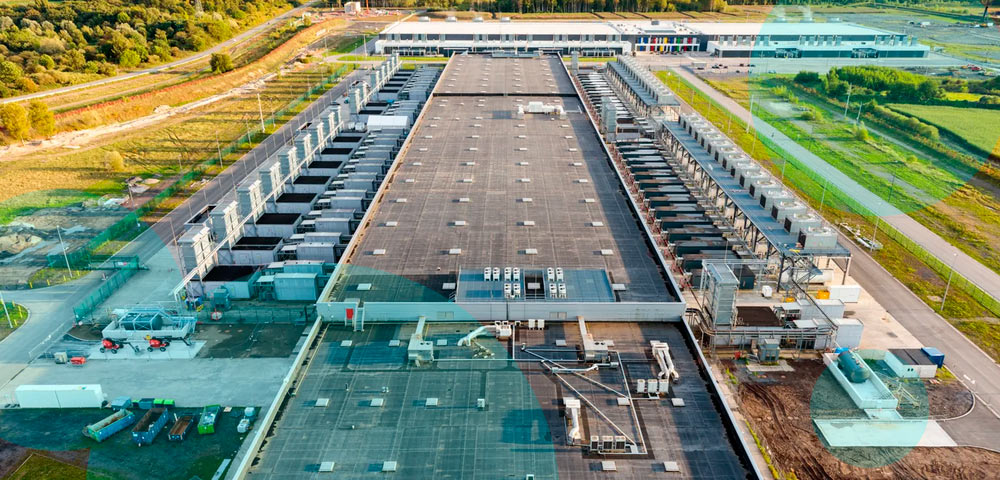
Global investment in AI data centers is creating significant opportunities for insurers and reinsurers, while introducing new concentrations of property, construction, business interruption and cyber risks.
According to IDC, worldwide AI infrastructure spending reached $89.9bn in the fourth quarter of 2025 and increased to $121.4bn in the second quarter of 2026. Rapid expansion is placing pressure on electricity networks, cooling systems and equipment supply chains.
AI infrastructure spending accelerates demand for insurance
The expansion of AI computing infrastructure is generating substantial demand for construction and operational insurance.
IDC reported that spending on AI servers reached $87.7bn in Q4 2025, representing nearly 98% of total AI infrastructure expenditure during the quarter. By Q2 2026, overall infrastructure spending had increased to $121.4bn, up 53% year over year.
Global AI infrastructure spending
| Indicator | Value | Period |
|---|---|---|
| Total AI infrastructure spending | $89.9bn | Q4 2025 |
| AI server spending | $87.7bn | Q4 2025 |
| Server share of infrastructure spending | ~98% | Q4 2025 |
| Total AI infrastructure spending | $89.7bn | Q1 2026 |
| Total AI infrastructure spending | $121.4bn | Q2 2026 |
| Annual spending growth | 53% | Q2 2026 |
| Forecast annual infrastructure spending | $1.33tn | 2030 |
The capital-intensive nature of AI facilities creates insurance exposure throughout construction, equipment installation, commissioning and ongoing operations.
Standard data center construction costs are estimated at approximately $10mn–$12mn per megawatt, while AI-optimized facilities can exceed $15mn–$20mn per megawatt.
Power supply becomes a major data center risk
High-performance AI systems require increasingly concentrated computing power (see about Enterprise AI Adoption).
Rack-scale architectures can consume more than 130 kW per rack, significantly increasing cooling and electrical distribution requirements.
Liquid cooling is becoming essential for managing the heat generated by high-density AI equipment. Meanwhile, electricity availability increasingly determines where new facilities can be constructed.
The International Energy Agency projects global data center electricity consumption will rise from approximately 415 TWh in 2024 to 945 TWh by 2030.
Global data center electricity demand forecast
| Indicator | 2024 | 2030 forecast |
|---|---|---|
| Electricity consumption | 415 TWh | 945 TWh |
| Share of global electricity demand | ~1.5% | Nearly 3% |
| Demand growth | — | More than 2× |
Grid interconnection delays, transformer shortages and power infrastructure limitations can postpone projects and increase development costs.
For insurers, these constraints affect construction schedules, delay-in-startup exposure and the potential duration of operational interruptions.
Swiss Re warns of natural catastrophe accumulation risks
The geographic concentration of data centers is becoming a major underwriting concern. Swiss Re’s 2026 research found that substantial portions of US data center capacity are located in areas exposed to severe convective storms.
More than one-quarter of capacity may be situated in locations experiencing at least three large-hail days annually. Approximately 40% could be located in zones with significant tornado activity.
Northern Virginia represents another concentration concern, with more than 300 data centers and approximately 3,945 MW of commissioned power capacity.
In July 2024, a grid disturbance reportedly caused approximately 60 facilities in the region to disconnect around 1,500 MW of electricity demand.
Such incidents demonstrate how interconnected facilities can create correlated losses affecting multiple operators and insurance portfolios.
Business interruption insurance faces emerging coverage gaps
Business interruption is among the most significant operational exposures for data center insurers. Traditional property business interruption policies generally require insured physical damage before coverage responds.
However, data center outages can result from equipment malfunctions, power disruptions, cooling failures, software errors or operational mistakes without causing qualifying physical damage.
The distinction creates potential coverage gaps between property and cyber insurance policies.
In November 2025, a cooling failure at a CyrusOne facility in Aurora, Illinois, disrupted CME Group’s derivatives trading operations for more than 10 hours.
The incident illustrated how a localized infrastructure malfunction can affect financial markets and other businesses dependent on continuous digital services. Non-damage business interruption insurance could address certain operational outages that fall outside conventional property policy triggers.
SLA violations create financial exposure for data center operators
Data center service-level agreements frequently require availability exceeding 99%.
Failure to meet contractual uptime commitments can result in substantial financial penalties, including service credits owed to customers.
A June 2026 analysis by Parametrix estimated that a 45-minute outage at a 100 MW data center generating $144mn in annual rental revenue could produce approximately $24mn in service credit losses.
That scenario could reduce annual cash flow by roughly 42%.
Data center outage financial risk scenario
| Metric | Parametrix scenario |
|---|---|
| Data center capacity | 100 MW |
| Annual rental revenue | $144mn |
| Outage duration | 45 minutes |
| Potential SLA service credits | $24mn |
| Estimated annual cash flow reduction | ~42% |
The analysis highlights the potential financial consequences of relatively short service interruptions.
Parametric insurance products are emerging to address these exposures through predefined triggers linked to service availability.
Such policies can provide specified payments when agreed conditions are met, without requiring the same loss-adjustment process as traditional indemnity insurance.
Data center insurance opportunities across the infrastructure lifecycle
AI data centers require different insurance products as projects move from construction into operation.
Insurance coverage across the data center lifecycle
| Project phase | Key risks | Relevant insurance |
|---|---|---|
| Planning and development | Design errors, environmental exposure, professional negligence | Professional liability, environmental liability |
| Construction | Property damage, contractor losses, project delays | Construction All-Risks, third-party liability |
| Equipment transportation | Damage to GPUs, servers and electrical equipment | Marine cargo, transit insurance |
| Commissioning | Testing failures, equipment breakdown, delayed operations | Testing and commissioning, Delay in Start Up |
| Operations | Fire, flood, equipment failure, power disruption | Property, machinery breakdown, business interruption |
| Digital operations | Cyberattacks, data breaches, software failures | Cyber insurance, technology E&O |
| Service delivery | SLA breaches, customer compensation, operational downtime | Parametric insurance, specialized BI |
| Corporate operations | Management liability, contractual disputes | D&O, professional indemnity |
The transition from construction to commercial operation creates recurring demand for insurance covering physical assets, business continuity and third-party liabilities.
Equipment shortages could extend insured losses
Replacement timelines represent another challenge for AI data center insurance. Specialized GPUs, high-voltage electrical equipment and liquid-cooling infrastructure may require lengthy procurement periods.
A major loss at an AI-optimized facility could therefore lead to prolonged reconstruction and business interruption. Some large facilities may require 24–36 months to replace, depending on equipment availability, permitting and construction requirements.
Traditional indemnity insurance can compensate eligible financial losses but cannot eliminate physical supply-chain constraints.
For insurers and reinsurers, these exposures make realistic reinstatement periods, contingent business interruption modeling and equipment dependency assessments increasingly important.
The expansion of AI infrastructure is creating a growing insurance market, but sustainable underwriting profitability will depend on accurately assessing power dependencies, catastrophe accumulation, equipment scarcity and operational downtime.
Specialized non-damage business interruption coverage, SLA-triggered parametric insurance and broader infrastructure protection could become important sources of premium growth as the global data center market expands.
Insurance lines of business across the data center lifecycle
| Pre-Construction Land acquisition, financing, design and approvals | Construction Build, procure and install | Commissioning Testing, handover and transition to operations | Live operations and ongoing service delivery | Cross Lifecycle Lines | |
| Property and Physical Assets | Environmental liability (pre-existing)Title insurance (transactions) | Construction All Risk (CAR)Delay in Start-Up (DSU)Marine/Project cargo | Construction (ITS)Equipment breakdown | Property (including high-value equipment)Business interruption (incl., contingent BI) | Property/BIEquipment breakdown |
| Digital and Technology | Cyber due diligence | Cyber (construction phase) | Cyber (systems integration and testing) | Cyber and Tech E&O (OT/IT, data and network)Tech E&O/Professional liability | CyberTech E&O/PI |
| Financial and Contractual | Surety (bid, performance and interconnection)Trade credit/Credit insuranceD&O liabilityM&A/W&I and tax liability | Surety (performance and payment)Trade credit (equipment suppliers) | Surety (completion/ performance)Contract bonds/ Guarantees | SLA/Paramedic (service levels)Trade credit (ongoing suppliers)Renewable and ESG (PPA performance) | SuretyTrade creditD&O liabilityRenewable and ESG |
| Liability and People | Third-party liability (pre-construction)D&O Liability | Third-party liability (construction)Workers’ compensation/ Employer liability | Third-party liability (testing)Employers liability | Third-party liability (operations, clients, tenants)Employers liability | Third-party liabilityEmployers liabilityD&O liability |
| Environment, Energy and Sustainability | Environmental liability (site)ESG advisory/Due diligence | Environmental liability (construction)Pollution legal liability (CPL) | Environmental liability (testing)Pollution legal liability (CPL) | Environmental liability (cooling, fuel, DESS and oil)Energy insurance (power generation and BESS)Renewable and ESG (PPA performance) | Environmental liabilityEnergy insuranceRenewable and ESG |
| Specialty and Emerging | Title insurancePolitical violence/ Terrorism (planning) | Political violence/ Terrorism (construction)Specie/Valuable equipment | Political violence/ Terrorism (testing)Specie/Valuable equipment | Political violence/ Terrorism (operations)Specie/Valuable equipment | Political violence/ TerrorismSpecie/Valuable equipment |
AI data center investment creates a growing insurance market
The expansion of hyperscale and AI computing infrastructure is generating demand for insurance across the entire data center lifecycle.
JLL projects that nearly 100 GW of new capacity will come online globally between 2026 and 2030, approximately doubling the installed base.
The expansion is expected to create $1.2tn in real estate asset value, excluding some equipment and tenant investments.
Swiss Re estimates that annual global data center insurance premiums will reach $24.2bn by 2030, compared with $10.6bn currently.
Global data center insurance market outlook
| Market indicator | Current estimate | Forecast |
|---|---|---|
| Global data center insurance premiums | $10.6bn | $24.2bn by 2030 |
| Global installed data center capacity | ~103 GW | ~200 GW by 2030 |
| Additional capacity, 2026–2030 | — | ~100 GW |
| New real estate asset value | — | $1.2tn |
| Total investment required | — | Up to $3tn |
The scale of the investment means that insurers must assess risks extending beyond traditional property damage.
Specialist coverage is increasingly relevant for acquisitions, high-value computing equipment, contractual performance and operational outages.
New insurance products emerge across the data center lifecycle
Warranty and Indemnity insurance can support data center acquisitions by transferring specified risks arising from representations and warranties in transaction agreements.
Equipment breakdown coverage becomes particularly important during testing and commissioning, when power and cooling systems operate under demanding conditions for the first time.
High-value GPU clusters and high-bandwidth memory components introduce additional concerns involving theft, physical damage and lengthy replacement periods.
Specialty insurance solutions may help address these exposures, although coverage depends on policy terms and the nature of the insured property.
Emerging data center insurance coverage opportunities
| Insurance product | Principal exposure |
|---|---|
| Warranty and Indemnity | Transaction-related liabilities in data center acquisitions |
| Construction All-Risks | Physical damage during development and construction |
| Equipment breakdown | Mechanical and electrical failures |
| Marine cargo | Transportation of servers, GPUs and other equipment |
| Specie and specialty property | High-value portable computing equipment |
| Business interruption | Lost income following insured interruptions |
| Non-damage business interruption | Operational outages without qualifying physical damage |
| SLA-triggered parametric insurance | Contractual penalties following service availability failures |
| Cyber insurance | Cyberattacks, data breaches and digital disruption |
| Environmental liability | Pollution and environmental damage |
| Directors and Officers liability | Management and corporate governance claims |
These products address different parts of the risk profile, making coordinated underwriting important for large data center programs.
Power failures and cooling risks increase operational exposure
AI infrastructure is moving toward higher computing densities, creating greater demands on electrical distribution and cooling systems.
Liquid cooling is increasingly used to manage heat from advanced GPUs and high-density server racks. However, these systems introduce additional potential failure modes, including coolant leaks, corrosion and equipment damage.
Responsibility for failures can also become complicated when cooling manufacturers, engineering contractors, equipment suppliers and facility operators are involved.
Data center outages remain expensive. Uptime Institute’s 2026 outage analysis found that 57% of surveyed operators reporting major outages estimated their most recent incident cost more than $100,000.
Approximately one in five reported costs exceeding $1 mn. Power-related problems remained a leading cause of significant outages.
Business interruption and parametric insurance address coverage gaps
Traditional business interruption insurance generally requires insured physical damage to trigger coverage. However, data center operators may experience substantial financial losses from power interruptions, cooling failures or software problems that do not meet this requirement. These disruptions can also result in breaches of service-level agreements.
SLA penalties create financial exposures separate from physical asset damage and may fall outside standard property insurance policies. Non-damage business interruption extensions and parametric insurance products are emerging to address these risks.
Parametric policies can provide predetermined payments when specified service availability thresholds are breached, reducing the need for conventional loss adjustment.
For insurers, these products represent opportunities to develop coverage tailored to the operational economics of digital infrastructure.
Data center accumulation risk challenges insurers and reinsurers
One of the most significant underwriting concerns is the accumulation of multiple insurance exposures at a single location.
A carrier may insure a data center’s buildings while also covering equipment shipments, power infrastructure, contractors and tenants.
Those exposures may be distributed across separate policies and underwriting teams despite depending on the same physical facility.
A major power outage, fire or natural catastrophe could therefore generate claims across several insurance lines simultaneously. Swiss Re has identified this concentration as an important challenge for the industry.
Insurers increasingly need site-level exposure data and portfolio models capable of aggregating risks across entire campuses rather than assessing individual buildings independently.
Reinsurance capacity will support large AI infrastructure projects
Large data center developments can generate total insured values exceeding the capacity that individual primary insurers are willing to retain.
Reinsurance is therefore essential for supporting construction and operational programs involving multibillion-dollar facilities. Treaty reinsurance, facultative placements and retrocession can help distribute exposures across multiple risk carriers.
However, transferring risk does not eliminate concentration. Reinsurers must also assess dependencies involving power networks, equipment suppliers, natural catastrophes and shared infrastructure.
As more independent developers enter the market, demand for specialist underwriting expertise is expected to increase.
Engineering assessments, cooling system reviews, power resilience testing and commissioning audits will become important tools for evaluating risks where historical claims data remains limited.
The expansion of AI infrastructure offers insurers and reinsurers substantial long-term premium opportunities, but profitable participation will depend on identifying interconnected exposures and developing coverage that reflects how modern data centers operate.
………..
EXPERTS: Lara Mowery – Chief Commercial Officer at Gallagher Re, Luca Drane – Associate within Gallagher Re’s Global Strategic Advisory team
by Peter Sonner, Lead Tech Editor at Beinsure, Oleg Parashchak — CEO & Founder of Finance Media Holding, Founder & Editor-in-Chief of Beinsure