- Texas could delay 13 GW of planned data center capacity
- AI data center developers face higher political risks across US states
- AI infrastructure stocks react to potential regulatory restrictions
- US AI data center growth depends on state regulatory decisions
- AI data center protests spread across Europe as activists demand moratorium
- AI infrastructure expansion increases pressure on electricity and water resources
The expansion of artificial intelligence data centers across the United States faces growing regulatory uncertainty following Democratic victories in several key gubernatorial elections.
Texas, the country’s largest market for planned data center development, is expected to adopt a tougher approach under Governor-elect Gina Hinojosa, who defeated Republican incumbent Greg Abbott in the November 3 election.
Hinojosa has pledged to suspend approvals for new data centers until lawmakers introduce stronger protections for communities, electricity consumers and water supplies.
Thousands protest AI data center expansion across Europe, demanding construction moratoriums amid concerns over electricity use, environmental damage and rising costs.
Key Highlights
- Democratic victories in Texas, Ohio and Georgia have increased the risk of restrictions on new AI data center construction, with several incoming governors supporting development moratoriums.
- Approximately 13 GW of proposed data center capacity in Texas could face delays, while the state accounts for nearly 30% of US capacity scheduled to come online in 2028.
- Analysts warn that stricter permitting, electricity and water requirements could delay infrastructure projects, increase development costs and affect AI investment plans.
- Approximately 2,000 people protested in Dublin and 1,300 in Helsinki on November 7, 2026, as demonstrations against AI data center expansion spread across Europe.
- More than 100 organizations across 15 European countries joined coordinated protests calling for a moratorium on new large-scale data centers.
- Data centers accounted for 23% of Ireland’s metered electricity consumption in 2025, while Finland faces approximately €80 bn in proposed and ongoing data center investments.
Similar proposals have emerged in Ohio and Georgia, while Pennsylvania Governor Josh Shapiro has become increasingly critical of speculative projects and developments opposed by local communities.
The policy changes could affect a substantial portion of planned US AI computing infrastructure as technology companies continue investing in data centers.
The rapid expansion of AI is driving unprecedented investment in data centers, creating new underwriting challenges and potential growth opportunities for the global insurance and reinsurance industry, according to Gallagher Re.
As demand for AI computing capacity accelerates, technology companies and infrastructure investors are expanding the physical facilities needed to support increasingly powerful computing systems.
McKinsey estimates that global investment in the data center sector could reach $6.7 tn by 2030, with approximately $5.2 tn allocated to infrastructure supporting AI workloads.
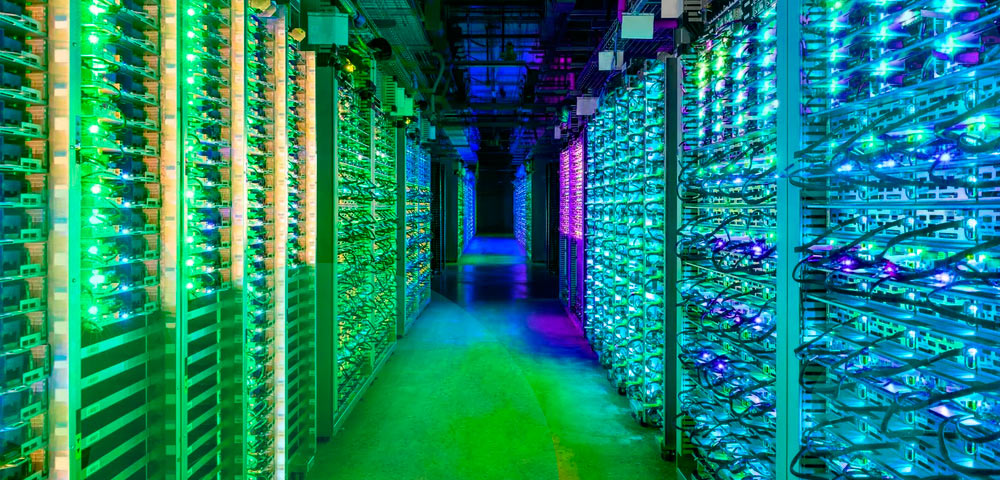
The expansion is also increasing demand for electricity generation and supporting infrastructure, introducing additional operational, environmental and sustainability considerations.
Gallagher Re’s Global InsurTech Report highlights how these developments are changing the risk profile of data centers and forcing insurers to reconsider traditional underwriting approaches.
Unlike conventional commercial properties, modern AI data centers combine several categories of exposure within a single infrastructure project.
During construction, insurers must assess building and engineering risks associated with the development of large-scale facilities (see about Agentic AI in Insurance).
Equipment procurement introduces additional exposures involving the transportation of advanced chips, circuit boards and other high-value components, potentially affecting marine cargo and inland transit insurance.
Texas could delay 13 GW of planned data center capacity
Texas faces the greatest immediate regulatory exposure following Hinojosa’s election.
The governor-elect has repeatedly called for a moratorium on new data center approvals, arguing that large developments place additional pressure on electricity rates and water resources.
Her proposal would maintain restrictions until the state legislature establishes stronger rules governing infrastructure costs, environmental impacts and community participation.
Abbott had already introduced temporary restrictions on certain data center approvals and grid connections as part of a review of the sector.
Hinojosa has indicated that the restrictions should continue beyond that review.
According to GLJ Research analyst Gordon Johnson, approximately 13 GW of proposed data center capacity could be affected by the change in administration.
Projects with secured electricity connections, permits and construction underway are more likely to proceed.
Developments that have obtained power agreements but lack environmental approvals could face delays of 12 to 18 months, Johnson estimated.
Projects without either power access or permits face greater uncertainty and could be relocated to neighboring states.
Texas represents nearly 30% of planned US data center capacity for 2028
Texas has become a major destination for AI infrastructure investment because of its available land, energy resources and established technology industry.
Research firm SemiAnalysis estimates that the state accounts for nearly 30% of US data center capacity expected to enter service in 2028.
Consequently, delays in Texas could materially affect the pace of national data center construction.
The industry’s growth has been driven by rising demand for computing infrastructure supporting AI models and cloud services.
Technology companies including Meta, Amazon and Alphabet are investing heavily in data centers, while infrastructure providers such as CoreWeave are expanding specialized AI computing capacity.
These projects also generate demand for NVIDIA accelerators, memory chips, networking equipment, cooling systems and electrical infrastructure.
A slowdown in construction could affect suppliers throughout the AI infrastructure industry.
AI data center developers face higher political risks across US states
The November elections brought several governors into office who campaigned for stricter oversight of data center construction.
| State | Political development | Potential impact on data centers |
|---|---|---|
| Texas | Gina Hinojosa elected governor | Proposed moratorium pending new legislation |
| Ohio | Amy Acton elected governor | Conditional pause tied to development requirements |
| Georgia | Keisha Lance Bottoms elected governor | Proposed moratorium on new construction |
| Pennsylvania | Josh Shapiro reelected | Increased scrutiny of speculative and locally opposed projects |
Jefferies has developed a five-tier framework for assessing political risk associated with data center development.
Tier 1 represents the most favorable regulatory conditions, while Tier 5 indicates the greatest opposition. Ahead of the Texas election, Jefferies analysts said a Hinojosa victory could move the state from Tier 3 to Tier 4.
The firm expects potential changes to electricity infrastructure financing, water use and tax incentives. However, its analysts suggested that new requirements may increase development costs rather than permanently eliminate much of the proposed capacity.
Ohio and Georgia governors support data center restrictions
In Ohio, Democrat Amy Acton defeated Republican Vivek Ramaswamy to become governor. Acton has criticized unrestricted data center development and proposed a conditional moratorium requiring developers to satisfy specific standards before construction can proceed.
Ohio has attracted substantial investment in data center infrastructure, particularly around Columbus. Georgia also faces potential policy changes following the election of Democrat Keisha Lance Bottoms.
Bottoms supported a moratorium on new data center construction during her campaign.
The state has historically encouraged large infrastructure investments and ranks among the country’s largest markets for planned data center capacity.
However, growing local opposition has increased scrutiny of electricity consumption, water demand and the economic benefits of individual projects.
Pennsylvania presents a different situation. Governor Josh Shapiro previously supported initiatives to attract data center investment but has increasingly criticized speculative developments and projects facing opposition from local communities.
His reelection is expected to preserve much of the existing regulatory framework while maintaining pressure for greater oversight.
AI infrastructure stocks react to potential regulatory restrictions
The election results have introduced uncertainty for companies involved in AI infrastructure development.
- CoreWeave shares fell more than 5% in trading following the election, extending losses that had already reached approximately 25% for the year.
- NVIDIA shares also declined, while Tesla and SpaceX, both controlled by Elon Musk, experienced selling pressure.
- By contrast, major technology companies including Meta, Amazon and Alphabet traded higher after the election.
Analysts said regulatory changes in Texas could affect the timing and economics of new AI infrastructure investments.
AI infrastructure would be among the first sectors affected by additional Texas regulations. The potential restrictions come as investors assess whether the pace of AI infrastructure spending can be sustained.
Electricity costs, water use and tax incentives become regulatory priorities
The growing political opposition to data centers reflects concerns over their impact on local communities (see about Enterprise AI Adoption).
Large AI computing facilities can require substantial electricity supplies, new transmission infrastructure and significant cooling capacity.
In areas facing water constraints, cooling requirements have become a particular source of concern.
Residents and policymakers are also questioning whether existing tax incentives adequately compensate communities for the infrastructure needed to support large developments.
Proposals under consideration include requiring operators to finance their own electricity infrastructure, limiting water consumption and reducing tax subsidies.
Developers may also face stricter environmental permitting and greater requirements for community consultation. These measures could extend construction schedules and increase project costs.
US AI data center growth depends on state regulatory decisions
The consequences of the November elections will depend on the scope and duration of new restrictions.
Projects already under construction or holding the necessary permits are generally better positioned to proceed than developments still seeking regulatory approvals.
Some developers could shift planned investments to states with more favorable conditions, including Louisiana and Oklahoma.
Others may delay projects while awaiting clarity on electricity pricing, water requirements and tax treatment.
For the AI industry, the central risk is a slowdown in the deployment of computing capacity rather than an immediate halt to all construction.
The decisions taken by incoming governors and state legislatures in 2027 will determine how much planned infrastructure proceeds on schedule and whether developers must revise their investment strategies.
AI data center protests spread across Europe as activists demand moratorium
Thousands of demonstrators gathered across Europe on November 6-7 to protest the expansion of artificial intelligence data centers, calling for construction moratoriums amid concerns about electricity consumption, environmental damage and the growing influence of major technology companies.
Approximately 2,000 people marched in Dublin, according to Irish broadcaster RTE, while around 1,300 participated in demonstrations in Helsinki, Finnish broadcaster YLE reported.
Additional protests took place across Finland and in several European countries, including Spain, France, Denmark, the Netherlands and the United Kingdom.
The coordinated demonstrations were organized under the Stop Dirty Data Centres campaign, which brings together environmental organizations and community groups opposing large-scale data center development.
European protesters call for moratorium on new AI data centers
The Stop Dirty Data Centres coalition organized two days of demonstrations involving more than 100 organizations across 15 European countries.
Campaigners called for an immediate pause in approving new large data centers until governments establish stronger environmental requirements and provide communities with greater influence over development decisions.
The coalition argues that rapid AI infrastructure expansion is placing increasing pressure on electricity networks, water supplies and local environments.
Protesters also questioned whether the economic benefits of data centers justify their demands on public infrastructure.
The demonstrations followed a confrontation at a Microsoft data center in Amsterdam on November 6, where hundreds of protesters clashed with police.
One person was arrested during the incident. The protests reflect growing opposition to the rapid construction of computing facilities needed to train and operate AI models.
Ireland’s data centers consume 23% of national electricity
Ireland has become one of Europe’s largest data center markets following substantial investments by US technology companies, including Microsoft, Amazon and Google.
The country’s concentration of computing infrastructure has raised concerns about electricity demand and the potential consequences for households and businesses.
According to Ireland’s official statistics agency, data centers accounted for 23% of the country’s total metered electricity consumption in 2025.
Demonstrators in Dublin marched from Parnell Square toward Leinster House, calling for a moratorium on new developments.
Campaign groups argued that data centers contribute to electricity costs, carbon emissions and environmental pressures. They also raised concerns about water consumption and noise pollution.
A government-commissioned report published in June estimated that data center investment had contributed €22 bn to the Irish economy since 2010, supported 17,000 jobs and generated €2.8 bn in tax revenue.
Enterprise Minister Peter Burke has described further expansion as an important economic opportunity.
Finland faces €80 bn in proposed data center investments
Finland is another major destination for technology companies seeking to expand European AI computing capacity.
Approximately €80 bn worth of data center projects are at various stages of planning and construction, according to the Confederation of Finnish Industries.
In September, Google announced a €13 bn investment in Finland, its largest European investment commitment to date. The plans include expanding an existing data center and constructing two additional facilities.
However, the scale of development has generated increasing opposition from environmental groups and local communities.
On November 7, approximately 1,300 protesters gathered in Helsinki and marched toward Google’s offices and the Finnish parliament.
Demonstrations were also organized in Oulu, Tampere, Turku and other Finnish cities. The protests followed reports that woodland had been cleared, topsoil removed and access roads constructed at a Google-related development site before the environmental impact assessment was completed.
The company developing the site is facing a criminal investigation, while Finnish authorities are preparing legislation to strengthen oversight of data center construction.
AI infrastructure expansion increases pressure on electricity and water resources
Technology companies are investing hundreds of billions of dollars in data centers to support the development and deployment of artificial intelligence.
These facilities require substantial electricity supplies for computing equipment and cooling systems. Their expansion can also increase demand for land, water and electricity infrastructure.
Campaigners argue that local communities may bear part of these costs without receiving proportional economic benefits.
Environmental concerns are particularly significant in areas where new developments require additional power generation or transmission capacity.
European governments face the challenge of supporting digital infrastructure investment while addressing electricity affordability and environmental commitments.
………………….
by Peter Sonner, Lead Tech Editor at Beinsure