- How Warren Buffett’s 90/10 retirement strategy works
- Why Buffett’s strategy is not designed to generate high dividend income
- Research supports Buffett’s 90/10 allocation, with important limitations
- How retirement income is taxed in 2026
- Is a 90% stock allocation too aggressive for retirement?
- Warren Buffett retirement income strategy outlook
Warren Buffett’s retirement income strategy remains one of the simplest approaches to long-term investing, but its suitability for retirees in 2026 depends on more than historical stock market performance.
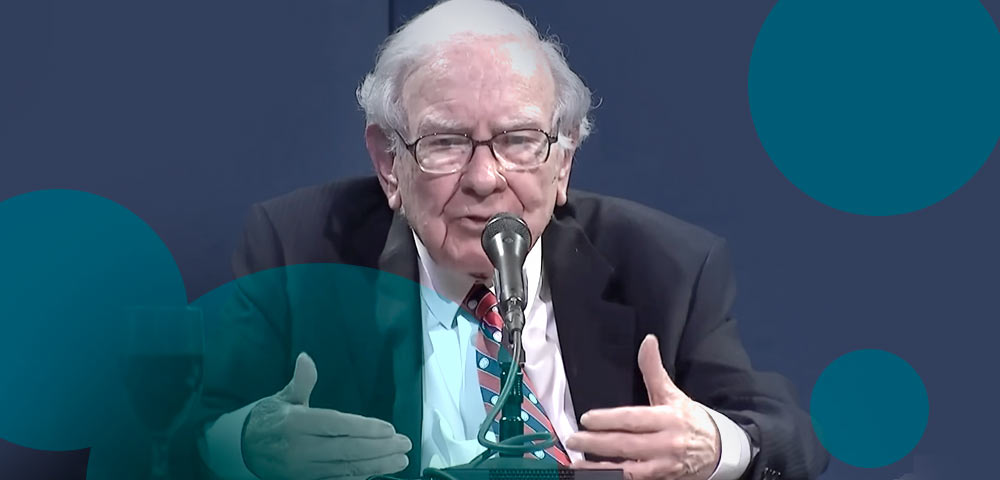
In his 2013 Berkshire Hathaway shareholder letter, Buffett disclosed instructions for the trustee responsible for managing money intended for his wife after his death.
He recommended investing 90% in a low-cost S&P 500 index fund and the remaining 10% in short-term US government bonds, specifically suggesting Vanguard for the equity allocation.
The strategy eliminates individual stock selection and minimizes investment expenses while retaining substantial exposure to American businesses.
Key takeaways
- Warren Buffett’s 90/10 retirement strategy allocates 90% to a low-cost S&P 500 index fund and 10% to short-term US government bonds, prioritizing long-term capital growth.
- Morningstar’s 2026 retirement research estimates a 3.9% starting withdrawal rate for a 30-year retirement, while historical research by Javier Estrada found a 2.3% failure rate for Buffett’s 90/10 allocation under specific assumptions.
- The strategy remains exposed to substantial stock market declines. Retirement sustainability depends on withdrawal discipline, inflation, taxes and the timing of investment losses.
However, Buffett designed the arrangement for a financially secure beneficiary. It was not presented as a universal retirement withdrawal strategy.
For retirees who depend on investment accounts to cover living expenses, the distinction between portfolio growth and sustainable income is critical.
How Warren Buffett’s 90/10 retirement strategy works

The 90/10 allocation has two components:
- 90% in an S&P 500 index fund, providing diversified exposure to major US companies and their earnings growth.
- 10% in short-term Treasury securities, providing liquidity, relatively stable principal values and interest income.
Buffett’s investment philosophy assumes that productive businesses will generate stronger long-term returns than cash and government bonds.
The S&P 500 has historically delivered average annual nominal returns of approximately 10%, although actual returns vary considerably across different periods.
Low investment costs are central to the strategy. The Vanguard S&P 500 ETF (VOO), one of the funds consistent with Buffett’s recommendation, has an annual expense ratio of 0.03%.
Over several decades, avoiding high management fees can materially improve compounded investment returns.
The strategy also reduces the need for frequent trading
Instead of attempting to identify winning companies, investors maintain exposure to the broader US equity market as its composition changes. However, diversification within the S&P 500 does not eliminate equity market risk.
The index has become increasingly concentrated in large technology companies, meaning its performance is substantially influenced by a relatively small number of businesses.
This concentration has become more relevant following the volatility in AI-related stocks during October 2026.
Why Buffett’s strategy is not designed to generate high dividend income
One of the main limitations of the 90/10 approach is its relatively low natural income.
The S&P 500 currently offers a dividend yield of approximately 1%, reflecting the substantial weight of technology and other growth-oriented companies.
Short-term US Treasury securities offer higher yields
Three-month Treasury yields were around 4.2% in early November 2026, while the 10-year Treasury yield was approximately 4.9%.
At these rates, a 90/10 portfolio generates relatively little cash income compared with its total value. The strategy therefore depends on capital appreciation as well as dividends and interest.
Retirees who require income beyond the portfolio’s natural distributions must sell part of their investments.
This is consistent with total-return investing, which treats dividends, interest and capital gains as components of the same investment return.
Selling equities after substantial losses reduces the number of shares available to participate in a subsequent recovery.
Buffett’s short-term Treasury allocation can help reduce that pressure by providing another source of liquidity.
However, the original 90/10 recommendation does not specify a complete withdrawal schedule or require investors to fund every withdrawal during a bear market exclusively from bonds. Those decisions form a separate retirement income strategy.
Morningstar estimates a 3.9% safe withdrawal rate for 2026
The traditional 4% rule remains a starting point for retirement planning. Under the original framework, retirees withdraw 4% of their portfolio’s initial value in the first year and subsequently adjust the withdrawal amount for inflation (see Current US Mortgage Rates).
The rule is designed to maintain purchasing power rather than produce a fixed percentage of the remaining portfolio every year.
Morningstar’s latest retirement income research estimates a 3.9% starting withdrawal rate for 2026 under its baseline assumptions. The research targets a 90% probability of maintaining portfolio assets throughout a 30-year retirement. This does not mean that a 3.9% withdrawal rate is appropriate for every investment allocation.
Morningstar’s results depend on portfolio composition, expected returns, retirement duration and spending assumptions. Its research also indicates that longer retirement periods require more conservative initial withdrawal rates.
Fidelity Investments continues to use approximately 4-5% as an initial planning guideline, while emphasizing that sustainable spending depends on asset allocation, inflation and market performance.
The difference between these estimates reflects distinct research assumptions. Neither guarantees that retirement savings will last.
Research supports Buffett’s 90/10 allocation, with important limitations
Javier Estrada, a finance professor at IESE Business School, tested Buffett’s recommended allocation against alternative stock and bond portfolios. His research examined 86 overlapping 30-year retirement periods using US market returns from 1900 to 2014.
The analysis assumed an initial 4% withdrawal rate, annual inflation adjustments and periodic portfolio rebalancing.
The 90/10 allocation produced a historical portfolio failure rate of 2.3%. By comparison, a conventional 60/40 stock-bond portfolio recorded no failures in the same historical test.
The 90/10 strategy generally produced stronger potential ending wealth, reflecting its greater equity exposure. These findings support Buffett’s long-term investment approach but do not establish that a 90% stock allocation is optimal for every retiree.
The research covered historical market conditions, and its overlapping retirement periods are not independent observations.
Future returns, valuations and inflation may differ substantially from those recorded in the study. Estrada also examined modified withdrawal strategies that adjusted the source of withdrawals according to market performance.
The findings suggest that withdrawal management can be as important as the initial asset allocation.
J.P. Morgan emphasizes the risk of retiring during a market downturn
J.P. Morgan Asset Management’s 2026 retirement research places significant emphasis on the sequence of investment returns.
Sequence-of-returns risk arises when substantial portfolio losses occur during the early years of retirement while withdrawals continue.
Poor returns at the beginning of retirement can permanently impair portfolio sustainability, even if average long-term returns subsequently recover.
J.P. Morgan’s retirement specialists recommend considering flexible withdrawal policies that respond to market conditions.
Such strategies can include reducing discretionary withdrawals during severe market declines and maintaining sufficient liquidity to avoid forced equity sales. However, cash reserves have limitations.
Short-term Treasury yields fluctuate as securities mature and proceeds are reinvested. Maintaining a fixed 10% bond allocation also requires decisions about rebalancing.
After strong equity performance, restoring the target allocation generally involves selling some stocks and buying Treasury securities.
After market declines, strict rebalancing may require the opposite. A strategy that instead spends down the Treasury reserve during equity market losses can temporarily move away from the original 90/10 allocation.
Both approaches have advantages and risks, but they should not be treated as identical.
How retirement income is taxed in 2026
The tax treatment of retirement withdrawals can materially affect the income available for spending.
For US investors, the distinction between traditional IRAs, Roth accounts and taxable investment accounts is particularly important.
Dividends and interest earned inside a traditional IRA generally do not generate annual income tax while they remain in the account.
Withdrawals from traditional IRAs are generally taxed as ordinary income, regardless of whether the money originated from dividends, Treasury interest or investment sales.
Qualified Roth IRA withdrawals, by contrast, are generally tax-free. Social Security benefits are subject to separate federal tax rules.
Depending on combined income, up to 85% of Social Security benefits may be included in taxable income.
The relevant combined-income thresholds remain $25,000 and $34,000 for single filers, and $32,000 and $44,000 for married couples filing jointly.
The 2025 tax legislation did not eliminate federal taxation of Social Security benefits.
Instead, it introduced additional deductions for eligible older taxpayers.
For the 2026 tax year:
- The standard deduction is $16,100 for single filers and $32,200 for married couples filing jointly.
- An additional standard deduction of $2,050 applies to eligible unmarried taxpayers aged 65 or older.
- A separate enhanced deduction of up to $6,000 is available to eligible taxpayers aged 65 or older through 2028.
- The enhanced deduction begins to phase out when modified adjusted gross income exceeds $75,000 for single filers or $150,000 for married couples filing jointly.
These provisions can reduce the federal tax burden on retirement income.
However, eligibility and actual tax savings depend on filing status, income and other deductions. State taxes and healthcare costs must also be considered.
The standard Medicare Part B premium is $202.90 per month in 2026, with higher premiums for certain higher-income beneficiaries.
Required minimum distributions now begin at age 75 for younger retirees
Required minimum distributions are another important consideration for traditional IRA holders.
Under the SECURE 2.0 Act, individuals born in 1960 or later generally begin required minimum distributions at age 75. The age-73 requirement applies to certain older birth cohorts.
This distinction matters because retirees reaching age 65 in 2026 generally have several additional years before mandatory withdrawals begin.
During that period, Roth conversions may offer opportunities to manage future taxable income. However, conversions themselves are generally taxable. They can also increase the taxable portion of Social Security benefits and affect income-related Medicare premiums.
Consequently, filling a nominally low federal tax bracket does not necessarily mean the entire conversion is taxed at that bracket’s stated marginal rate.
The interaction between IRA withdrawals, Social Security taxation and the enhanced senior deduction makes tax planning more complex than the 90/10 investment allocation itself.
Is a 90% stock allocation too aggressive for retirement?
Buffett’s strategy offers substantial exposure to long-term equity growth, but it also leaves retirees vulnerable to large market corrections.
A portfolio with 90% invested in equities will experience significant losses during severe bear markets.
Short-term Treasury securities reduce volatility but cannot fully offset a major stock market decline when they represent only 10% of assets.
The appropriate allocation depends on retirement duration, income requirements, financial flexibility and tolerance for investment losses.
Current Treasury yields make larger fixed-income allocations more attractive than they were during the prolonged period of exceptionally low interest rates. A greater allocation to bonds can reduce portfolio volatility and provide more predictable cash flows. However, it also changes long-term growth potential and inflation exposure.
Fidelity and J.P. Morgan both emphasize the importance of matching retirement investments to spending requirements rather than relying exclusively on expected market returns.
Guaranteed lifetime income from Social Security, pensions or appropriately structured annuities can reduce dependence on portfolio withdrawals for essential spending.
Such arrangements were not part of Buffett’s simple trust instructions, but they remain relevant to broader retirement income planning.
For UK investors, the same investment principles can apply, but withdrawals from pensions, SIPPs and ISAs are governed by different tax rules. US IRA deductions and Social Security thresholds should not be applied to British retirement accounts.
Warren Buffett retirement income strategy outlook
Buffett’s 90/10 strategy remains a credible low-cost approach to long-term investing. Its strongest features are simplicity, broad equity exposure and minimal management expenses.
Historical research supports the potential for substantial long-term growth, while the short-term Treasury allocation provides liquidity during market declines.
However, current retirement research does not support treating the allocation as a universal solution.
Morningstar’s 3.9% withdrawal estimate, J.P. Morgan’s work on sequence-of-returns risk and Fidelity’s guidance on income sustainability all point to the importance of adapting withdrawals to individual circumstances.
Three considerations are particularly relevant in the current market:
- The S&P 500’s exposure to large technology companies increases sensitivity to changes in AI investment expectations and valuations.
- Treasury yields near 4%-5% provide meaningful income opportunities, but short-term rates can decline when securities are reinvested.
- Adjusting spending during market downturns can help reduce the damage caused by selling investments after substantial losses.
Buffett’s investment advice addresses how to allocate capital efficiently. It does not resolve every question about when to withdraw money, how much to spend or how to minimize taxes.
For retirement income planning in 2026, the 90/10 rule remains a useful investment framework, but its long-term sustainability depends on the withdrawal policy built around it.
…………………..
AUTHOR: Tetiana Mykhailova – Senior Investment Analyst & CFO of Beinsure, Commercial Director of Finance Media