- Goldman Sachs maintains S&P 500 forecast of 8,000
- JPMorgan expects earnings growth to support further gains
- Morgan Stanley sees the correction approaching its final stages
- Bank of America sees earnings growth spreading beyond technology
- US economic data presents a mixed outlook for the Federal Reserve
- S&P 500 technical analysis: Is 8,000 achievable in November?
- S&P 500 forecast for November and year-end 2026
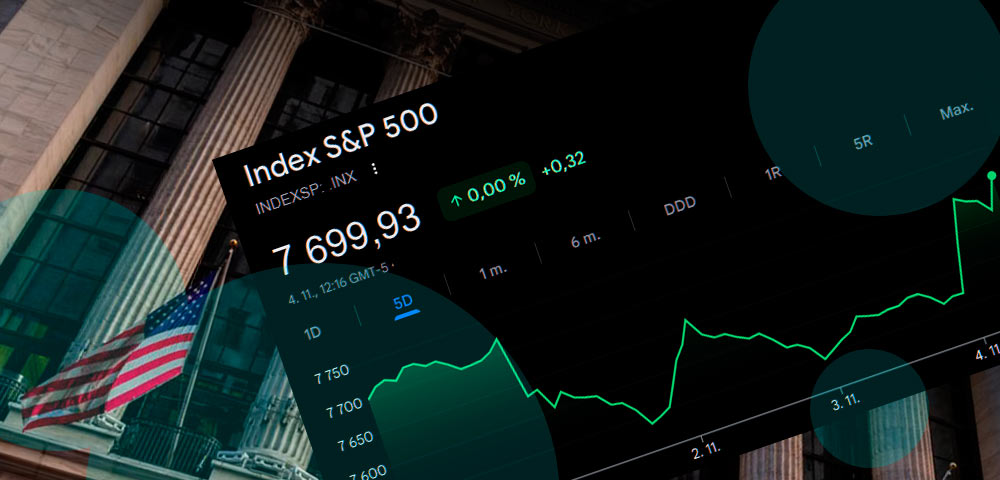
The S&P 500 rallied on November 4, 2026, as investors reassessed US political risks following the Democratic victory in the midterm congressional elections.
The benchmark index advanced 129.88 points, or 1.72%, to 7,698.80 by 9:46 a.m. ET, recovering from the technology-led selloff that weighed on equities throughout October.
- The S&P 500 gained 1.72% to 7,698.80 on November 4 after Democrats secured control of both chambers of Congress.
- Goldman Sachs, JPMorgan and Morgan Stanley have each projected an S&P 500 level of 8,000 by year-end 2026, supported by corporate earnings.
- Elevated Treasury yields, AI investment costs and uncertainty over Federal Reserve policy remain the principal risks to the recovery.
The advance was relatively broad, with eight of the index’s 11 sectors trading higher during the morning session. Consumer discretionary stocks led the gains, supported by a sharp recovery in Amazon and other major companies.
Healthcare providers and renewable energy businesses also advanced as investors considered how the new congressional balance could affect government spending and regulation.
The market’s attention has shifted from election uncertainty to corporate earnings, inflation and the sustainability of AI investment. Stock Market Today: US stocks surge after Democrats sweep Congress. Dow, S&P 500 and Nasdaq rally as Goldman Sachs, Morgan Stanley and Citi assess the market outlook.
Goldman Sachs maintains S&P 500 forecast of 8,000
Goldman Sachs Research has a year-end 2026 target of 8,000 for the S&P 500.
The bank raised its forecast from 7,600 earlier this year, citing stronger corporate earnings and improving expectations for economic growth.
From the index’s November 4 morning level of 7,698.80, reaching 8,000 would imply approximately 3.9% additional upside.
Goldman Sachs argues that earnings growth, rather than expanding valuation multiples, has been the principal driver of the US equity market’s 2026 advance.
The distinction matters because rising corporate profits can support stock prices even when interest rates remain elevated.
The bank also expects artificial intelligence to contribute to productivity growth. Its research incorporates an estimated 0.4 percentage-point contribution from AI-related productivity to S&P 500 earnings growth in 2026, increasing to approximately 1.5 percentage points in 2027.
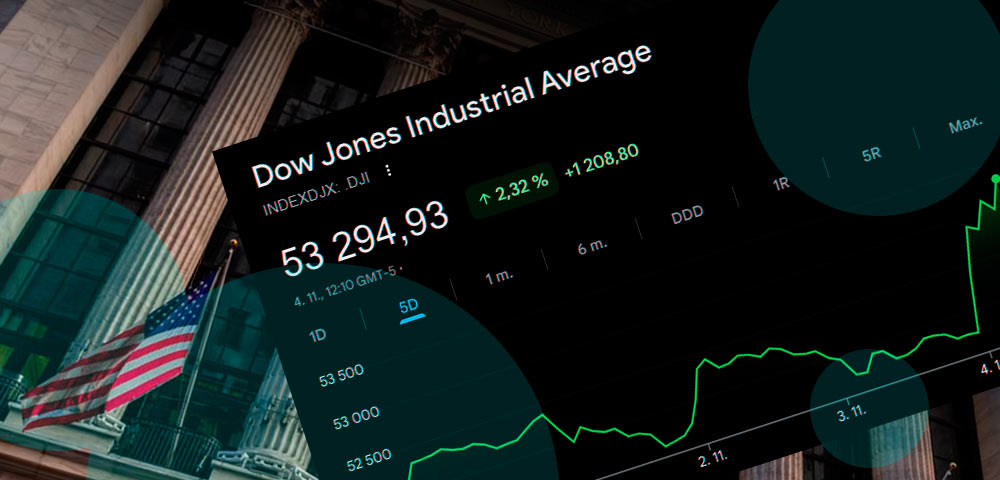
However, these benefits depend on whether businesses can turn AI investment into measurable productivity improvements and earnings. Dow Jones forecast: Dow surges 1,200 points as Wall Street bets on political gridlock
Goldman Sachs also expects the Democratic election victory to affect fiscal negotiations. Its economists estimate that reversing selected government spending cuts could increase expenditure by approximately 0.25% of GDP in 2027.
Such changes could provide some economic support, particularly for healthcare and consumer-related industries.
JPMorgan expects earnings growth to support further gains
JPMorgan also raised its S&P 500 year-end target to 8,000 earlier in 2026. The bank’s constructive outlook rests on stronger corporate earnings and expectations that investment in AI will eventually translate into higher revenue.
JPMorgan has highlighted the strength of quarterly earnings results, with a substantial majority of reporting companies exceeding analyst expectations.
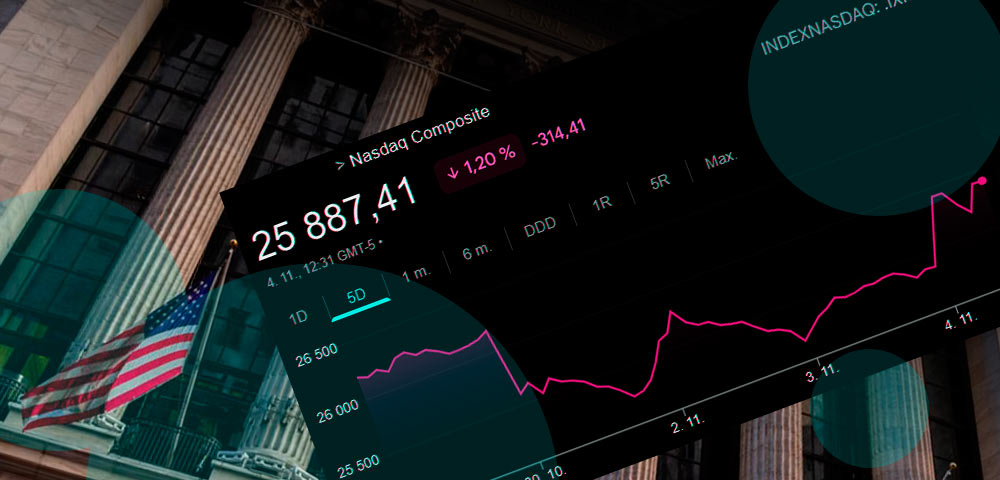
However, investors have become less willing to reward companies simply for announcing larger AI investment programs. Nasdaq forecast today: Tech stocks rally after Wall Street reassesses AI spending and regulation.
Recent selling in major technology stocks followed concerns about weaker free cash flow, rising debt issuance and the financial returns on new data centers.
For the S&P 500, this creates a potential conflict.
Large technology companies remain important contributors to index earnings, but their high market weights also expose the benchmark to concentrated valuation risk.
Continued earnings growth outside technology would make an advance toward 8,000 more sustainable.
Morgan Stanley sees the correction approaching its final stages
Morgan Stanley’s chief US equity strategist Mike Wilson believes the market correction is nearing its final phase.
In a November 2 report, Wilson argued that the midterm elections could remove a significant source of uncertainty and create opportunities in quality cyclical stocks. The bank maintains a base-case S&P 500 year-end target of 8,000.
However, Morgan Stanley previously identified 7,100-7,200 as a potential tactical downside area if financial conditions tightened further.
The difference between these levels reflects the market’s sensitivity to earnings expectations and interest rates.
Wilson has noted that approximately 60% of Russell 3000 companies have already experienced corrections of at least 20% from their respective highs since June. This suggests that weakness beneath the major indexes has been more extensive than headline S&P 500 performance indicates.
The bank expects better opportunities to emerge in companies with reliable earnings and strong cash generation. It also warns that investors are increasingly scrutinizing the difference between reported earnings and actual free cash flow.
That is particularly relevant for technology companies financing large infrastructure projects.
Bank of America sees earnings growth spreading beyond technology
Bank of America’s US equity strategists have emphasized the broadening of corporate profit growth beyond the largest technology companies.
BofA Global Research raised the bank’s 2026 earnings growth expectations during the year as corporate results exceeded forecasts.
Her analysis identified stronger earnings contributions from industrial, energy, materials and other nontechnology businesses.
This broadening is important for the S&P 500 because a market driven by several hundred companies is generally less dependent on the valuations of a small group of technology leaders.
However, BofA also recognizes substantial risks surrounding data center development. Economist Stephen Juneau expects political restrictions to make AI infrastructure projects more expensive and slower to complete, without necessarily ending the investment cycle.
That could pressure semiconductor suppliers and infrastructure developers while reducing capital expenditure at major cloud providers.
US economic data presents a mixed outlook for the Federal Reserve
Recent economic reports indicate that US activity remains resilient. Factory orders increased 1.8% in September, while the October Logistics Managers’ Index rose to 70.7.
The stronger figures suggest that manufacturing and distribution activity continued expanding ahead of the holiday season. However, persistent cost inflation remains a concern.
The Logistics Managers’ Index showed a sharp increase in inventory expenses, while manufacturing surveys indicated that input prices remained elevated.
The Federal Reserve must therefore balance resilient economic growth against the risk of persistent inflation.
The yield on the 10-year US Treasury note declined toward 4.9% on Wednesday, providing some support for equity valuations. A sustained reduction in bond yields would improve the relative attractiveness of stocks.
Conversely, renewed increases in Treasury yields could compress valuation multiples even if corporate earnings continue growing.
S&P 500 technical analysis: Is 8,000 achievable in November?
The index’s move toward 7,700 has improved short-term momentum following October’s correction. The 7,700 area represents an immediate level to monitor. A sustained breakout would bring the index closer to the 7,800-7,900 range before a potential test of 8,000.
The 8,000 level is especially relevant because it corresponds to year-end targets published by several major investment banks.
On the downside, the 7,500-7,600 range represents an important area for assessing whether the recovery is holding. A sustained move below that zone would indicate renewed selling pressure.
Morgan Stanley’s earlier 7,100-7,200 tactical downside range remains relevant if AI earnings expectations deteriorate or financial conditions tighten substantially.
Technical levels should not be interpreted as guaranteed support or resistance.
S&P 500 forecast for November and year-end 2026
The outlook remains constructive but depends on earnings and interest rates rather than the election result alone.
Three scenarios are relevant:
- Bullish forecast: 8,000-8,100. Earnings expectations improve, Treasury yields decline and major technology companies demonstrate stronger returns on AI investment.
- Base forecast: 7,600-7,900. The index consolidates after Wednesday’s rally as investors await further earnings and inflation data.
- Bearish forecast: 7,100-7,300. AI spending concerns intensify, earnings forecasts weaken or higher inflation forces additional monetary tightening.
The scenarios are analytical estimates. The 8,000 year-end target is separately attributable to Goldman Sachs, JPMorgan and Morgan Stanley. The immediate focus is the October employment report on November 6.
Investors will also monitor the next Federal Reserve decision, developments in the Iran conflict and negotiations over the December 11 government funding deadline.
Historical post-midterm rallies provide some support for sentiment, but they do not eliminate the risk of another correction. In 2018, US equities rallied immediately after the elections before falling sharply as monetary conditions tightened.
For the S&P 500 to reach 8,000, corporate earnings will need to continue improving without a significant increase in borrowing costs.
That combination remains possible, but the market’s reduced tolerance for expensive valuations leaves little room for disappointing guidance.