- Amazon, 3M and Apple drive the Dow rally
- Morgan Stanley sees opportunities in quality cyclical stocks
- Goldman Sachs expects fiscal negotiations to influence stocks
- Wells Fargo warns against ignoring interest rates
- Dow Jones technical outlook: Can the index break above 53,000?
- Dow Jones forecast for November and year-end 2026
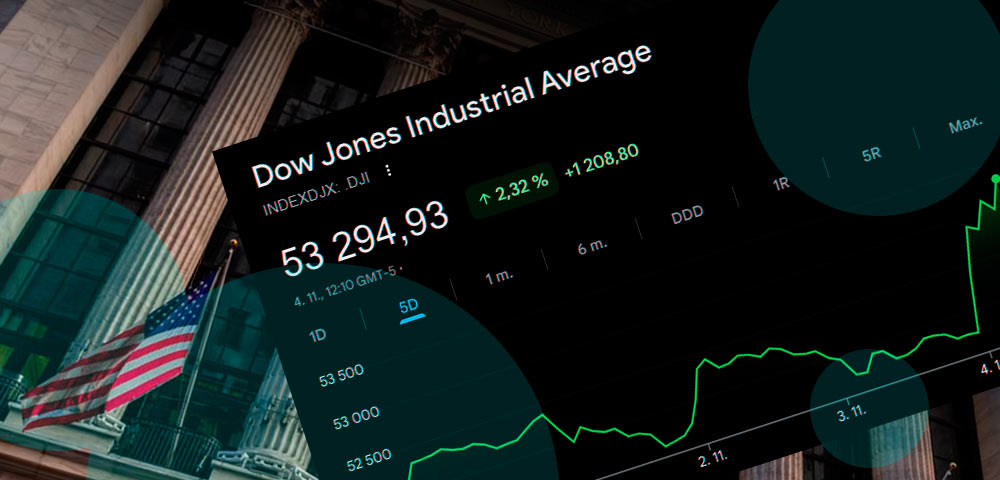
The Dow Jones Industrial Average surged 2.3% on Wednesday as investors welcomed the prospect of divided government following a sweeping Democratic victory in the US midterm elections.
The index had advanced 1,203 points to 52,989.79, reversing the previous session’s 197-point decline. The rally followed a turbulent October during which investors reduced exposure to expensive technology stocks and moved toward businesses with stronger cash flow and more predictable earnings.
- The Dow Jones Industrial Average jumped 1,203 points to 52,989.79 on November 4 as Democrats gained control of both chambers of Congress.
- Morgan Stanley sees opportunities in quality cyclical stocks, while Goldman Sachs expects changes in fiscal negotiations, tariffs and spending priorities.
- Lower oil prices and Treasury yields support the rally, but the October jobs report and persistent inflation could limit further gains.
Democratic control of both the House of Representatives and Senate initially unsettled futures markets. However, stocks reversed their overnight losses after President Donald Trump indicated that he would accept the election results.
Investors began pricing in a reduced likelihood of major changes to corporate taxation and other legislation, while considering the possibility of a less aggressive trade policy and progress toward resolving the Iran conflict (see Stock Market Today: S&P 500, Nasdaq, Dow Jones jump after Democratic election win).
Amazon, 3M and Apple drive the Dow rally
Amazon and 3M were among the largest contributors to Wednesday’s advance.
Amazon shares gained approximately 7.4%, while 3M rose 7.3%. Their combined increases added roughly 186 points to the index. Apple, Microsoft and Sherwin-Williams also contributed to the rally.
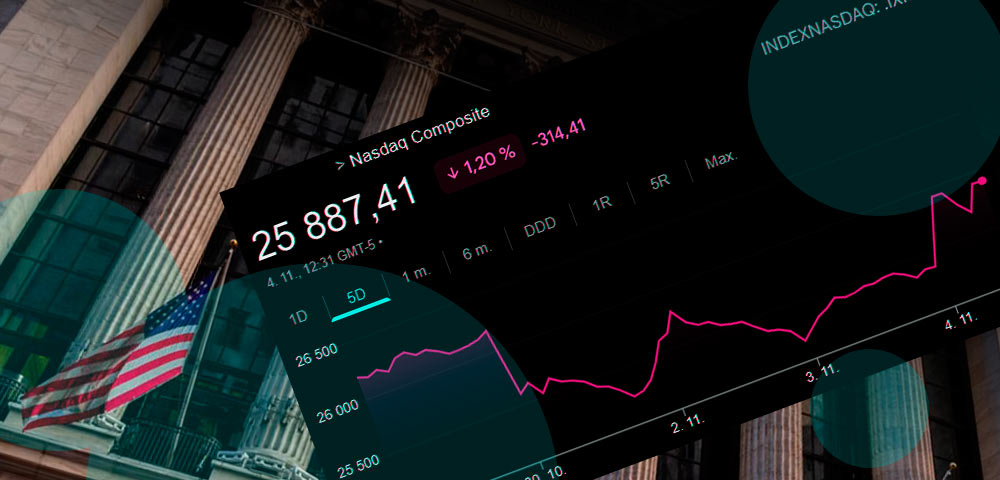
Unlike the S&P 500 and Nasdaq Composite, the Dow is price-weighted. Companies with higher share prices have greater influence on daily index movements, regardless of their total market capitalization. Nasdaq forecast today: Tech stocks rally after Wall Street reassesses AI spending and regulation.
Consequently, the Dow’s performance depends not only on overall market sentiment but also on relatively concentrated movements among its 30 constituents.
McDonald’s provided additional support after reporting third-quarter adjusted earnings of $3.57 per share, exceeding expectations. Revenue reached $7.16 bn, while global systemwide sales increased 4% and consolidated operating income rose 7%.
The results suggest that major consumer businesses continue generating earnings growth despite pressure on household purchasing power.
Industrial companies also benefited from expectations that lower energy prices and reduced tariff uncertainty could improve operating margins.
Morgan Stanley sees opportunities in quality cyclical stocks
Morgan Stanley’s chief US equity strategist Mike Wilson believes the equity market correction is approaching its final stages. In a November 2 assessment, Wilson identified the midterm elections as a potential catalyst for renewed investor demand. His analysis favors quality cyclical companies whose valuations have declined despite relatively resilient earnings.
The distinction is important for the Dow, which has substantial exposure to industrials, financial services, healthcare and established consumer businesses.
Morgan Stanley argues that investors have become more sensitive to earnings durability and free cash flow after months of heavy spending on artificial intelligence infrastructure.
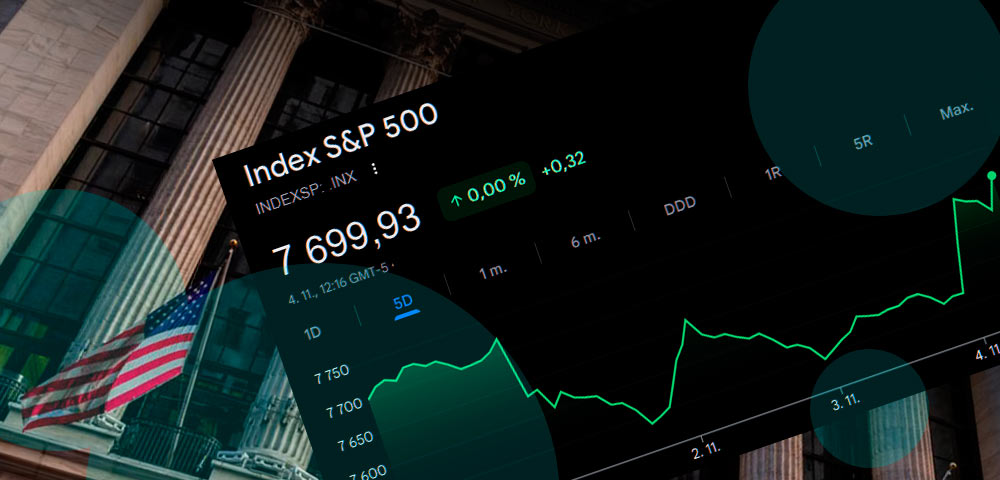
The S&P 500 rallied as investors reassessed US political risks following the Democratic victory in the midterm congressional elections.
This change could favor companies that generate cash without relying on large amounts of additional borrowing. However, Wilson does not expect immediate monetary easing from the Federal Reserve.
A prolonged period of elevated borrowing costs remains a risk for industrial companies, manufacturers and businesses exposed to consumer credit.
Morgan Stanley also warns that renewed escalation in the Middle East or additional tariffs could reverse part of the post-election rally.
Goldman Sachs expects fiscal negotiations to influence stocks
Goldman Sachs expects the Democratic takeover of Congress to strengthen the opposition’s position in negotiations over tariffs, federal spending and the Iran conflict.
The bank estimates that reversing selected spending cuts could increase federal expenditure by approximately 0.25% of GDP in 2027. This could support demand across healthcare, infrastructure and other industries dependent on government spending.
However, Democrats lack sufficient Senate votes to overcome presidential vetoes without Republican support. As a result, major legislative changes remain uncertain.
For Dow constituents, lower tariff risks could be particularly important. Industrial manufacturers and companies with international supply chains have faced higher costs and planning uncertainty from trade restrictions.
Reducing those pressures could help earnings even without a substantial increase in revenue.
The December 11 federal funding deadline will provide an early indication of whether negotiations between Congress and the White House can produce meaningful policy changes.
Wells Fargo warns against ignoring interest rates
Wells Fargo Investment Institute expects the economy, corporate earnings and borrowing costs to matter more for overall equity performance than the election results. Dow Jones forecast: Dow surges 1,200 points as Wall Street bets on political gridlock.
The bank identifies fiscal policy, energy prices and consumer resilience as important variables for the remainder of 2026. The 10-year US Treasury yield declined toward 4.9% on Wednesday as investors reassessed inflation expectations.
West Texas Intermediate crude also fell toward $93 per barrel. Lower energy prices could reduce costs for transportation, manufacturing and consumer-facing companies. However, recent economic reports suggest that demand remains strong enough to complicate the Federal Reserve’s inflation fight.
September factory orders increased 1.8%, above expectations, while the October Logistics Managers’ Index reached 70.7.
The logistics report also showed inventory costs at their highest level since March 2022. This combination of expanding activity and persistent cost pressures could keep interest rates elevated.
Dow Jones technical outlook: Can the index break above 53,000?
The Dow’s November 4 rally brought the index close to the 53,000 level, an important near-term psychological threshold.
A sustained move above 53,000 would indicate that buyers are willing to extend the recovery beyond the immediate election reaction.
The next potential upside area is 54,000, although reaching it would require continued support from corporate earnings and bond markets.
On the downside, 52,000 represents an initial area to monitor following Wednesday’s sharp advance. A move back below 52,000 would suggest that investors are reducing exposure after the relief rally.
The November 3 closing level near 51,787 provides another reference point for assessing whether the post-election gains are holding. These are technical reference levels, not investment bank price targets.
Dow Jones forecast for November and year-end 2026
Morgan Stanley’s constructive assessment of quality cyclical stocks supports the possibility of further gains if earnings remain resilient.
Goldman Sachs identifies potential benefits from fiscal negotiations and reduced trade uncertainty.
Wells Fargo remains focused on inflation and bond yields, which could limit equity valuations if financial conditions tighten again.
Three conditional scenarios emerge from these factors:
- Bullish: The Dow moves toward 54,000-55,000 if oil prices continue declining, earnings forecasts improve and Treasury yields stabilize.
- Base: The index trades between 52,000-54,000 as investors assess political developments and economic data.
- Bearish: The Dow retreats toward 50,000-51,500 if inflation accelerates, bond yields rise or geopolitical tensions intensify.
These ranges are independent analytical scenarios, not forecasts published by the investment banks. The next important test is the October US employment report on November 6.
For the Dow, the strongest foundation for a sustained recovery would be continued earnings growth among industrial and consumer companies, accompanied by lower inflation and stable borrowing costs.
Wednesday’s rally has improved short-term momentum. The coming employment and inflation data will determine whether the index can sustain its advance beyond 53,000.