The US, China and Europe are moving toward autonomous mobility, but each region is taking a different route. The split comes less from technology alone than from policy choices, capital models and transport priorities, according to the Allianz report.
In the US, autonomous mobility is moving through private-sector rollout. Software-led companies are scaling robotaxi services city by city, using commercial operations to gather road data, test safety performance and refine service economics.
For European commuters, driverless cars still feel distant. In several large US cities, they already operate as part of daily urban transport.
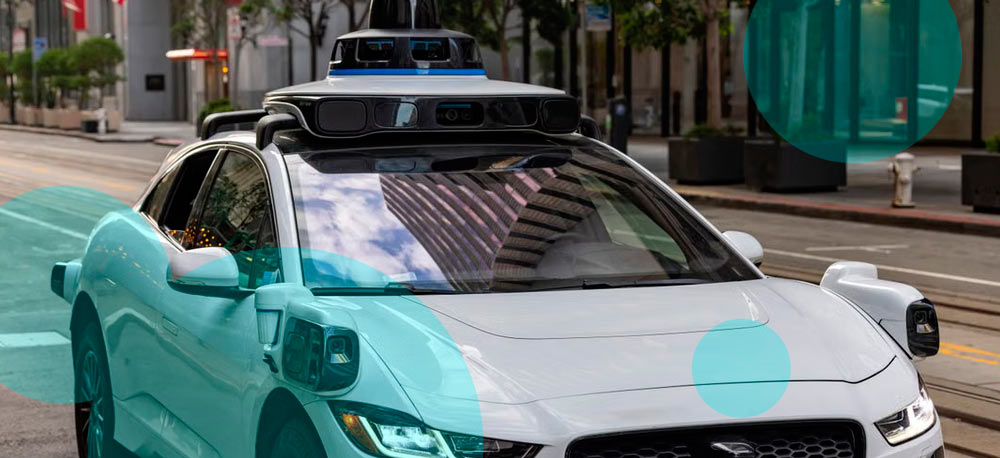
Waymo shows how fast the US model is moving. In February 2026, the company said it was providing more than 400,000 rides a week across six large metropolitan areas. That compared with more than 200,000 paid trips a week in March 2025.
San Francisco offers a clearer market signal. Research cited by Fast Company found that Waymo had captured 27% of the city’s ride-share market by spring 2025.
The US approach favors speed, investor capital and rapid product learning. It also creates friction. Companies deal with fragmented state and city rules, public concern over safety, and local resistance when autonomous vehicles disrupt traffic or emergency response routines.
China treats autonomous mobility as a national industrial priority. Government policy, funding and urban planning support deployment, with driverless systems tied to smart-city programs and China’s broader ambitions in automotive technology.
Regulators in China use a lessons-learned model. Rules change as road testing exposes new problems, which gives companies room to move faster than in more restrictive regimes.
- Robotaxi services in Beijing, Guangzhou, Shanghai and Shenzhen have moved beyond early trials. In some districts, autonomous taxis are more visible than human-driven ride-hailing vehicles.
- Pony ai reported strong productivity during the Chinese New Year holiday, with robotaxis averaging 26 rides per vehicle per day, Allianz stated. That level of use exceeded the productivity of human drivers during the same period.
China’s model scales fast because public authorities, local technology firms and automakers often move in the same direction. German manufacturers also use China as a testing and partnership market. Volkswagen’s work with Xpeng and Horizon Robotics shows how foreign automakers are trying to close the gap in driver-assistance and autonomous systems.
Fast scaling carries its own risk, according to Beinsure. A software update in Wuhan reportedly caused a broad robotaxi outage, showing how operational concentration creates failure points when fleets depend on the same digital stack.
Europe is moving more cautiously and with closer attention to public transport. The region is less focused on replacing private ride-hailing drivers quickly and more focused on fitting autonomous systems into existing mobility networks.
Labor shortages are pushing Europe toward autonomy for practical reasons. In high-wage countries, the question is not only whether automation removes drivers. It is whether enough drivers will exist to keep bus and local transport services running.
The ambition in Europe is not simply to put driverless cars on the road. It is to integrate autonomous mobility with public transport in a way that is safe, efficient and socially useful.
Stefan Sellschopp, autonomous driving expert at Allianz Partners
According to the Federal Association of German Bus Operators and the Association of German Transport Companies, German public transport already faces a shortage of 20,000 bus drivers. That shortage is expected to almost triple by 2030, partly because more than half of drivers are already over 50.
Across Europe, more than 105,000 bus driver jobs were unfilled in 2023. The International Road Transport Union expects the figure to double by 2028.
Autonomous shuttles and robotaxis therefore look less like a tech luxury in parts of Europe. They are becoming one of the few realistic tools for maintaining service levels as transport labor tightens.
The three regions show different versions of the same transition. The US pushes commercial robotaxi deployment through private operators. China uses state-backed scale and industrial coordination. Europe puts safety, regulation and public transport fit ahead of speed.
The driverless future will not arrive as one global model. It will look American in some cities, Chinese in others, and European where autonomy has to plug into buses, rail, local authorities and public trust.