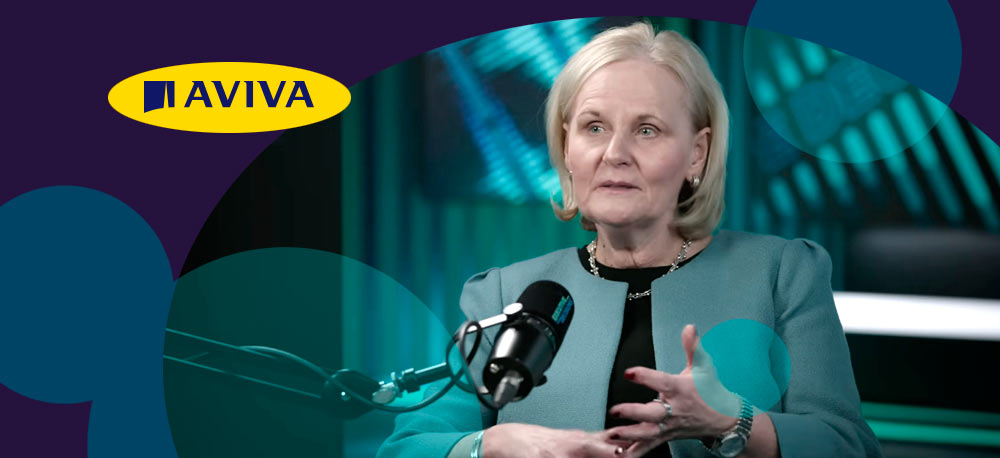
Aviva CEO Amanda Blanc has called for insurance professional standards to reflect growing use of artificial intelligence, while also warning that thousands of new homes being built in England face rising flood exposure that could eventually make some properties uninsurable.
Speaking at the Chartered Insurance Institute’s annual conference, Blanc urged the professional body to update its qualifications, standards and guidance for an insurance workforce increasingly working alongside AI.
She warned that companies and professionals that fail to adapt risk becoming irrelevant as AI becomes more common across underwriting, claims and other insurance functions.
Her comments come as Aviva expands its own use of AI. The insurer has been introducing technology across medical underwriting and claims, including a generative AI tool that reads and summarises medical reports and extracts information relevant to underwriting decisions.
Aviva is also preparing an AI virtual assistant and AI-enabled claims agents.
Blanc’s comments to the CII put AI literacy alongside established insurance knowledge as an area that professional training will need to address as insurers change how work is carried out.
The Aviva chief also raised concerns about another long-term insurance issue: the growing exposure of UK housing to flooding. She told the BBC that flood risk is “absolutely increasing”, while current construction patterns indicate around 115,000 new homes will be built in flood zones over the next decade.
“That doesn’t seem to me to make sense. We need to think about where those homes are being built,” Blanc said. She added that England was “for sure” building properties that might become uninsurable at some point in the future.
Around 6.3 mn homes and businesses in England are already at risk of flooding, according to the Environment Agency. Aviva research found one in nine homes built between 2022 and 2024 faces medium to high flood risk.
The insurer also estimates that nearly one-third of homes built in 2024 will face some level of flooding risk by 2050. One in seven is expected to face medium to high risk as extreme weather becomes more severe.
Blanc said authorities already know where many flood-prone areas are located, making planning decisions an important part of managing future insurance exposure. She also argued that homes built close to flood zones require different construction approaches because property design affects how vulnerable buildings are to water damage.
You can do all sorts of different things to your property to make it more or less vulnerable to flood.
Earlier this year, the Met Office estimated that record-breaking wet winters similar to the UK’s 2023-24 season have shifted from roughly once every 80 years to once every 20 years under current levels of global warming.
A Department for Environment, Food and Rural Affairs spokesperson said the government has committed record investment intended to protect nearly 900,000 properties from billions of pounds of flood damage. The department said proposed planning changes are intended to stop housebuilding in areas exposed to flooding while supporting the government’s target of 1.5 mn new homes.
Blanc also used her BBC interview to urge the government to avoid policy “kite flying” before Chancellor John Healey’s first Budget on Oct. 28. She said speculation around pension policy before recent Budgets had prompted unusually high levels of withdrawals from private pensions.
Aviva is a major UK pension provider, and Blanc said withdrawals reached around 30 times the normal level during the past year. She warned that customers who take tax-free lump sums in response to speculation cannot simply put that money back later if the expected policy change does not happen.
“Effectively we saw in the last year 30 times the normal withdrawal from pensions that we would normally see, which is clearly something which customers may regret afterwards because once you take your tax-free lump sum out, you can’t put it back in,” Blanc said.
The comments place technology, climate exposure and consumer behaviour among the issues Aviva expects insurers and policymakers to deal with as the market changes. For Blanc, both AI adoption and flood risk require earlier action rather than adjustments after established practices have already become difficult to sustain.