Overview
- California’s insurance crisis puts rate regulation under scrutiny
- Ben Allen’s insurance legislation targets insurer accountability
- Jane Kim’s political record centers on consumer and tenant protections
- California Democrats split over insurance reform proposals
- Kim proposes state-run wildfire and flood insurance
California’s 2026 insurance commissioner election has become a contest over how the state should address rising insurance costs, shrinking coverage availability and the financial consequences of increasingly destructive wildfires.
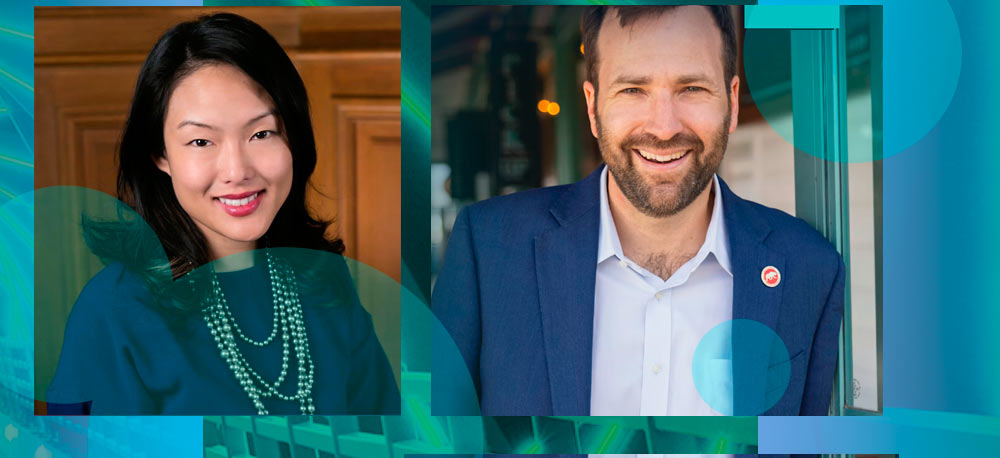
Two Democrats, former San Francisco Supervisor Jane Kim and state Sen. Ben Allen, are competing for a regulatory position whose decisions affect one of the world’s largest insurance markets.
Both candidates have records of consumer advocacy and promise tougher oversight of insurance companies. Their approaches to resolving California’s insurance problems, however, differ substantially.
- California’s 2026 insurance commissioner election pits Democrats Jane Kim and Ben Allen against each other as rising wildfire risks, higher premiums and insurer withdrawals put pressure on the state’s insurance market.
- Jane Kim, endorsed by Bernie Sanders, proposes state-run disaster insurance covering wildfires and floods, funded through existing insurance premiums. Ben Allen, backed by Jane Fonda’s climate political action committee, favors wildfire risk reduction, stronger regulatory enforcement and measures to preserve private insurance coverage.
- California homeowners insurance rates rose 5% in the first half of 2026. New regulations allow insurers to incorporate reinsurance costs and catastrophe models into pricing, while legislation signed this year will strengthen oversight of insurer conduct and policy nonrenewals.
Kim, backed by U.S. Sen. Bernie Sanders, wants California to establish a public disaster insurance system that would separate wildfire and flood risks from conventional insurance policies. Allen, supported by Jane Fonda’s climate political action committee, proposes a coordinated effort to reduce wildfire exposure, strengthen insurance regulation and encourage private insurers to maintain coverage.
The differences were evident during an October 8 debate moderated by CalMatters. Kim characterized Allen’s approach as an attempt to “tinker” with the existing system, while Allen described her proposal as “totally unprecedented and unmoored.”
The election comes after a decade of destructive and deadly California wildfires that have increased claims costs, disrupted insurance availability and raised questions about the long-term sustainability of property insurance in high-risk communities.
Although homeowners insurance dominates the discussion, the commissioner’s authority extends considerably further. California’s Department of Insurance regulates property and casualty insurance rates and insurer practices across home, auto, commercial, renters, pet and travel policies. Its activities also affect landlords, businesses, life insurance customers and workers’ compensation coverage.
The next commissioner will inherit a market already undergoing major regulatory changes, with disagreements continuing over whether those measures adequately protect consumers or provide sufficient incentives for insurers to operate in California.
California’s insurance crisis puts rate regulation under scrutiny
Several major insurers have reduced or suspended new homeowners insurance business in wildfire-prone areas in recent years. Some have also declined to renew existing policies, arguing that California’s regulatory process prevented premiums from keeping pace with their exposure to catastrophic losses.
These withdrawals have pushed additional homeowners into the California FAIR Plan, the state’s insurer-of-last-resort arrangement. Participating insurers are required to provide access to coverage for property owners unable to obtain policies through the conventional market.
FAIR Plan policies generally cost more and provide narrower protection than standard homeowners insurance, increasing financial pressure on households already facing rising property-related expenses.
Insurance Commissioner Ricardo Lara introduced a series of regulatory changes in 2025 intended to improve market conditions.
The reforms include faster reviews of insurers’ rate applications and permission for companies to incorporate reinsurance costs and catastrophe risk models into their pricing calculations.
Reinsurance allows primary insurers to transfer portions of their risk to other insurance companies. Catastrophe models estimate potential losses from events such as wildfires, helping insurers assess exposure that may not be fully reflected in historical claims data.
California’s Insurance Department maintains that the changes are beginning to produce results, pointing to insurers that have announced plans to expand policy writing in the state.
For consumers, the reforms have generally been associated with higher premiums. According to insurance comparison platform Insurify, California homeowners insurance rates increased 5% during the first six months of 2026, among the largest increases nationwide.
Auto insurance affordability presents another problem. California’s average car insurance premiums remain among the highest in the United States, partly reflecting increases in vehicle prices and replacement costs.
Both commissioner candidates support raising awareness of California’s existing low-cost auto insurance program for qualifying low-income drivers. Kim also proposes expanding eligibility, a policy Allen opposes because he argues that broader participation could allow drivers with greater financial resources to benefit from a program intended for lower-income households.
Survivors of the January 2025 Eaton and Palisades wildfires have reported difficulties rebuilding their homes because of delayed or denied insurance claims, including disputes involving smoke damage.
The Insurance Department can examine insurer practices and conduct investigations, but its authority to compel corrective action has historically been limited.
Ben Allen’s insurance legislation targets insurer accountability
Allen, a state senator since 2014 who is leaving the Legislature because of term limits, has spent his final legislative session advancing measures addressing insurance enforcement, wildfire protection and policy nonrenewals.
Governor Gavin Newsom recently signed Senate Bill 1209, authored by Allen and co-sponsored by Commissioner Lara.
The legislation expands the Insurance Department’s authority to require insurers to correct violations identified during regulatory examinations and investigations.
The measure responds to limitations that have complicated enforcement actions, including investigations following the 2025 Los Angeles wildfires.
California regulators found that State Farm violated state law in its handling of claims arising from those fires and recommended penalties. The matter had not proceeded to a hearing at the time of the candidates’ debate.
SB 1209 does not apply retroactively, meaning it will not change the legal framework governing that investigation. It is intended to give future commissioners stronger tools to compel corrective action and impose consequences when insurers fail to meet regulatory requirements.
Allen also authored Senate Bill 894, which establishes a state-backed loan program to help homeowners finance improvements that make their properties more resistant to wildfires.
These measures, commonly described as home hardening, are intended to reduce the likelihood of damage when fires reach residential communities.
Another measure, Senate Bill 1301, requires insurers to provide homeowners with more information when they intend to discontinue coverage. It also gives policyholders additional time to address identified property risks and potentially retain their insurance.
State Senate President Pro Tem Monique Limón, among the Democratic lawmakers endorsing Allen, highlighted his response to the Palisades fire, which affected communities within his district.
Jane Kim’s political record centers on consumer and tenant protections
Kim has not held elected office since 2019, but her campaign draws on her record as a member of the San Francisco Board of Supervisors and her subsequent work in progressive political organizations.
Her most recent position was California director for the Working Families Party. Previously, she served as California political director for Sanders’ 2020 presidential campaign.
During her tenure in San Francisco government, Kim helped secure the state’s first $15 minimum wage ordinance, expanded tenant protections and supported the establishment of free community college for city residents.
California Controller Malia Cohen, who served alongside Kim on the Board of Supervisors and is seeking another term in 2026, recalled their eight years working together.
“I got to witness for eight years a woman that was tenacious and relentless,” Cohen said. Their political priorities sometimes differed, particularly because they represented different parts of San Francisco. “She has been my enemy and my friend,” Cohen said.
Among their joint efforts was a local ordinance restricting the use of criminal-history questions on employment applications, commonly known as “ban the box.”
Kim’s campaign has also emphasized her family’s immigrant background and its influence on her approach to public service.
At an October 3 rally in San Francisco, where Sanders campaigned for Proposition 40, a proposed billionaire wealth tax, Kim described how her parents shaped her political outlook.
The rally also featured U.S. Rep. Ro Khanna, a Silicon Valley Democrat who has maintained close political ties with Sanders and endorsed Kim’s campaign.
California Democrats split over insurance reform proposals
For the first time in the history of California’s elected insurance commissioner position, voters are choosing between two Democratic candidates.
The contest has exposed disagreements within the party over how extensively the state should intervene in private insurance markets.
Allen has secured the California Democratic Party’s endorsement, along with support from California’s two U.S. senators, Adam Schiff and Alex Padilla. Kim has received the California Labor Federation’s endorsement and support from Khanna.
Both candidates are also backed by labor, environmental and civil rights organizations, although different groups have aligned with their respective campaigns.
These divisions resemble debates within the wider Democratic Party over the role of public programs, regulatory intervention and market-based reforms, which have also featured in progressive political campaigns elsewhere, including that of New York City Mayor Zohran Mamdani.
Both Kim and Allen have proposed stronger transparency requirements for insurers, including public report cards that would give consumers more information about company practices.
Each has also pledged to pursue greater accountability for insurers, particularly in their treatment of policyholders.
Their disagreement centers on whether California should fundamentally change how catastrophic risks are insured or concentrate on making the existing insurance market function more effectively.
Kim proposes state-run wildfire and flood insurance
Kim’s central policy proposal is to establish a public disaster insurance system financed through premiums that consumers already pay to private insurance companies.
Under her proposal, homeowners could retain their existing insurance arrangements while wildfire and flood protection would be separated into a state-administered program.
The state would assume responsibility for providing coverage against those specified catastrophic risks.
Kim argues that the arrangement would provide more reliable protection against natural disasters and allow premium revenue to be invested in measures that reduce future losses. She has also proposed directing some of that funding toward wildfire prevention rather than investing in fossil-fuel companies, as she says private insurers do.
The concept resembles proposals from researchers and policy organizations that question whether conventional private insurance can continue providing affordable coverage in regions facing increasingly expensive natural catastrophes.
A California Earthquake Authority report examining the state’s ability to withstand catastrophic losses also considered the potential role of a state-backed wildfire insurer.
Supporters of greater public involvement argue that worsening disaster risks could make it increasingly difficult to maintain affordable coverage through private insurance alone.
The insurance industry and some consumer advocates disagree with Kim’s proposal, warning that transferring catastrophic losses to a state-backed system could expose public finances to substantial liabilities.
A San Francisco Chronicle editorial endorsing Allen argued that Kim’s proposal could destabilize the insurance market before Lara’s recently introduced regulations have had sufficient time to demonstrate their effectiveness.
Kim has rejected the argument that maintaining the current framework is necessarily less risky than introducing a public alternative.