Cozmo AI, the AI workforce for property and casualty claims, has launched a purpose-built claims automation platform for restoration networks and third-party administrators working across property and casualty insurance.
The platform manages operational work from first notice of loss through invoice settlement. It operates across existing claims systems rather than requiring customers to replace their current technology.
Cozmo AI is already processing live property claims in production. Early deployments have focused on tasks that previously required several employees and repeated handoffs between separate systems. The company says its technology reduced property damage estimating time from one or two days to less than 10 minutes.
Cozmo AI also reports lower estimating costs. According to the company, the cost of producing an estimate fell from roughly $100 to $200 per claim to less than $50.
Property insurance claims operations often involve multiple teams working across different software environments. Higher claim volumes increase staffing requirements and create additional coordination work between those groups.
Cozmo AI co-founder and CEO Alok Kumar said the insurance market already has numerous standalone AI applications. His company instead focuses on applying AI across the operational claims process.
Kumar said property claims remain fragmented across different systems and frequent handoffs. Cozmo AI is designed to keep individual claims moving between intake, estimating and settlement without requiring employees to manually coordinate every stage.
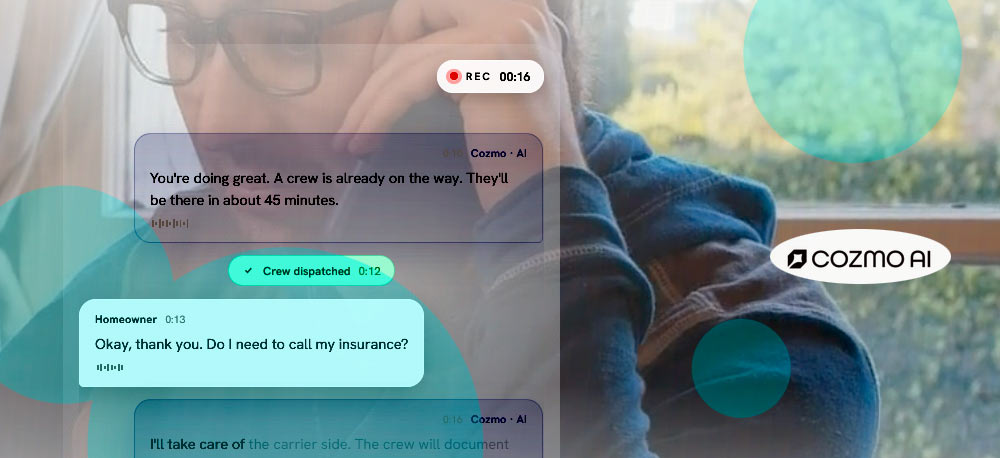
The platform deploys AI employees across the claims workflow between FNOL and final invoice settlement. Its agents collect initial claim information and dispatch assignments. They also follow up on missing documentation and interpret field records received during the adjustment or restoration process.
The software prepares estimates in formats intended for insurance carriers. Agents then communicate with relevant teams regarding invoices, payment status and remaining work required before the claim process closes.
Cozmo AI co-founder and CTO Nuha Hashem said claims technology needs to operate inside existing workflows rather than function as a separate application employees must monitor.
According to Hashem, the company’s AI agents retain claim context as work moves between tasks. This allows information collected earlier in the process to remain available during subsequent stages.
Company-specific operating rules determine when employees need to review or approve an action. The platform also maintains an audit trail covering activity performed during the claim.
Cozmo AI uses those records to provide explanations for actions and decisions generated through the automated workflow.
The technology connects with existing claims and communications platforms. It also works across customer relationship management software and established claims administration systems.
Cozmo AI positions this architecture around restoration networks and TPAs that already operate several claims applications and communication tools. Rather than moving work into another isolated system, its agents operate across the software already involved in the claim.
The company describes its product as an AI workforce for property and casualty claims. Its agents support FNOL and dispatch, then continue through documentation and property estimating.
Invoice settlement forms the final part of the workflow. The same agents maintain context across those stages while working within the systems used by restoration companies and TPAs.
Cozmo AI has backing from Y Combinator, Goodwater Capital and Rebel Fund. The company is headquartered in the San Francisco Bay Area.