Dai-ichi Life Holdings, a major Japanese financial services group specializing in life insurance and asset management, said it committed ¥4.7 bn, roughly $30 mn, to the world’s first carbon capture and storage bond, issued by Havenbedrijf Rotterdam N.V., also known as the Port of Rotterdam Authority.
The insurer takes the top slot in the order book and worked closely with the port authority and HSBC Securities to shape the transaction, according to its statement.
The bond stands apart because every yen raised flows into a single CCS project. No side pools. No blended use. The structure channels funds into capturing CO2 and locking it underground instead of letting it drift into the atmosphere. The stated aim is to push carbon neutrality faster, though the timeline, as always, stays open-ended.
Dai-ichi said the investment fits one of its four materiality themes, environmental leadership, which the company frames as a strategic response to climate pressure rather than a branding exercise.
It expects steady returns, but the insurer also positions the deal as financial backing for the port’s decarbonization push.
According to the company, it plans to track progress on an ongoing basis, not just at reporting milestones.
The ¥4.7 bn commitment covers more than half of the total ¥9 bn bond issuance. That concentration gives Dai-ichi unusual weight for a first-of-its-kind structure, and maybe some quiet leverage as the project develops.
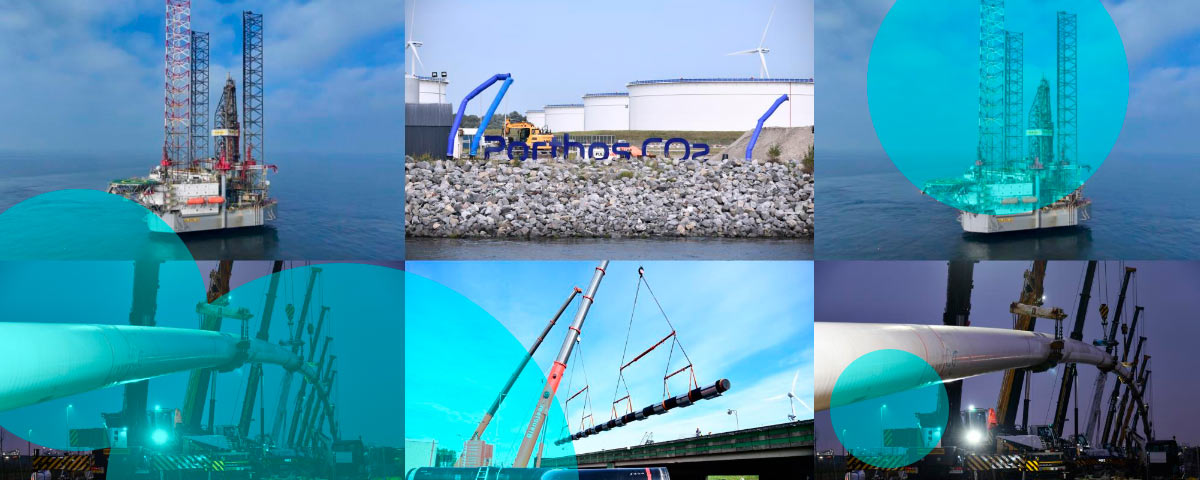
Bond proceeds will fund the Port of Rotterdam Authority’s equity stake in Porthos, a CO2 transport and offshore storage project.
The plan sets up shared infrastructure to collect emissions from industrial companies operating in the port zone, move the CO2 offshore, and store it permanently in depleted gas fields beneath the North Sea.
Many of our investments directly reduce CO₂ emissions, such as the construction of the CO₂ pipeline infrastructure for the Porthos CO₂-transport and storage project. Our collaboration with Dai-ichi Life enables us to realise these kind of decarbonisation projects and build a future-proof port.
Vivienne de Leeuw, CFO at the Port of Rotterdam Authority
According to Beinsure analysts, deals like this show how insurers increasingly test climate-linked assets that look less like experiments and more like balance-sheet tools.
Carbon capture and storage, or CCS, cuts CO2 by trapping it and pushing it underground instead of letting it leak into the air. The tech targets sectors where deep emissions cuts stay hard to pull off, even with aggressive efficiency gains. Many policymakers expect CCS to carry weight in the push toward net zero by 2050, not as a silver bullet, but as a working tool.
The European Union set a target to store 50 mn tonnes of CO2 a year by 2030. Projects like Porthos sit directly in that math. According to Beinsure, without large-scale storage hubs, those numbers stay theoretical.
Dai-ichi Life Group has mapped out a set of priority issues it wants to address through its business as part of its 2030 social vision. This investment falls under one of those themes, environmental leadership, which the group frames as a response to environmental pressure rather than a branding exercise.
The company expects stable returns, but it also says the capital backs the decarbonization plans of the Port of Rotterdam Authority. Progress won’t be a box-ticking exercise.
Dai-ichi says it will keep monitoring how these initiatives move, and maybe stall, over time.
From the insurer’s view, the deal fits its role as a long-term institutional investor. It plans to stay active in sustainable investments, using more sophisticated and varied strategies to support a sustainable society and, at the same time, lift investment returns.
Dai-ichi Life Holdings headquartered in Tokyo, it operates through domestic and international subsidiaries, positioning itself as one of Japan’s largest insurers and an important player in the global insurance market.
Originally established as a mutual company, Dai-ichi Life demutualized in 2010 and reorganized under Dai-ichi Life Holdings Inc. in 2016. This holding structure allowed it to expand more flexibly across domestic and international markets.
Its core subsidiaries include Dai-ichi Life Insurance, Dai-ichi Frontier Life Insurance, and Protective Life Corporation in the United States.
The group’s main business is life insurance, complemented by annuities, pension products, and investment management.
Through subsidiaries, it also provides asset management and reinsurance services. International expansion in North America, Australia, and Asia has been a key strategic focus, helping diversify revenue beyond Japan’s aging domestic market.