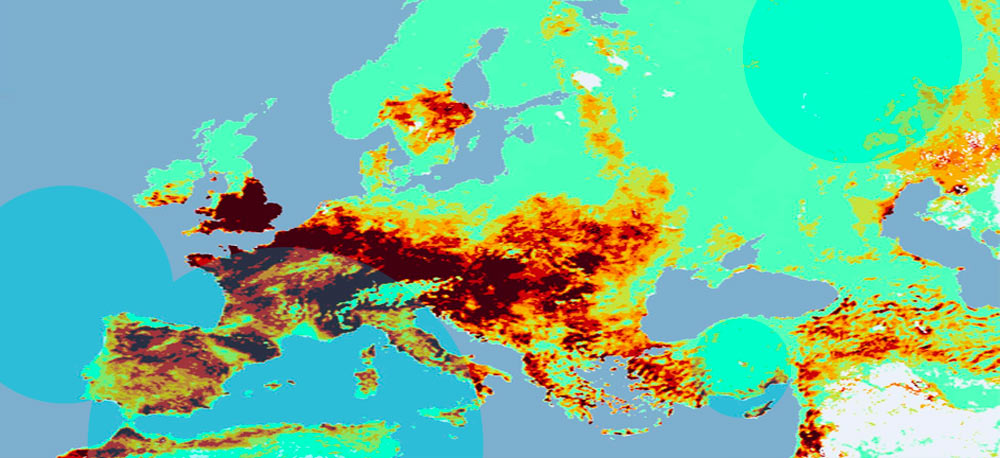
Domestic insurers are expected to absorb most losses from Europe’s worst wildfire season in recent history. Authorities have evacuated about 220,000 people in France as unprecedented wildfires burn across the country, according to Reuters.
Fires have also hit Spain and Greece, raising concern about insurance costs and gaps in climate-risk protection.
France’s total losses are estimated at €10 bn to €15 bn, according to Morningstar DBRS. Insured losses are expected to reach several € bn.
Analysts still view the impact as manageable for the insurance sector. The fires, though, give insurers a view of what comes next if wildfires move into densely populated areas.
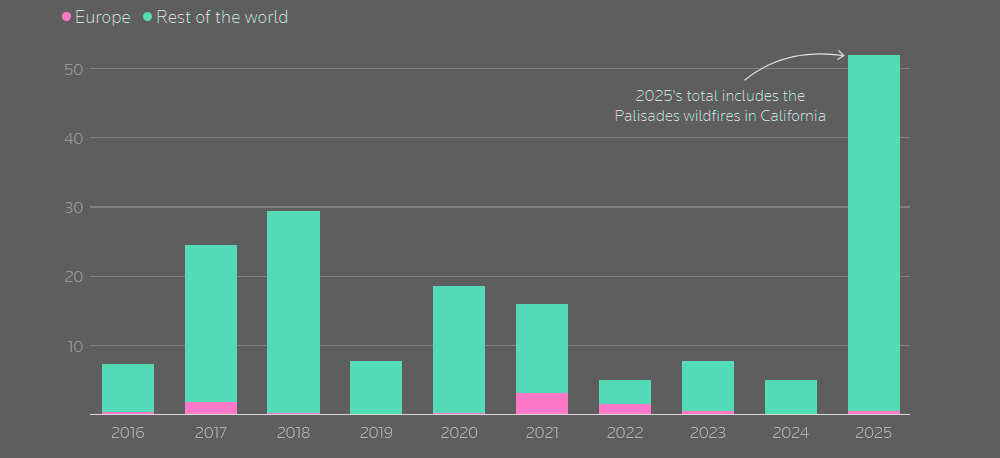
The French fires remain far below the roughly $40 bn in insured losses from California’s Palisades Fire in 2025. Even so, they are on track to become France’s costliest wildfire event on record.
Insurers expect claims for homes and businesses, plus costs linked to mass evacuations that stopped residents from reaching their properties. They also expect knock-on claims from business interruption, supply-chain disruption and utility outages.
Private insurers are expected to carry most of the recovery cost for now. France’s state-backed natural disaster compensation scheme covers floods and droughts, but not wildfires.
Europe is typically a small part of wildfire losses
Fitch Ratings said last week that the impact on 2026 insurer earnings should stay limited if fires do not spread into major residential, commercial or industrial zones.
The Insurer reported last week that French insurers approved emergency measures for policyholders evacuated by wildfires near Bordeaux. The measures allow evacuees to stay in hotels for up to three weeks at their insurer’s expense.
The fires have renewed attention on Europe’s protection gap, the difference between total disaster losses and insured losses.
Spain’s 2025 wildfires caused close to €5 bn in damage, but well under €1 bn was insured, said Tyson Vickery, global placement leader at Marsh in Zurich.
The European Central Bank and the European Union’s insurance regulator have warned that only one quarter of losses from climate-related catastrophes between 1980 and 2024 were insured. Wildfire insurance also remains less developed in Europe than in the US.
Spain has experienced significant wildfires before, and the insurance industry has considerable experience in responding to these events.
Analysts and climate experts told Reuters that limited historical wildfire data in Europe complicates underwriting. Insurers rely on that data to model and price risk.
Thin data means harder calls on accumulation, pricing and appetite. Not much room for guesswork.
Household premiums are likely to rise in higher-risk areas when policies renew in January.
Property insurance is widely held in France. Lenders typically require homeowners with mortgages to carry cover, and tenants generally must buy home insurance, Mann said.
Europe accounted for 5% of the €173 bn in global wildfire losses from 2016 to 2025, according to Munich Re data.
By 2050, areas around French cities are projected to see nearly 70% more high-risk wildfire days a year on average
Rising catastrophe risks strengthen the case for narrowing Europe’s protection gap. EU-level work remains exploratory.
While it’s too early to estimate the ultimate cost of these events, Europe is increasingly experiencing conditions that have traditionally been associated with major wildfire-prone regions such as California and parts of Australia.