Follow Beinsure
Tropical Storm Hanna formed Monday in the central subtropical Atlantic, according to the National Hurricane Center. The system, previously designated Invest 91-L, was located about 870 miles east-northeast of Bermuda as of 11 a.m.
Hanna had maximum sustained winds of 45 mph, with higher gusts, and was moving east at 17 mph. Forecasters expect an east to east-southeast motion over the next few days, with little change in strength during that period.
Tropical-storm-force winds extend outward up to 90 miles from the centre. Minimum central pressure was 1006 millibars, and no coastal watches or warnings were in effect. The storm wasn’t producing hazards on land.
The formation of Hanna comes during an unusually quiet Atlantic hurricane season. A strong El Niño has disrupted tropical development across the basin, and the Atlantic went without a hurricane through Sept. 21, breaking a 112-year record.
The season had produced eight tropical storms and no hurricanes after Hanna formed. Hurricane season passed its statistical peak on Sept. 10 and runs through Nov. 30.
Tropical Storm Gonzalo became the seventh named storm of the Atlantic season on Sept. 25. It formed around three weeks later than the typical timing for the season’s G-named storm.
If the Atlantic finishes the season without a hurricane, it would be only the third such season on record, after 1914 and 1907.
Activity in the Pacific has moved in the opposite direction. Eighteen tropical storms and hurricanes had formed there, including eight hurricanes in the eastern Pacific, compared with eight tropical storms and no hurricanes in the Atlantic.
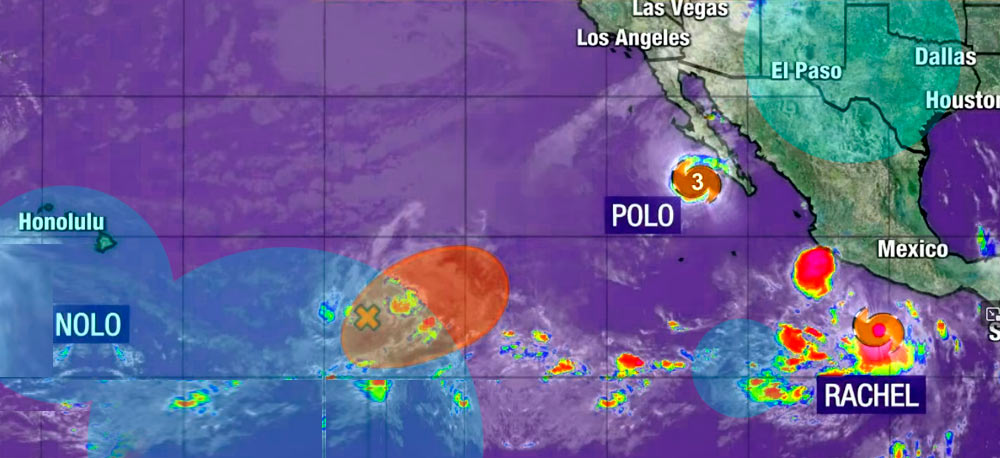
Hurricane Polo was approaching Mexico, while Hurricane Nolo was moving away from Hawaii. In a typical year, the Atlantic and eastern Pacific produce similar numbers of named storms by the end of their seasons.
El Niño has contributed to the gap between the two basins. Tropical waves crossing the Atlantic have encountered stronger wind shear, disrupting their organisation before many systems develop further.
Some storms in both basins originated from tropical disturbances over Africa. Meteorologists follow those waves with NOAA satellites as they cross the Atlantic and, in some cases, continue into the Pacific.
Tropical Storm Fay was also active in the Atlantic before weakening again. Fay degenerated last Tuesday, redeveloped into a tropical storm Thursday evening and had returned to tropical depression status by late Sunday morning far east of Bermuda.
Fay is expected to continue weakening over the next few days and poses no threat to land. Hanna also remains over the open Atlantic, with no immediate threat to coastal areas and little change in strength forecast in the next couple of days.