The FTSE 100 fell sharply on Friday as a sell-off in US technology shares spread across Asian and European stock markets, driven by concerns that political changes in Washington could slow investment in artificial intelligence infrastructure.
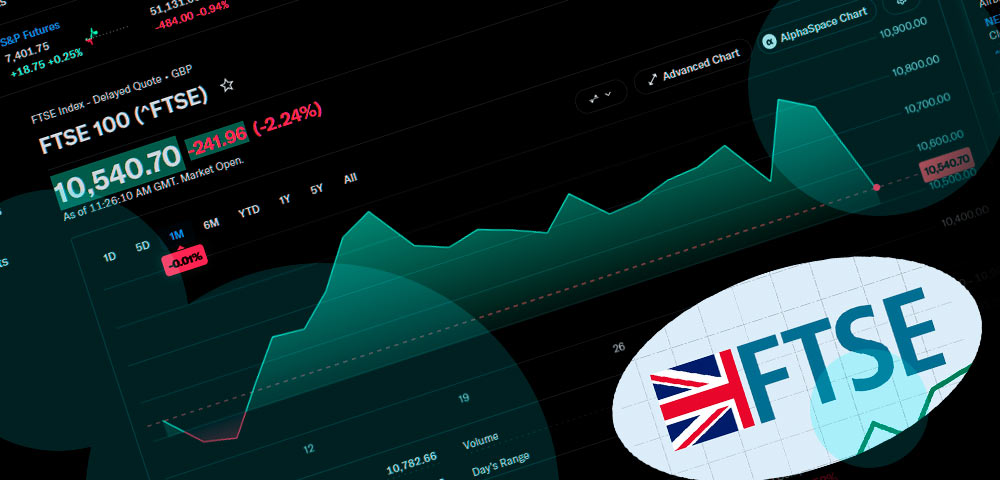
Britain’s leading stock index declined approximately 2.1% during morning trading, extending losses across global equities after Wall Street suffered one of its steepest sessions in years.
- The FTSE 100 dropped more than 2% on Friday as a sell-off in US technology stocks spread across global markets.
- The Nasdaq 100 fell 6.4% on Thursday, while Japan’s Nikkei 225 and South Korea’s Kospi both lost 6% on Friday.
- Investors are reassessing AI investments amid concerns that Democratic gains in the US midterm elections could slow data centre development.
Japan’s Nikkei 225 and South Korea’s Kospi both closed 6% lower, while semiconductor manufacturers and other companies exposed to AI investment recorded substantial declines.
The market turbulence followed sweeping Democratic victories in the US midterm elections, which investors fear could lead to greater scrutiny of data centre construction and restrictions on the expansion of AI infrastructure.
Nasdaq 100 enters correction territory after 6.4% decline
The technology-heavy Nasdaq 100 index plunged 6.4% on Thursday, its largest single-session decline since March 2020.
The index has now fallen 11.9% from its record high reached in October, placing it in correction territory, generally defined as a decline of at least 10% from a recent peak.
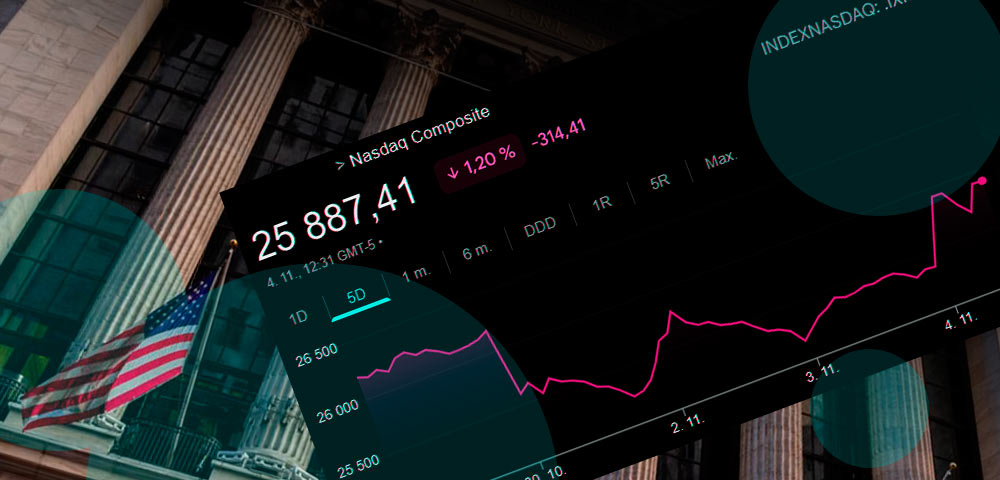
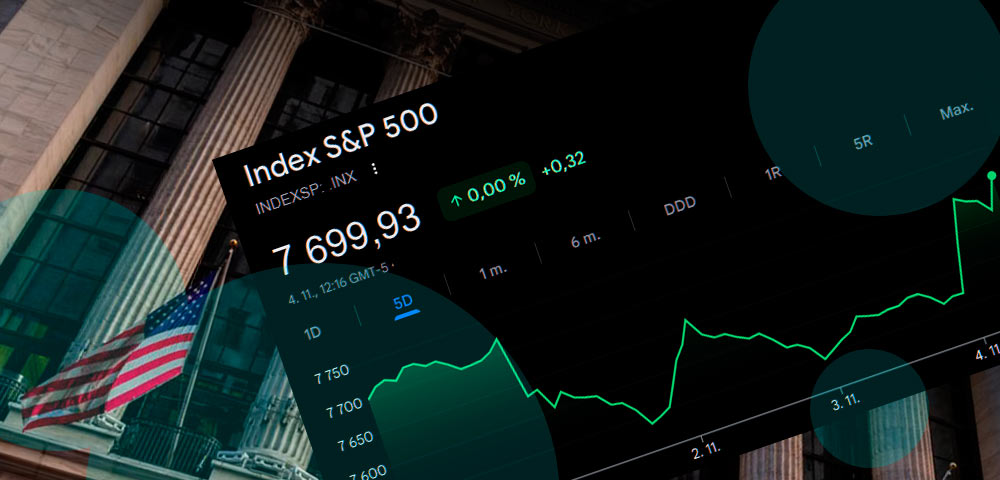
The broader Nasdaq Composite lost approximately 5.5%, while the S&P 500 dropped 4.4%, its worst session since US President Donald Trump announced his “Liberation Day” tariffs in April 2025.
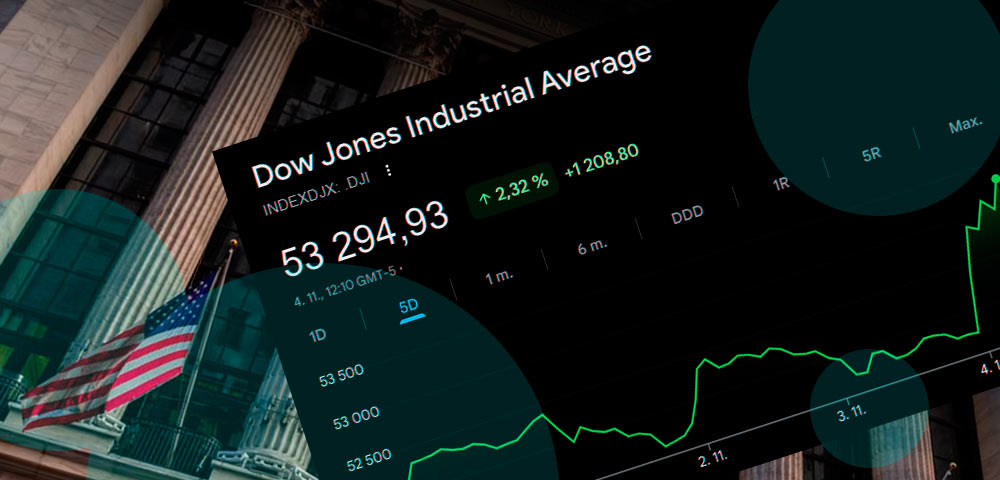
The Dow Jones Industrial Average declined 3.4%, shedding more than 1,800 points.
Thursday’s losses erased the previous day’s gains, which had marked Wall Street’s strongest session in three months.
Semiconductor companies suffered particularly heavy selling as investors reconsidered the outlook for spending on AI data centres.
Nvidia shares fell 9.3%, reducing the chipmaker’s market capitalisation by approximately $447 bn.
Broadcom declined around 10%, while AMD, Micron Technology and other semiconductor companies also recorded steep losses.
The sell-off extended beyond technology, affecting financial institutions, industrial companies and smaller businesses.
Asian markets suffer sharp losses
The downturn spread to Asia on Friday, where technology stocks experienced some of their largest declines since the market disruption triggered by US tariffs in April 2025.
Japan’s Nikkei 225 fell 6% to close at 57,434.77 points, while South Korea’s Kospi dropped 6% to 5,059.69.
Major semiconductor companies were among the hardest hit.
| Company | Share price decline |
|---|---|
| SK Hynix | 10.4% |
| SoftBank | 10.8% |
| Kioxia | 8.7% |
| Samsung Electronics | 6.4% |
| TSMC | 4.7% |
Japanese technology investor SoftBank, a major shareholder in chip designer Arm, was particularly affected by concerns over the outlook for AI infrastructure investment.
South Korean memory chip manufacturers also came under pressure as investors questioned whether demand associated with data centre expansion could continue growing at its previous pace.
Markets in Hong Kong, mainland China and Australia declined as well, although their losses were smaller than those recorded in Japan and South Korea.
FTSE 100 hit despite limited technology exposure
London’s FTSE 100 has relatively limited exposure to technology companies compared with major US stock indices. Nevertheless, the global retreat from risk assets weighed heavily on British equities.
The FTSE 100 was trading around 10,549 points during the session, down approximately 2.1%, while the FTSE 250 declined by about 1.3%.
Pharmaceutical companies were among the largest fallers. AstraZeneca dropped approximately 3.1% in early trading, while GSK and Haleon declined 2.3% and 3.2%, respectively.
Investors were concerned that slower AI development could delay potential advances in drug discovery, an area where pharmaceutical businesses have increasingly sought to apply advanced computing technologies. Other European markets also weakened.
The pan-European Stoxx 600 fell approximately 1.6% during early trading, while France’s CAC 40 and Germany’s DAX recorded declines of around 1.5% and 1.8%, respectively.
Susannah Streeter, chief investment strategist at Wealth Club, said London’s relatively low technology exposure offered some protection but could not fully insulate British companies from weakness in global markets.
US midterm elections raise concerns over AI investment
The sell-off followed Democratic gains in the US midterm elections, which increased expectations of tougher oversight of AI infrastructure development.
Several newly elected Democratic governors and senators have expressed opposition to the rapid expansion of data centres.
These facilities require substantial amounts of electricity, land and water, while their construction depends heavily on semiconductor chips and other computing equipment.
Investors fear that new restrictions or more demanding approval procedures could delay projects and reduce demand for technology supplied by companies such as Nvidia.
However, concerns about AI valuations and investment returns had already been building before the election.
Technology companies have committed substantial sums to expanding computing capacity, with some financing their investments through increased borrowing.
Market analysts have questioned whether future revenues from AI services will justify the scale of expenditure.
Tudor Brown, co-founder of Arm, said rising borrowing costs and uncertainty about longer-term AI demand had made investors increasingly cautious.
Mohit Kumar, an economist at Jefferies, attributed much of Thursday’s initial selling to retail investors taking profits after substantial gains in technology shares. He also warned that geopolitical uncertainty could make an immediate market recovery less likely.
Nevertheless, Kumar argued that Democratic policymakers would have incentives to support AI investment because of its contribution to employment and economic growth.
He suggested that additional regulatory oversight could make the expansion of AI infrastructure more sustainable over time.
Technology shares show signs of recovery
Despite Thursday’s steep losses, US technology shares showed indications of a rebound in premarket trading on Friday.
Nasdaq 100 futures rose approximately 1.4%, while Nvidia gained 3.6% before the opening bell. Other semiconductor companies, including AMD, Intel, Broadcom and Micron Technology, advanced between 5% and 8.3% in premarket trading.
S&P 500 futures increased 0.3%, although contracts tracking the Dow Jones Industrial Average remained around 0.8% lower.
Mark Dowding, chief investment officer at RBC BlueBay, suggested that a slowdown in AI-related construction could ease pressure on financing markets.
He noted that repeated increases in planned spending had contributed to substantial debt and equity issuance, sometimes exceeding investor demand.
A more measured pace of investment could help stabilise financing conditions for major cloud computing companies, he argued.
Dan Ives, a technology analyst at Yorkville Ives, also maintained a positive longer-term view of AI-related stocks, characterising the downturn as a potential buying opportunity.
Energy markets and interest rates add to uncertainty
The global sell-off coincided with significant movements in energy markets. European wholesale natural gas prices were heading for their largest weekly decline in more than a year. Dutch TTF gas futures fell approximately 3.6% on Friday and were on course for a weekly loss exceeding 15%.
Traders were assessing whether the Democratic election victory could increase pressure for an end to the US-Iran conflict, potentially easing energy market tensions.
Lower energy prices could benefit AI data centre operators, whose facilities require substantial electricity supplies.
However, Ole Hansen, an analyst at Saxo Bank, cautioned that markets were reacting to expectations rather than confirmed diplomatic progress.
The Bank of England’s decision on Thursday to raise its benchmark interest rate from 3.75% to 4% added another consideration for UK investors.
Higher borrowing costs can weigh on businesses financing expansion and reduce the appeal of growth stocks whose valuations depend heavily on future earnings.
The immediate outlook for global equities remains uncertain. While technology shares showed signs of stabilisation ahead of Friday’s US session, investors continued to assess the potential effects of American political developments, AI infrastructure spending and higher financing costs.