CVS Health Corporation (NYSE: CVS) reported third-quarter 2026 revenue of $108.4 bn, an increase of 5.4% from $102.9 bn a year earlier, supported by improved performance across its healthcare operations.
GAAP diluted earnings per share reached $1.68 for the three months ended September 30, compared with a loss of $3.13 per share in the corresponding period of 2025.
- CVS Health’s third-quarter revenue increased 5.4% to $108.4 bn, while adjusted EPS rose to $2.09 from $1.60 a year earlier.
- GAAP diluted EPS improved to $1.68 from a loss of $3.13, supported by the absence of a $5.7 bn goodwill impairment charge recorded in Q3 2025.
- CVS raised its 2026 adjusted EPS forecast to at least $8.20 and operating cash flow guidance to at least $15.5 bn, following stronger performance across key business segments.
CVS Health plans to split its retail pharmacy operations from its health insurance and pharmacy benefit management businesses, dismantling a $117 bn healthcare conglomerate built through two decades of acquisitions.
Adjusted earnings per share increased to $2.09 from $1.60, primarily reflecting higher adjusted operating income in the Health Care Benefits segment as the company continued implementing its margin recovery plan.
The improvement in reported earnings also reflected the absence of a $5.7 bn goodwill impairment charge that affected CVS Health’s third-quarter 2025 results.
Our colleagues build trust every day through delivering quality health care rooted in our purpose – to simplify health care one person, one family and one community at a time.
David Joyner, Chairman and CEO of CVS Health
“Through their continued dedication, each of our businesses delivered another quarter of strong results. We continue to advance our strategy by improving the consumer experience, lowering health care costs, and connecting care for the people we serve.”
CVS Health raises 2026 earnings and cash flow guidance
Following the third-quarter results, CVS Health increased its full-year earnings and operating cash flow forecasts, citing stronger performance in its Health Care Benefits and Pharmacy & Consumer Wellness segments.
The company now expects 2026 GAAP diluted EPS of at least $6.98, compared with its previous guidance range of $6.84 to $7.04.
Adjusted EPS is projected to reach at least $8.20, up from the earlier forecast of $7.90 to $8.10 per share.
CVS also raised its full-year operating cash flow guidance to at least $15.5 bn, compared with the previous minimum forecast of $11.5 bn. The company generated $15.3 bn in cash flow from operations during the first nine months of 2026. Full-year revenue is expected to reach at least $420 bn.
Health Care Benefits margin recovery supports earnings growth
Improved profitability in the Health Care Benefits segment was the primary contributor to CVS Health’s year-over-year adjusted earnings growth.
The company attributed the improvement to continued execution of its margin recovery plan, alongside stronger performance in Pharmacy & Consumer Wellness.
These developments supported the upward revisions to the company’s 2026 financial outlook.
CVS maintained a cautious assessment of the remainder of the year, citing persistently elevated healthcare cost trends and potential macroeconomic headwinds.
The updated forecast incorporates the improved operating performance recorded through September while retaining those risks in management’s expectations for the final quarter of 2026.
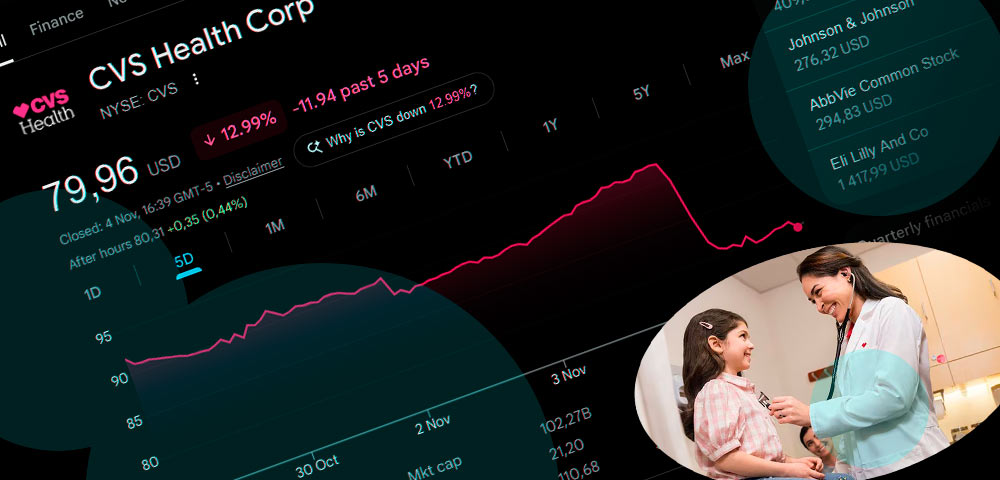
CVS shares fall as investors question restructuring
According to analysts surveyed by Reuters, the company’s split has raised questions about the financial benefits of separating businesses CVS had spent years integrating.
CVS shares are weak today despite very strong Q3 operating results because the announced split of the company came as a surprise, and is perceived as happening as a defensive move against regulation rather than an offensive move.
UBS analyst Kevin Caliendo
Barclays analyst Andrew Mok identified the absence of detailed financial information about the separation as a major investor concern.
When CVS acquired Caremark in 2006, the company projected at least $500 mn in synergies from combining pharmacy retail and prescription benefit management. The planned separation raises questions about how those financial benefits will change.
Kevin Gade, chief operating officer at Bahl & Gaynor, said CVS’s earnings outlook compared unfavorably with competitors expecting faster profit growth in 2027.
Some rivals have greater exposure to government-sponsored health insurance plans, which could receive increased political support following the Democratic Party’s victory in Tuesday’s US congressional midterm elections.
Analysts think investors are taking a step back to ask themselves why they should lean into a story that is seeing an earnings hiccup in 2027, which is a year when all other peers are seeing accelerating earnings growth.
CVS Chief Financial Officer Brian Newman also outlined challenges facing the pharmacy benefit business next year, including pressures related to a government prescription drug discount program, a “less robust selling season” and declining health plan membership.
Management subsequently upgraded store technology to increase capacity and changed its prescription drug reimbursement model, allowing the company to offer lower prices while generating profits on both branded and generic medicines.
CVS also improved performance at Aetna, which had previously missed financial targets following miscalculations in its Medicare Advantage business. The government-backed insurance program primarily serves Americans aged 65 and older