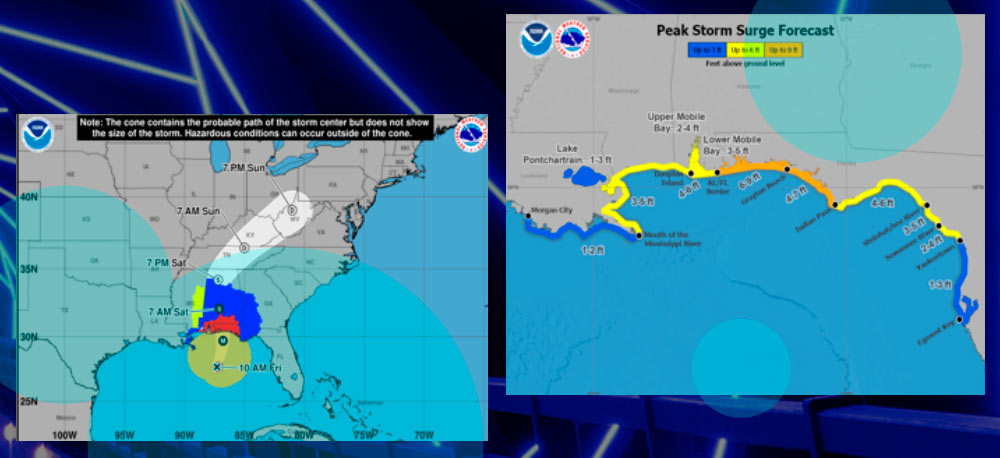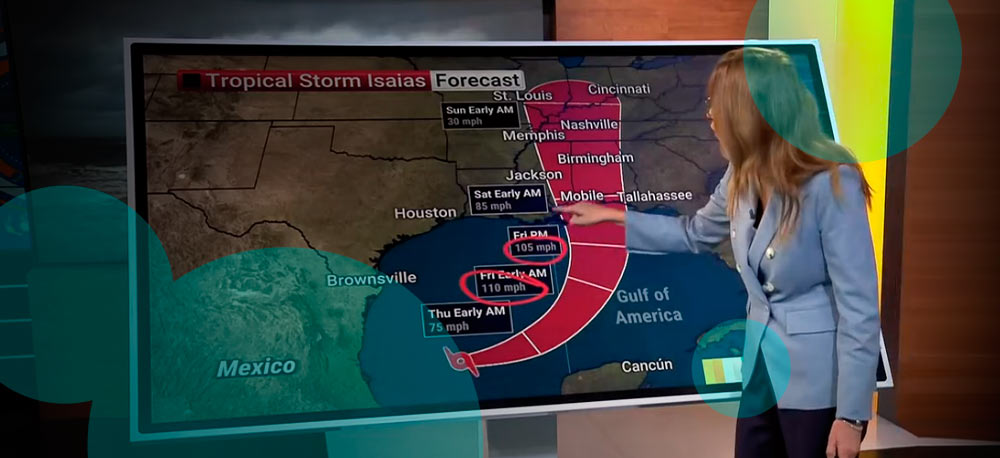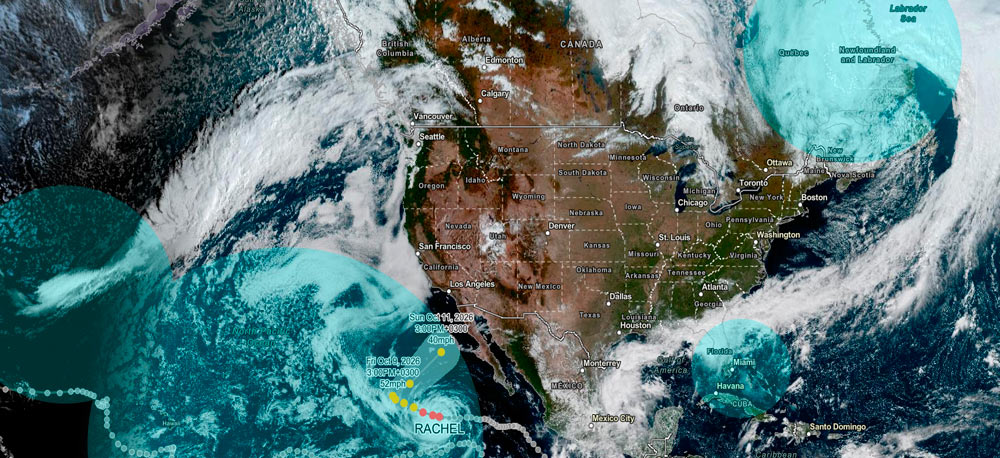
- Hurricane Isaias is expected to make landfall along the northern Gulf Coast late October 9 or early October 10, threatening commercial properties across Alabama, Florida and Mississippi.
- Moody’s estimates that 31,659 commercial properties valued at $71.8 bn face a greater than 50% probability of experiencing winds of at least 50 mph, including 14,945 multifamily buildings worth $40.2 bn.
- Commercial insurers and policyholders face potential losses from wind, flooding and business interruption, with hurricane deductibles and coverage exclusions affecting how claims are paid.
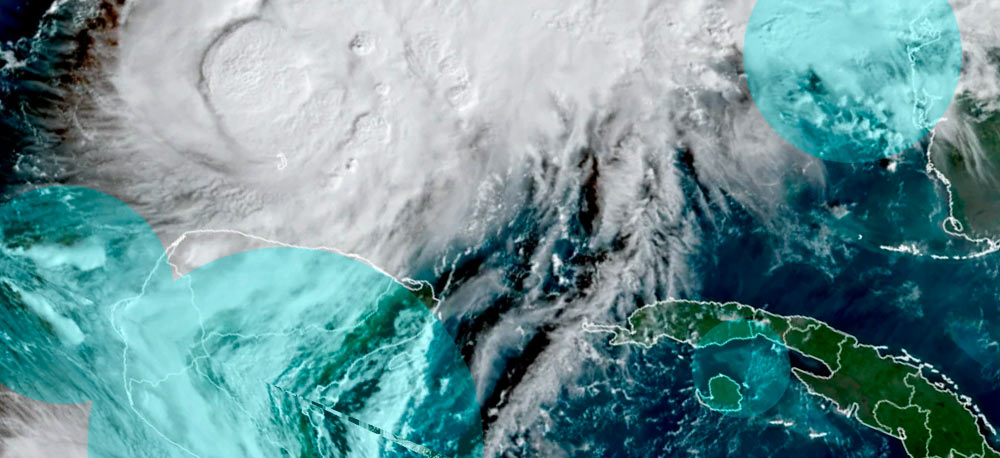
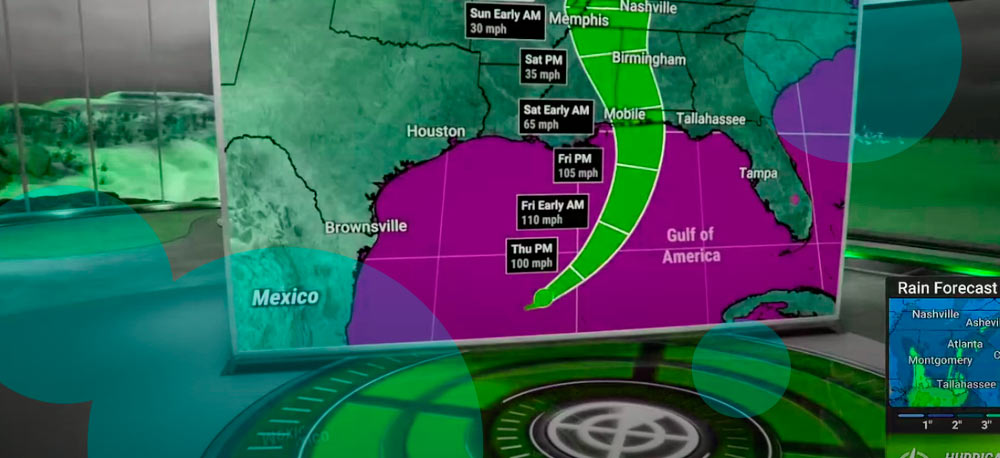
Hurricane Isaias is forecast to strike the northern Gulf Coast late Friday or early Saturday as a significant hurricane, potentially ending a period of more than two years without a hurricane making landfall in the United States and exposing billions of dollars in commercial property to damaging winds.
According to Moody’s, 31,659 commercial properties across Alabama, Florida and Mississippi have a greater than 50% probability of experiencing wind speeds of at least 50 mph, a level at which some structural damage becomes likely.
The properties have a combined estimated value of $71.8 bn, although that figure represents exposed property value rather than projected economic damage or insured losses.
Multifamily residential buildings account for a substantial share of the exposure, with 14,945 properties valued at approximately $40.2 bn. Mobile, Alabama, Pensacola, Florida, and Biloxi, Mississippi, are among the cities facing the greatest exposure.
Moody’s said Isaias is following a track comparable to Hurricane Sally in terms of its expected landfall location and intensity.
Sally made landfall near Gulf Shores, Alabama, in September 2020 as a Category 2 hurricane. Karen Clark & Company estimated that the storm generated approximately $2 bn in privately insured losses, excluding claims under the National Flood Insurance Program (NFIP), which added hundreds of millions of dollars.
Moody’s plans to publish damage and loss estimates after Isaias passes through the affected region. The approaching storm puts commercial property insurance terms under scrutiny, particularly for businesses that have not experienced a major weather-related claim since before the previous relatively quiet hurricane season.
Wind damage to buildings may be covered under commercial property insurance, although some coastal risks are insured through state wind insurance pools rather than conventional private market policies.
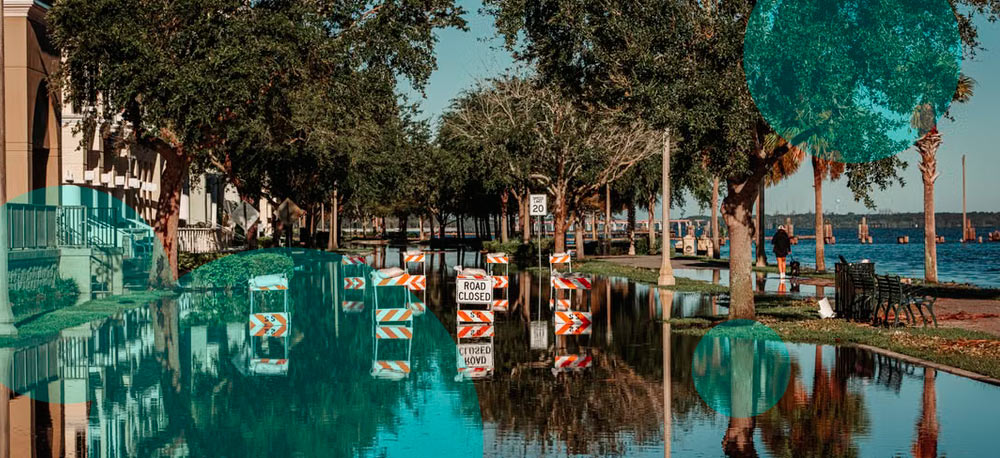
Flooding and storm surge present different coverage considerations. These perils contributed substantially to Hurricane Sally’s losses but generally require separate flood insurance, purchased through the NFIP or private insurance providers.
Hurricane and named-storm deductibles can also materially increase the amount policyholders must absorb before insurance coverage responds.
Unlike standard fixed-dollar deductibles, these provisions are commonly calculated as a percentage of the insured property’s value. Their application depends on policy language, the storm’s classification and the relevant state requirements.
For example, a commercial property insured for $5 mn with a 5% hurricane deductible would leave the policyholder responsible for the first $250,000 of covered damage.
Businesses accustomed to conventional flat-dollar deductibles may therefore face substantially higher out-of-pocket costs following a hurricane-related claim.
Business interruption insurance presents another potential source of coverage disputes
Standard business interruption provisions generally require direct physical damage to insured property before coverage is activated. Businesses forced to close because of mandatory evacuation orders or electricity outages may therefore find that their policies do not respond if their premises sustain no physical damage.
Some commercial property policies include civil authority coverage or utility service interruption extensions that may respond to these circumstances.
Such extensions, however, are subject to specific coverage triggers, waiting periods and sublimits, which differ between insurance contracts.
For insurance brokers and commercial policyholders along the Gulf Coast, the approaching landfall makes it particularly important to review wind and flood protection, hurricane deductible provisions and the conditions governing business interruption claims before losses occur.