- Ukraine expands state support for war risk insurance
- Compensation for war-damaged property capped at UAH 30 mn
- Proposed $3-4 bn fund could increase war damage coverage
- Government-backed recovery loans provide up to UAH 1 bn
- Russian attacks damage 2.1 mn square meters of warehouse space
- Insurance subsidies and compensation limits leave coverage gaps
Russian attacks on industrial facilities, warehouses, manufacturing plants and fuel infrastructure are increasing financial pressure on Ukrainian businesses, many of which cannot obtain sufficient commercial war risk insurance.
Coverage remains expensive, particularly for assets near the front line and businesses operating in sectors with high exposure to missile and drone attacks. Some properties cannot be insured on commercially viable terms, leaving companies to finance repairs and reconstruction themselves.
- Ukraine has expanded state support for war risk insurance, offering businesses up to UAH 30 mn in property damage compensation and UAH 5 mn annually in insurance premium reimbursements.
- A proposed $3-4 bn compensation fund could provide up to $10 mn per company, with businesses contributing 2% of their selected coverage limits.
- Government-backed recovery loans of up to UAH 1 bn are available under specified conditions, although funding limits and eligibility restrictions continue to constrain access.
Ukraine is expanding state-backed financial protection through three mechanisms: compensation for war-damaged property, reimbursement of insurance premiums and subsidized recovery loans.
The programmes, governed primarily by Cabinet of Ministers Resolutions No. 1541 and No. 594, address different financial needs. Property compensation provides partial reimbursement for direct damage, premium subsidies reduce insurance costs, and concessional loans finance reconstruction and continued operations.
Their effectiveness depends on coverage limits, eligibility requirements, budget allocations and the time required to receive funding.
Ukraine expands state support for war risk insurance

Amendments to Resolution No. 1541 have broadened access to compensation for businesses exposed to military attacks.
Cabinet Resolution No. 1157, adopted on September 17, 2026, expanded the categories of eligible property and revised the geographical scope of the programme. Some amendments took effect on October 23.
Kyiv and Kyiv Oblast have been added to the list of high-risk territories. The revised rules also clarify eligibility for property located in these areas or transported through them.
Additional eligible assets include fuel storage tanks, fuel inventories and vehicles used to transport fuel. The changes also allow insurance premium compensation for leased property under specified conditions.
Two components of the programme operate under different rules.
Compensation for damaged or destroyed property applies to eligible assets in designated high-risk territories. Insurance premium reimbursement has broader geographical coverage and is intended to make private insurance more affordable.
Businesses can receive up to UAH 5 mn annually in insurance premium compensation across all qualifying policies.
The subsidy may reduce insurance costs for companies that previously struggled to purchase adequate protection. Its practical value, however, depends on the insured assets’ value, prevailing premium rates and the amount of coverage insurers are prepared to provide.
A premium subsidy does not guarantee that an insurer will accept a particular risk or offer sufficient policy limits.
Compensation for war-damaged property capped at UAH 30 mn
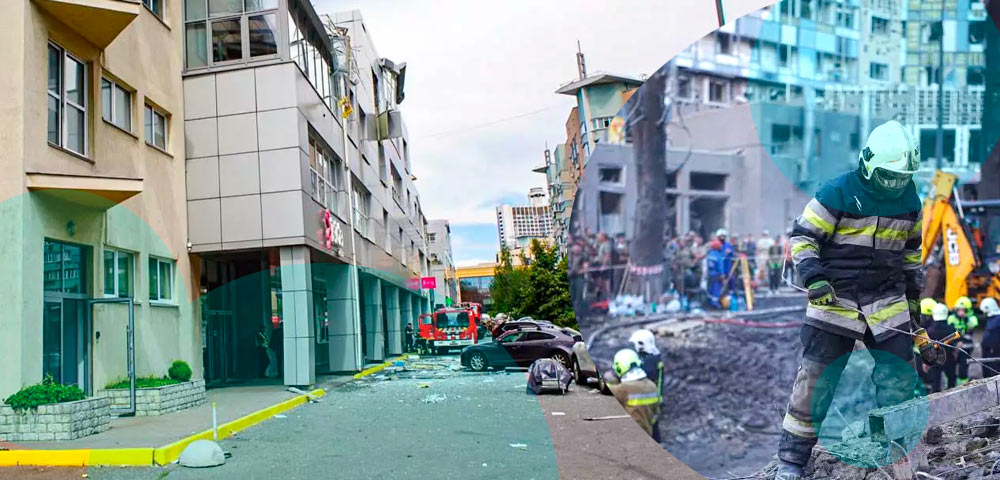
Ukraine’s property compensation mechanism provides partial reimbursement for assets damaged or destroyed by Russian military attacks.
Eligible businesses must document their losses and satisfy the programme’s participation requirements. Compensation is limited to UAH 30 mn per business over the programme’s entire duration.
Participation requires a one-time contribution equal to 0.5% of the declared amount of potential compensation.
For example, a company declaring UAH 20 mn in potential compensation would pay a UAH 100,000 participation fee. If its property subsequently suffered UAH 50 mn in damage, the programme’s maximum compensation would remain UAH 30 mn, subject to the declared amount, verified losses and other eligibility conditions.
Payments cover qualifying direct losses and are subject to available state budget funding. Meeting the programme’s eligibility criteria does not guarantee reimbursement of the full amount claimed.
There are also important restrictions concerning the timing of losses.
According to guidance from Ukraine’s Export Credit Agency, compensation applies only to qualifying incidents occurring from January 1, 2026, provided the company had already registered as a participant when the damage occurred.
The programme therefore does not provide automatic retrospective compensation for losses incurred in previous years. State-owned and municipal enterprises are excluded. The UAH 30 mn limit may be insufficient for companies operating large factories, warehouses or expensive production equipment.
Direct property compensation also does not necessarily cover the wider financial consequences of an attack, including production shutdowns, lost inventory, disrupted contracts, equipment relocation and additional logistics expenditure.
Proposed $3-4 bn fund could increase war damage coverage
Ukraine is also developing a separate compensation mechanism intended to provide broader financial protection for businesses.
The proposed model includes a dedicated fund with a targeted financing capacity of approximately $3-4 bn. Under the proposal, businesses could receive compensation of up to $10 mn per legal entity.
The mechanism would be open to qualifying companies operating in Ukrainian-controlled territory, with coverage extending to essential business assets such as buildings, equipment and engineering infrastructure.
Participating businesses would contribute 2% of their selected coverage limit.
Companies could potentially purchase additional private insurance for losses exceeding the amount covered by the state mechanism. This structure would divide financial exposure between businesses, public funding and commercial insurers, creating the possibility of combining basic state-backed protection with higher private insurance limits.
The proposed fund is not yet an established compensation entitlement. Its financial structure, sources of capital and operating procedures require further development. The next steps include identifying funding sources, preparing regulatory amendments and testing the claims and administration processes.
Until those arrangements are finalised, the proposed $10 mn limit should not be treated as coverage already available to businesses.
Government-backed recovery loans provide up to UAH 1 bn
Compensation for damaged assets and insurance premiums addresses only part of the financing required after an attack.
Businesses may also need capital to replace equipment, restore inventories, repair infrastructure and resume production. Amendments under Cabinet Resolution No. 594 provide access to subsidized lending for these purposes.
- The maximum financing amount is UAH 1 bn per business, including related parties.
- The minimum loan amount is generally UAH 100 mn, reduced to UAH 30 mn for businesses operating in territories affected by possible or active hostilities.
The government compensates 5.5 percentage points of a bank’s base interest rate, subject to a maximum rate of 18% under the programme’s terms.
Actual borrowing conditions depend on the programme’s eligibility criteria and the participating bank’s requirements.
Eligible financing purposes include distributed electricity generation, fuel and warehouse infrastructure, manufacturing and processing facilities.
The programme also supports working capital for wholesale and retail businesses replacing inventories lost in attacks.
Recovery loans may finance investments intended to reduce exposure to further damage. Examples include underground fuel storage tanks and production equipment installed below ground level. Such measures can improve physical protection but often require substantial additional capital expenditure.
Concessional lending helps businesses finance these investments, although borrowed funds must still be repaid.
Russian attacks damage 2.1 mn square meters of warehouse space
The scale of damage to Ukraine’s logistics infrastructure illustrates the limits of property compensation and the need for reconstruction financing.
Since late August 2026, approximately 2.1 mn square meters of modern warehouse space have reportedly been damaged or destroyed out of a total stock of around 5 mn square meters.
The affected area represents approximately 42% of that warehouse stock. Damage extends beyond the owners of industrial and logistics properties.
Manufacturers, distributors and retailers depend on warehouses for inventory management, transportation and continuity of supply.
The destruction of storage capacity can interrupt deliveries, eliminate merchandise inventories and increase operating costs for businesses whose facilities have not been directly attacked.
For companies facing repeated attacks, rebuilding the same infrastructure without additional physical protection can leave assets exposed to further losses.
Insurance compensation, recovery lending and investment in more resistant facilities therefore address separate aspects of the financial risk.
Insurance subsidies and compensation limits leave coverage gaps
Ukraine’s state support programmes offer different forms of financial assistance, but none provides complete protection against the economic consequences of war.
Insurance premium reimbursement can reduce the cost of obtaining commercial coverage without guaranteeing that sufficient capacity will be available.
Direct damage compensation provides partial reimbursement but remains subject to the UAH 30 mn ceiling, eligibility requirements and state budget resources.
Subsidized loans can finance larger reconstruction projects, although they increase borrowers’ debt obligations.
The proposed $3-4 bn compensation fund could potentially increase coverage limits and encourage private insurers and reinsurers to participate. Its effectiveness will depend on securing capital and establishing workable programme rules.
For businesses, the main considerations are the amount of protection available, the losses that remain uninsured and the time needed to obtain financial assistance. Assessing the programmes also requires more detailed public reporting.
Relevant indicators include the number of applications submitted and approved, actual compensation payments, average settlement periods, rejection rates and reasons for unsuccessful claims.
These figures should be reported by region, company size and industry to identify differences in access to financial support.
Without such data, it is difficult to determine whether government assistance is enabling damaged businesses to restore production and employment or merely compensating for a limited share of their property losses.