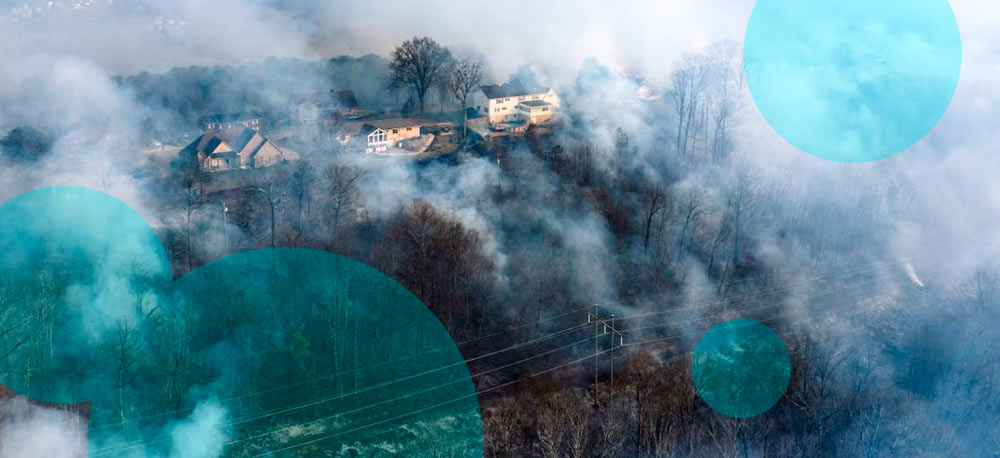
A year after the Los Angeles wildfires, many survivors still face the same hard math. Insurance payouts fall short of rebuilding costs. Homes stand gone. Coverage caps don’t stretch far enough.
This pattern isn’t new. Since the 1990s, US homeowners have become systematically underinsured when properties suffer total loss.
Multiple studies show many policies never promised full replacement, despite what policyholders often assume.
For years, the gap stayed mostly out of sight. Climate-driven disasters changed that. Large-scale wildfires now strip the issue bare, exposing how widespread underinsurance has become.
Global warming pushes temperatures higher and dries landscapes. Development keeps expanding into fire-prone zones known as the wildland-urban interface. Together, those forces drive heavier losses.
Researchers at University of Colorado Boulder found wildfires in Western states destroyed 243% more buildings between 2010 and 2020 than in the prior decade. The Los Angeles fires alone wiped out more than 15,000 structures.
Insurers have paid more than $22.4 bn on wildfire claims tied to the Los Angeles wildfires that erupted on Jan. 7 last year, according to figures released by the California Department of Insurance.
The data shows 42,121 claims filed, with 94% fully or partially paid. Of those, 39,677 claims received advance partial payments under state rules designed to speed recovery.
Denni Ritter, vice president for state government relations at the American Property Casualty Insurance Association, said insurers remain focused on helping Californians rebuild after what he described as devastating Southern California wildfires.
January’s Los Angeles fires did most of the work. Add in severe convective storms across the US, and insured catastrophe losses in 2025 are set to push past $100 bn for the sixth year in a row, according to the Swiss Re Institute.
United Policyholders formed in response to this problem after the 1991 Oakland firestorm. The group began surveying wildfire survivors in 2007.
Since then, roughly two-thirds of respondents report underinsurance, averaging more than $200,000 per household.
Independent research backs those numbers. Analysts reviewing losses from the 2021 Marshall Fire in Colorado, which destroyed over 1,000 homes in Boulder County, found 74% of affected homeowners lacked sufficient coverage.
The Insurance Information Institute estimates about two-thirds of US homeowners are underinsured for wildfire losses. Typical shortfalls run near 20%. In some cases, gaps reach 60%.
The institute points to structural tension. Reconstruction costs surge after disasters as labor and materials tighten. Insurers struggle to predict those spikes in advance.
Coverage limits set years earlier quickly look outdated once rebuilding begins.
Before the 1990s, this tension mattered less. Most US home policies included guaranteed replacement coverage, a commitment to rebuild regardless of cost.
As homes grew larger and more expensive, insurers shifted toward replacement-cost-value coverage, which places a cap on payouts.
Rising construction costs and repeated natural disasters made unlimited guarantees hard to sustain, industry groups argue. Capped coverage supports solvency and rate stability. From an insurer’s view, limits control risk.
To set those limits, most carriers rely on third-party cost estimators. Consumer advocates and plaintiffs’ attorneys say these tools often understate real rebuilding costs, keeping premiums lower while exposing homeowners to post-disaster gaps.
One widely used system is 360Value, introduced in 2007 by Verisk Analytics.
Verisk says the model draws on up to 13 million data points and produces estimates consistent with claims outcomes when inputs stay consistent.
Industry trade groups defend current practices. A spokesperson for the American Property Casualty Insurance Association said insurers work with policyholders to explain coverage and adjust limits as rebuilding costs change. Annual policy reviews, especially after renovations, remain standard advice.
Disputes still land in court. Homeowners sometimes claim insurers misrepresented coverage adequacy. Courts often rule coverage selection rests with the homeowner.
According to United Policyholders executive director Amy Bach, that assumption doesn’t match reality. She calls it a fiction.
Her proposed fix sounds old-fashioned. Bring back guaranteed replacement coverage. The industry left it behind decades ago. Wildfires keep reminding homeowners what went with it.