Karen Clark & Company (KCC), a specialist in catastrophe risk modelling, has released new analysis on the likelihood of U.S. hurricanes driving insured losses above $100bn.
The research highlights the vulnerability of major population centers and the financial risks insurers face if a powerful storm makes landfall in the wrong place.
The findings show that hurricane damage depends heavily on location. A single storm striking a dense metropolitan area could generate record-breaking insured losses, while multiple smaller hurricanes may leave the annual total near historical averages.
KCC notes that high-loss years often stem from one catastrophic event, as seen with Hurricane Andrew in 1992 and Hurricane Ian in 2022.
Over the past quarter century, major U.S. metro areas such as Miami and Houston have largely avoided direct hits, despite 16 major hurricanes making landfall.
The Northeast has also been spared for decades. By overlaying historical storm tracks with today’s property values, KCC estimates that past hurricanes like the 1926 Great Miami storm would exceed $200bn in insured losses if repeated today (see Global Natural Catastrophe Insured Losses Review).
Florida’s Tri-County region—Miami-Dade, Broward, and Palm Beach—stands out as the highest-risk zone, now holding more than $2tn in insured property.
A near miss like Hurricane Irma in 2017 showed the exposure clearly: a minor shift in its track toward Miami could have added $80bn in losses.
In Texas, a repeat of the 1900 Galveston hurricane would cause more than $100bn in wind damage alone. Although the state has never experienced a Category 5 storm, KCC stresses it remains a matter of time.
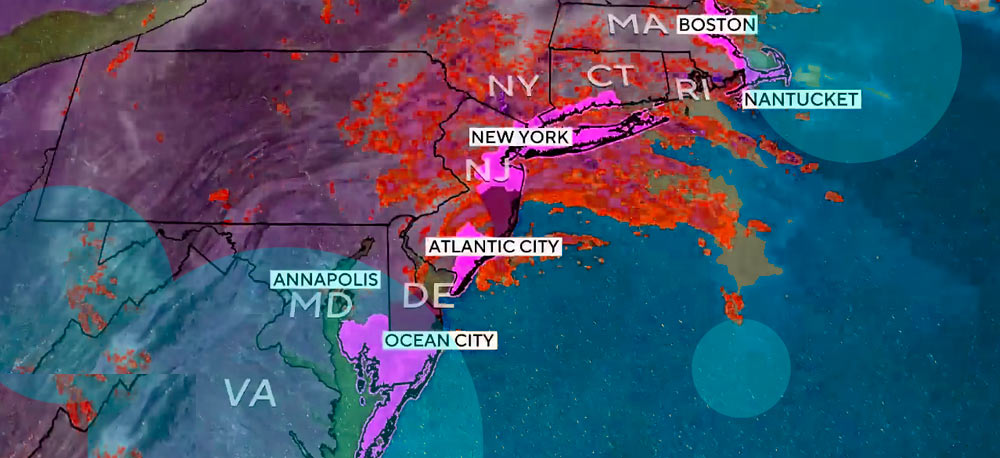
In the Northeast, hurricanes tend to weaken over cooler waters, yet fast-moving systems like the 1938 Great New England hurricane have the capacity to push destruction deep inland.
KCC cautions that common exposure management rules, such as limiting market share in a zip code, fail to reflect true hurricane risk. Instead, the firm relies on 100-year Characteristic Events (CEs), which simulate storms along the coastline every 10 miles, with storm traits designed around realistic probabilities.
This modelling approach enables insurers and reinsurers to pinpoint portfolio vulnerabilities and prepare for extreme but plausible losses.
The company concludes that the U.S. will eventually face a $100bn hurricane event. By combining detailed exposure data with historical and simulated storm scenarios, KCC aims to provide insurers with sharper insight into catastrophic risk and the capital strength needed to withstand the next record-breaking storm.