Follow Beinsure
Seattle-based startup Certiv has emerged from stealth with $4.2 mn in pre-seed funding to tackle the security risks created by autonomous AI agents.
The company is building what it calls Runtime Assurance for AI Agents, a new control layer designed to govern how these systems behave on employee devices. The funding will support engineering expansion and early enterprise deployments.
The pre-seed round drew backing from Aviso Ventures, Founders Co-op, and Fortson. Andrew Peterson of Aviso Ventures said enterprises need a new class of controls to govern autonomous systems, which helps explain why investors are already moving into this part of the AI security stack.
Certiv is entering the market as AI agents such as Claude Code and GitHub Copilot Workspace begin taking on more autonomy inside companies.
These tools are able to run code, read files, and interact with sensitive systems using employee credentials, which creates a fresh security problem for enterprises already struggling to keep pace.
Traditional security products, the company argues, are not built to monitor systems that behave unpredictably and make decisions on the fly.
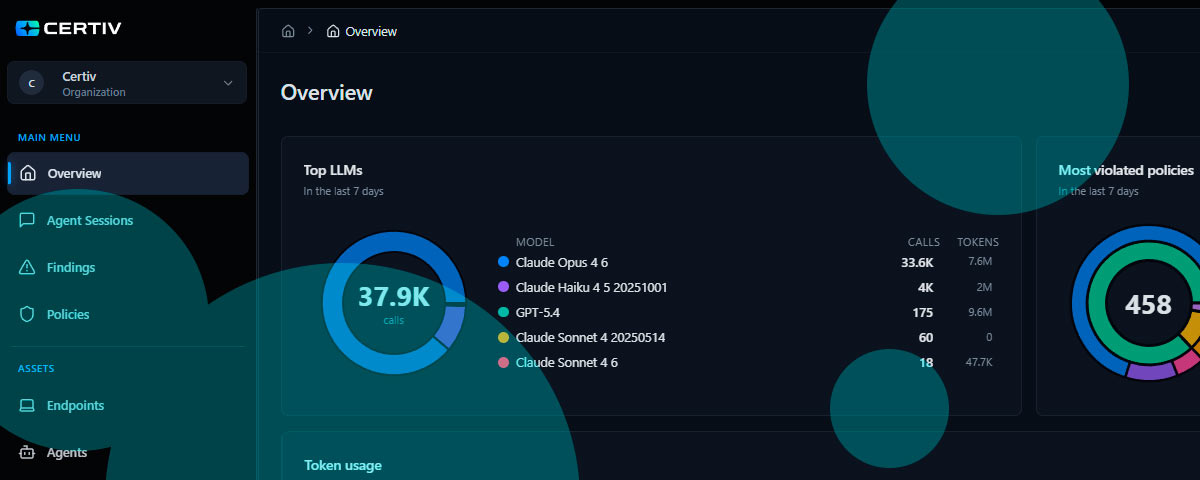
The company’s answer is an endpoint-first model. Certiv installs directly on employee workstations across Windows, Mac, and Linux devices. From there, it acts as a control point, intercepting and observing agent actions before they reach production systems or create damage.
That approach gives the platform visibility into local AI activity that network proxies often miss, including tool calls and data access happening directly on the device. Certiv says it does more than watch separate actions in isolation.
By analysing the full chain of reasoning, the system is designed to understand an agent’s intent and apply more precise policy controls in real time. Security teams do not only need to see what happened.
The founding team brings security, infrastructure, and AI experience into the build. Certiv is led by chief executive officer Jason Needham, chief technology officer Paul Allen, and chief AI officer Daniel Morris. The Seattle-based company currently has nine employees and is now moving into its next growth phase.
Certiv enters a market getting crowded with new companies focused on AI governance, though it is trying to separate itself by focusing tightly on agent behaviour at the endpoint.
That gives it a specific niche, and one with obvious demand as more companies start putting autonomous tools directly onto employee machines.
With the new capital, Certiv plans to grow its engineering team and expand early enterprise rollouts. The company said it is already running several pilot programs, which gives it early commercial traction as it tries to turn runtime assurance into a more recognised security category.