Follow Beinsure
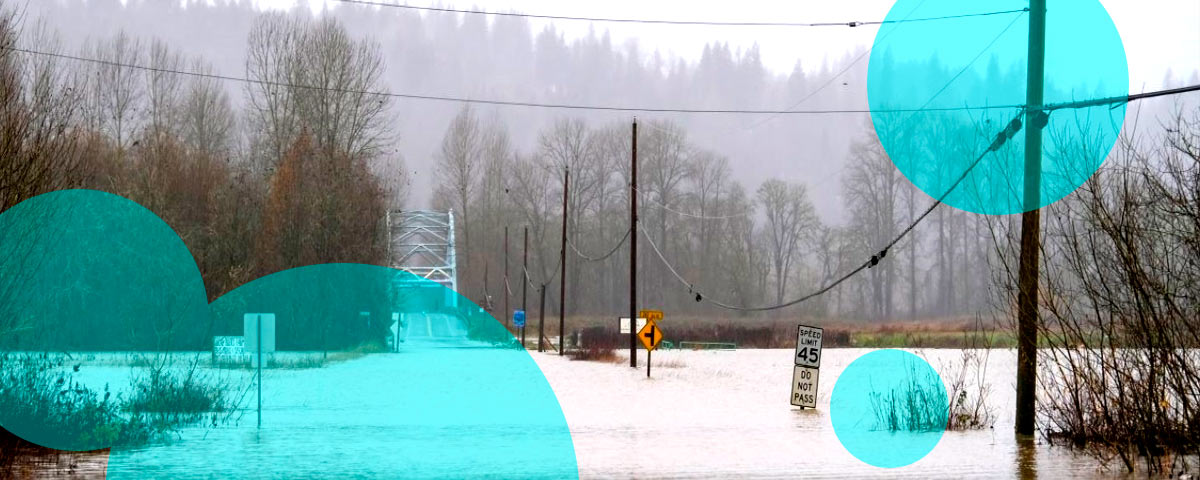
Days of relentless rain pushed large parts of Washington state into historic flooding, tearing homes from foundations, trapping families on rooftops, and cutting off major roads as rivers climbed past record levels. Emergency officials warned conditions could worsen as more rain moved in Friday.
The state remains under a declared emergency. Evacuation orders cover tens of thousands of residents.
Gov. Bob Ferguson urged people to follow evacuation guidance as river gauges continued to rise, saying the situation exceeds anything many communities have faced before.
Roughly 78,000 residents in an agricultural region north of Seattle were ordered to leave low-lying areas along the Skagit River, which was forecast to crest Friday morning. Authorities described the threat as immediate.
Flooding spread across much of the state. Bridges disappeared under water. Major highways closed. Sections of state Route 410 washed out entirely, with no alternate routes and no timeline for reopening.
A landslide shut down part of Interstate 90 east of Seattle. Photos showed cars boxed in by fallen trees, mud, and standing water, drivers waiting with nowhere to go.
Near the Canadian border, flooding forced evacuations in Sumas, Nooksack, and Everson. The Sumas border crossing closed. Amtrak suspended rail service between Seattle and Vancouver, British Columbia.
Sumas Mayor Bruce Bosch said much of the city has been devastated, coming just four years after a similar flood. Recovery from the last one, he said, never fully finished.
River levels shattered records. The Snohomish River rose nearly one foot above its previous high on Thursday, according to the National Water Prediction Service.
The Skagit River edged past its own record Thursday night in Mount Vernon, after surging through the mountain town of Concrete earlier in the day.
In Concrete, floodwaters slammed debris into homes along the river. Mariah Brosa said the water stopped just short of entering her raised house, but it destroyed her fiancé’s work car. She said she never expected the river to climb that high.
Mount Vernon, the largest city in Skagit County with about 35,000 residents, has a long history with floods. Hundreds were displaced during a major event in 2003. A floodwall that protects downtown was tested again as water pressed against its base Thursday morning, Mayor Peter Donovan said.
In nearby Burlington, officials said they were relying on dikes and flood-control systems to hold.
Michael Lumpkin of the Burlington Police Department said crews were preparing for the worst while hoping defenses would stand.
Rescues unfolded across the state. Emergency crews pulled people from stranded cars and flooded homes as an atmospheric river dumped heavy rain over the region.
In Sumas, helicopters rescued two families from rooftops after floodwaters rose to roughly 15 feet. The local fire station took on about 3 feet of water, according to Frank Cain Jr., a battalion chief with Whatcom County Fire District 14.
In the community of Welcome, erosion undermined homes along the Nooksack River. At least two houses collapsed into the water. No one was inside.
Elsewhere, the flooding turned surreal. In Snoqualmie, a herd of elk swam and waded through neck-deep water across a football field.
East of Seattle, residents along Issaquah Creek fired up pumps as water rushed into yards. Yellow tape blocked off unstable ground.
Scientists caution that no single storm can be directly pinned on climate change without specific analysis. Still, researchers say warming conditions drive heavier rainfall and make extreme floods more frequent. Washington’s rivers, this week, show what that looks like on the ground.