Follow Beinsure
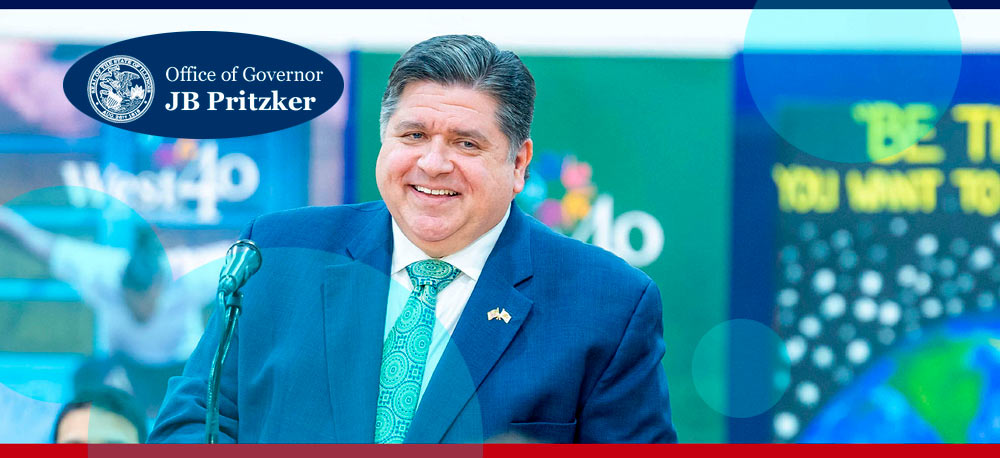
Illinois Gov. JB Pritzker signed new artificial intelligence legislation, putting the state beside California and New York in a growing state-led effort to regulate advanced AI models before Congress sets federal rules.
According to Beinsure, the law gives Illinois a place in the emerging U.S. AI safety framework, where large states are building common standards for transparency, model risk reporting and developer accountability.
Pritzker said federal lawmakers should have moved earlier on AI oversight. He argued that Washington has avoided similar rules because some officials remain too close to companies that benefit from limited regulation.
The governor framed the law as a choice between public safeguards and letting a small group of companies shift AI-related risks onto households, workers and communities. Illinois, he said, had chosen the first route.
Senate Bill 315, named the Artificial Intelligence Safety Measures Act, applies to the largest AI models. The law targets models that generate more than $500 mn in annual revenue and rely on major computing resources during training.
The bill follows California’s SB-53 and New York’s Responsible AI Safety and Education Act, both signed in late 2025. Together, the three state regimes are beginning to look like a practical national baseline, even without a federal statute.
The Illinois law creates reporting duties for risks linked to large-scale harm. That includes scenarios where an AI model helps users develop chemical, biological or nuclear weapons, or supports cyber-attacks.
Sen. Mary Edly-Allen, the bill’s Senate sponsor, said states have no reason to wait for Congress. She used a fishing analogy to warn that AI systems trained to solve problems at scale might create damage far beyond the original task.
The three states represent about 20% of the U.S. population, according to lawmakers. Yet they account for roughly 40% of the U.S. AI market, which gives their laws weight beyond state borders.
That market share matters. If large AI developers want access to California, New York and Illinois, they will likely build compliance systems around the strictest shared requirements rather than run separate systems for each state.
The new Illinois law requires developers to publish an AI safety framework. That document must explain how they identify and assess catastrophic risk.
The statute defines catastrophic risk as a likelihood of incidents causing death or serious injury to more than 50 people, or more than $1 mn in property damage.
Developers must also report harmful incidents to the state within 72 hours after identifying them. If an incident creates imminent risk of death or serious physical injury, the reporting deadline drops to 24 hours.
Rep. Daniel Didech, the House sponsor, said lawmakers are not dealing with abstract risks. He pointed to an AI-inspired mass shooting and cases where AI systems were used against municipal water and drainage infrastructure.
Didech also referred to Anthropic’s Mythos model, which the company described as too dangerous as a cyber tool for public release. Anthropic supported the Illinois bill and had representatives at the signing.
He compared AI regulation with earlier safety regimes for automobiles, electricity and air travel. In his view, government has usually responded to transformative technologies by setting safeguards rather than banning them or leaving markets alone.
Illinois added one requirement that goes beyond the New York model: mandatory annual third-party audits. New York requires an independent audit once developers become large enough to fall under the law. Illinois requires recurring external review.
That audit rule drew objections during debate in the General Assembly. TechNet, a coalition representing technology executives, warned that Illinois would ask private parties to make subjective safety judgments without national standards, certifications or federal guardrails.
OpenAI and Anthropic both supported the Illinois bill as it moved through the legislature. The measure passed with broad bipartisan backing. Five Republican senators opposed it, while the House approved it unanimously.
Large AI developers have generally pushed for a federal framework rather than a state-by-state rulebook. Still, OpenAI told Illinois lawmakers it saw room for a coordinated state approach if California, New York and Illinois moved in the same direction.
Caitlin Niedermeyer of OpenAI’s Global Affairs told the Senate’s AI and Social Media committee in April that the federal government remains well positioned to lead frontier AI safety because it has the resources and institutions.
She also said aligned state frameworks in Illinois, California and New York could create a national direction in practice.
Companies that violate the Illinois law face civil penalties brought by the attorney general’s office. Fines reach up to $1 mn for a first offense and up to $3 mn for later violations.
According to Beinsure, the Illinois law also signals where the next AI policy fights are heading: health care, education, cyber risk, infrastructure protection and independent model evaluation.
Analysts identified medical care and education as likely areas for further review as AI systems move into higher-risk public settings.
The current bill mainly asks whether a company follows its own safety framework. A developer might write a framework, complete each listed step, pass the audit and still release a risky system.