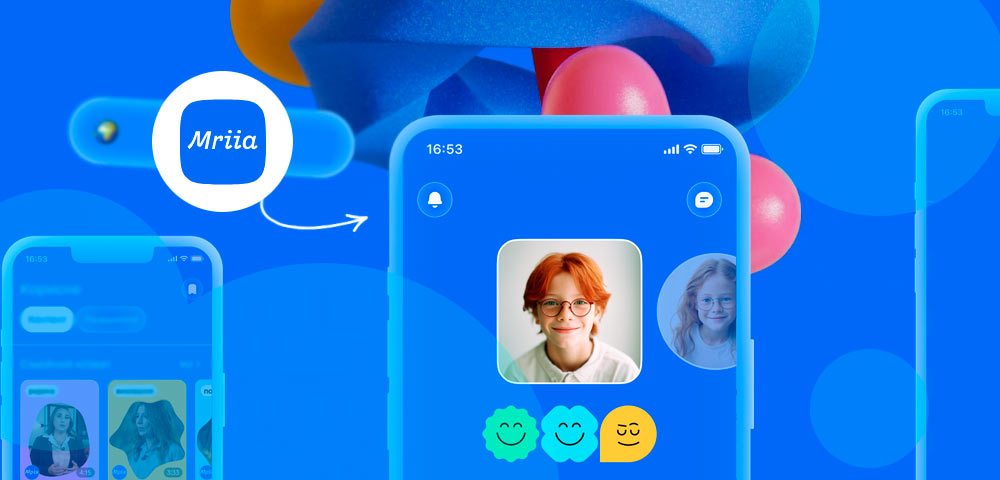
Ukraine’s state-backed digital education platform Mriia has reached more than 1 mn users across 3,700 schools, combining school administration, educational services and artificial intelligence within a unified system for teachers, students and parents.
Developed using a product management approach associated with technology startups, Mriia aims to simplify school operations, reduce administrative workloads and improve student engagement.
- Mriia education platform has expanded from 40 pilot schools to more than 3,700 schools and 1 mn users, with further growth planned for 2026.
- Mriia uses Google’s Gemini AI models to generate educational tests, reducing preparation time from hours to minutes while keeping content aligned with approved textbooks.
- The platform integrates school administration, grades, attendance and homework, with plans to extend digital education services from kindergarten through university and adult learning.
The platform was initially tested in 40 schools before expanding nationwide. Its development team plans to reach 7,000 schools and 1.5 mn active users by the end of 2026.
Anastasiia Kochubynska, Iryna Yashchenko and Viacheslav Miekh have discussed the project’s development, including its approach to AI, product design and the practical challenges of operating digital education services during wartime.
Mriia brings school administration and education services into one platform
Mriia is designed as a digital ecosystem that could eventually support the full educational journey, from kindergarten and school through university, adult education and career development. Its current offering includes mobile applications for students, parents and teachers, alongside a web portal serving teachers and school administrators.
The team prioritised mobile development because smartphones provide a more accessible way for families to use educational services without requiring a computer.
The platform combines electronic journals, timetables, attendance records, grades, homework assignments and administrative processes.
Its web portal provides additional functionality for educators and school management, with an emphasis on reducing paperwork and allowing teachers to spend more time on instruction.
Mriia is supported by international partners, including the Swiss-funded EGAP Program, UNICEF and Google.
Although commercial technology providers were already digitising school administration in Ukraine, Mriia entered the market with a different operating model: the state-backed service is free for schools and families.
According to Yashchenko, the development team needed to provide the core functionality schools expected while introducing additional capabilities that would distinguish the platform from existing services.
Mriia uses Google Gemini AI to automate test generation
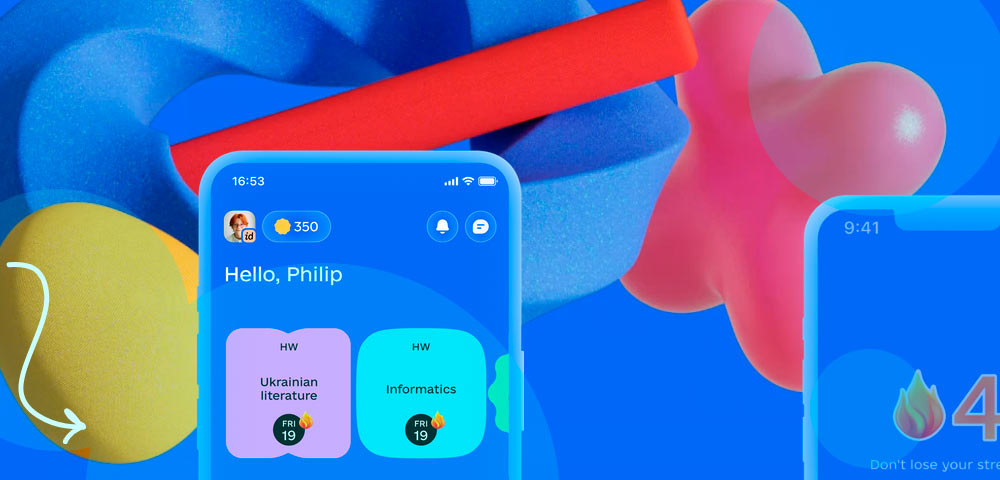
Artificial intelligence development at Mriia focuses initially on repetitive activities that consume teachers’ time, particularly preparing educational tests.
Teachers often spend hours developing lesson materials and assessment questions. Mriia’s AI tools can generate tests in minutes, reducing the time required for preparation.
The system currently uses Google’s Gemini models, supported by structured educational content drawn from textbooks, Ministry of Education materials and national examination guidelines.
These resources are organised into pages, topics and subtopics, providing AI models with relevant context for generating questions.
Approved educational materials are supplied as contextual information rather than being used to train the models.
The process involves structuring textbook content, generating assessment questions and using a separate AI agent to review the output and filter unsuitable questions.
Mriia is also testing alternative models, including Google’s Gemma and Mamai, a Ukrainian AI model.
The team is exploring methods for benchmarking AI performance against educational materials and reference answers supplied by Ukraine’s Ministry of Education.
Mriia is working with developers of Ukraine’s national large language model and may contribute educational resources to support model evaluation and improvements.
Because the platform already identifies where specific topics, illustrations and exercises appear within textbooks, the same structured content can support additional educational applications without rebuilding the underlying information system.
User behaviour shapes Mriia’s product development
Mriia’s development team uses actual platform activity to improve workflows rather than relying exclusively on assumptions about how teachers perform administrative tasks.
An early example involved electronic journals. Developers initially expected teachers to open the journal, record absences and then enter grades.
Usage data showed that many teachers went directly to grade entry instead. The findings prompted the team to remove unnecessary steps and redesign workflows around observed behaviour.
The platform also provides opportunities for more evidence-based education policy. Rather than depending entirely on periodic school reports, Ukraine’s Ministry of Education can gain additional visibility into how educational institutions operate and how digital services are used.
Behavioural analysis relies on depersonalised data, allowing the team to identify usage patterns without examining individual students’ information.
Ukraine’s digital education platform faces wartime infrastructure challenges

Operating a national education platform during Russia’s war against Ukraine presents practical difficulties, including electricity shortages, disrupted internet connectivity and heating outages. Mriia does not currently support offline functionality, making access dependent on an available internet connection.
Mobile connectivity can provide an alternative when electricity outages interrupt conventional internet services, although users still require a functioning connection to access the platform.
The development team has observed how teachers, students and parents adapt their usage during power disruptions, providing additional information for future product decisions.
Mriia’s longer-term development plans extend beyond school administration to a connected education system covering successive stages of learning and career development. Its immediate priorities include expanding adoption among Ukrainian schools, developing AI-assisted teaching tools and improving administrative workflows through feedback and observed user behaviour.