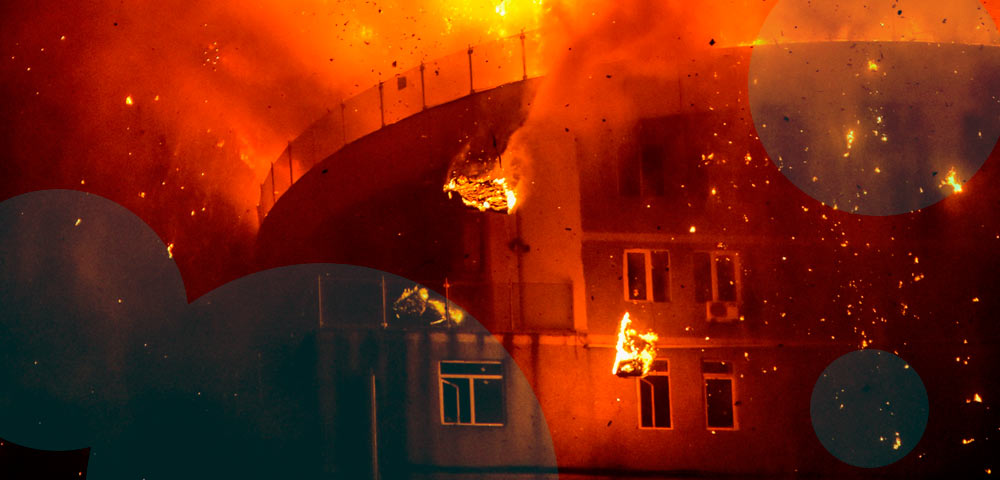
Russian insurance companies reported a net loss of approximately $141 mn in the third quarter of 2026 as Ukrainian drone strikes on oil refineries and commercial warehouses contributed to rising property insurance claims.
The industry recorded a loss of $141 mn between July and September, according to the Bank of Russia’s insurance market department.
Russia launched its full-scale invasion of Ukraine in February 2022 and has repeatedly carried out missile strikes against Ukrainian cities and civilian infrastructure. Ukraine, in turn, has conducted drone attacks on Russian oil refineries, fuel depots and major logistics centers, causing fires and substantial property damage.
These strikes have increasingly affected Russia’s insurance market, driving up claims for damaged industrial and commercial facilities.
- Russian insurers recorded a $141 mn net loss in Q3 2026, their first quarterly loss since 2023, as Ukrainian drone attacks increased claims involving industrial and commercial property.
- Insurance industry net profit fell by half to approximately $2.39 bn in the first nine months of 2026, while property insurance loss ratios reached 120%.
- The Bank of Russia plans to tighten catastrophe risk capital requirements from October 2027, potentially forcing insurers to raise additional capital and reducing profitability.
It was the sector’s first quarterly loss since the fourth quarter of 2023, when insurers lost approximately $735 mn. Another negative result was recorded in the second quarter of 2022, when losses reached $17 mn.
Since the beginning of 2024, Russian insurers had generally reported quarterly profits ranging from $1.22 bn to $1.84 bn before the latest downturn.
Net profit for the first nine months of 2026 fell by half compared with the same period a year earlier, reaching approximately $2.39 bn, Smirnov said.
Ukrainian drone attacks increase Russian property insurance losses
The growing financial impact of drone attacks and sabotage has changed the operating conditions for Russian insurers, particularly those covering industrial facilities, commercial properties and warehouses.
Demand for insurance against terrorism and sabotage risks now extends to virtually all corporate clients. The property insurance loss ratio had reached 120%, indicating that claims costs exceeded premium income in the segment.
AlfaStrakhovanie reported increases in both the frequency and average severity of property insurance claims, adding pressure to underwriting profitability. Other insurance lines have also experienced deteriorating results.
Loss ratios in compulsory motor third-party liability insurance exceeded 100%, while voluntary medical insurance (DMS) reached approximately 90%.
The deterioration in motor and health insurance performance partly to rising vehicle repair costs and higher prices for medical services.
Bank of Russia plans stricter catastrophe risk capital requirements
The Bank of Russia is preparing to expand capital requirements related to catastrophe risks, with changes scheduled to take effect on October 1, 2027.
According to the All-Russian Union of Insurers (VSS), the regulator intends to extend its catastrophe risk assessment framework to additional insurance accounting groups.
The existing requirements primarily apply to marine hull and cargo insurance. The planned expansion will include property insurance and construction and installation risks.
The central bank intends to assess whether insurers maintain sufficient capital relative to their exposure to major losses, taking account of retained risks and existing reinsurance protection.
The VSS said the regulator would examine whether “the risk assumed, taking into account the company’s own retention and existing reinsurance protection, genuinely corresponds to its capital.”
Higher capital requirements could reduce insurers’ profitability
Stricter regulatory standards could weaken capital adequacy ratios, leaving many insurers unable to meet the Bank of Russia’s requirements.
Companies may consequently need to increase their own funds to support underwriting exposures and comply with catastrophe risk capital rules.
The VSS said additional capital requirements could reduce insurers’ profitability, particularly as the industry faces rising property claims and deteriorating loss ratios across motor and health insurance.
The regulatory changes would also increase scrutiny of insurers’ retained catastrophe exposures and the effectiveness of their reinsurance arrangements.