Follow Beinsure
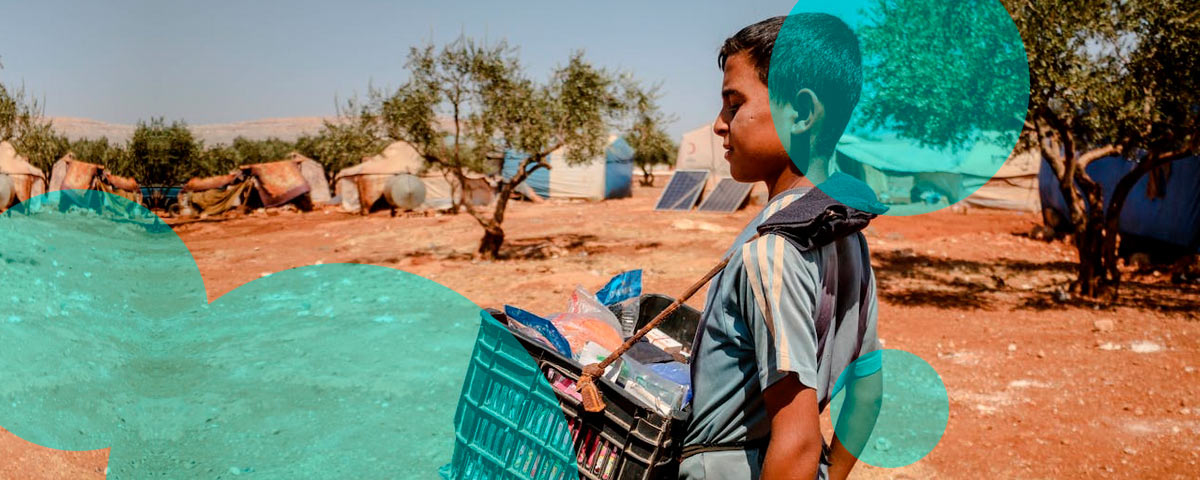
Nearly 120,000 people in Syria will receive urgent aid after a parametric drought insurance policy was triggered, unlocking a $7.9 mn payout coordinated by the World Food Programme.
The policy—funded by Humanity Insured with support from Allianz and the Global Shield Financing Facility—was designed to respond quickly when environmental shocks threaten livelihoods.
Satellite rainfall and vegetation data confirmed extreme drought in June, triggering the payout. Funds are now being used to deliver food assistance and essential supplies to families across the country’s most vulnerable farming regions.
“This payout shows why it matters for Allianz to back charities like Humanity Insured,” said Gabrielle Durisch, Chief Sustainability Officer at Allianz Commercial and trustee of Humanity Insured.
When drought strikes, families are forced into impossible choices like selling livestock or pulling children from school. Insurance like this prevents those trade-offs by delivering immediate relief.
Gabrielle Durisch, Chief Sustainability Officer at Allianz
Humanity Insured, a charity focused on expanding insurance protection for people in conflict zones and climate-vulnerable states, subsidises premiums so fragile communities can access pre-agreed payouts. Allianz, a founding partner, contributes both funding and technical expertise.
“This partnership strengthens resilience against real-world risks such as food insecurity, displacement, and climate volatility,” Durisch added.

The timing in Syria is critical. After more than a decade of war, the country faces collapsed infrastructure and widespread food insecurity. The northeast has endured its driest winter in 70 years, followed by punishing heatwaves.
Farmers have lost almost all their crops in some regions. Wheat production could fall short by 2.7 mn tons, with soaring feed and irrigation costs crushing rural families.
Khalid Osman, WFP Syria Deputy Country Director
Charlie Langdale, CEO of Humanity Insured, called the payout “a turning point for families in Syria and for how we approach climate risk globally,” arguing that it proves pre-arranged finance can function even in conflict zones.
WFP has been scaling up disaster risk financing for over a decade, building the technical and local networks to deliver aid swiftly.
“Insurance is an efficient way to provide early response in catastrophic events, even in fragile contexts,” said Mathieu Dubreuil, WFP’s climate risk financing lead. “This payout is proof that these instruments can prevent communities from being left behind.”
While Syria’s crisis runs deeper than one drought, the payout signals how aid delivery could evolve. Instead of reactive appeals after disaster strikes, pre-arranged finance and insurance can act as frontline tools—meeting needs with speed and dignity in the world’s most vulnerable places.
What Does the Global Shield Financing Facility (GSFF) Do?
The World Bank’s Global Shield Financing Facility (GSFF) supports vulnerable countries and communities with increased access to climate shocks, disasters, and crises by:
- Enhancing financial protection against disasters and climate shocks for vulnerable countries through analytical, advisory, and operational expertise.
- Strengthening partnerships with non-traditional stakeholders, including regional risk pools, the private sector, civil society organizations, and humanitarian organizations.
- Helping address financial protection gaps by providing strategic partnerships, technical advisory services, and integrated financial packages that offer coordinated and consolidated financial support to the vulnerable.
Program financial protection packages through World Bank country engagements
Teams prepare the project as per the World Bank (WB) project cycle, where the Disaster Risk Finance (DRF) engagement is a component within a larger WB project or a standalone Recipient Executed Trust Fund. The project’s design is guided by the GSFF project appraisal criteria, ensuring that the DRF engagement is well-structured and aligns with the project objectives.
An $8.5 mn grant for Rwanda supports a $150 mn World Bank operation. The project protects low-income farmers and agribusinesses with high-quality insurance in the event of agricultural shocks and, through a shock-responsive guarantee, protects banks and MSMEs (micro, small, and medium enterprises) from climatic shocks such as drought and compound shocks.
Transfer funds to partners for activities that align with the Facility’s development objective.
Approval is required from the GSFF Steering Committee for any transfer outs requested by eligible transferees, which include eligible UN organizations and multilateral institutions that can access resources from World Bank trust funds. The donors of the GSFF make all decisions on transfer outs. The World Bank does not have fiduciary oversight on any funds transferred out.
World Food Program (WFP) received $20 mn from Germany and the United Kingdom through the World Bank’s Global Shield Financing Facility to support the expansion of WFP’s climate and disaster risk financing cover in 23 countries across the globe, protecting up to 4.6 mn people from climate risks over the next two years.