Winter Storm Fern, with subfreezing temperatures, heavy snow and freezing rain that affected large portions of the Midwest, South, and Eastern U.S., is a significant event for the P&C insurance industry but will not trigger ratings downgrades of individual (re)insurers, Fitch Ratings says.
Insured losses are expected to remain within ratings sensitivities for affected issuers, given ample capital levels, diversified risk exposure and insurers’ ability to increase premium rates.
Fitch estimates insured losses in a range of $4 bn to $7 bn. That level sits well below the $18 bn in insured losses recorded during Winter Storm Uri in 2021 and the roughly $8 bn generated by Winter Storm Elliott in 2022.
Key Highlights
- Fitch Ratings estimates insured losses from Winter Storm Fern in the $4 bn to $7 bn range, materially below Winter Storm Uri in 2021 at $18 bn and Winter Storm Elliott in 2022 at about $8 bn.
- Karen Clark and Company estimates privately insured losses from Winter Storm Fern at $6.7 bn, driven primarily by freeze damage, snow, ice, and wind across more than 30 US states.
- AccuWeather estimates total damage and economic losses between $105 bn and $115 bn, including property damage, power outages, business interruption, supply chain disruption, travel impacts, and infrastructure losses.
- Fitch said losses remain within rating sensitivities for rated insurers, supported by strong capital levels, diversified underwriting portfolios, and pricing flexibility.
- The storm did not breach most catastrophe reinsurance attachment points, leaving primary insurers to absorb the majority of claims within Q1, 2026 results.
- Freeze-related damage, including burst pipes, roof failures, and vehicle losses, drove claims mainly across homeowners and personal auto insurance, with limited business interruption exposure.
- Southern states saw elevated insured losses due to building stock not designed for sustained subfreezing temperatures, ice, and snow, amplifying freeze-related damage.
Insured losses were driven mainly by freeze-related damage, including burst pipes, roof failures, vehicle damage, and ice-related property losses. Homeowners and personal auto lines were the most affected.
Winter Storm Fern: Economic Losses
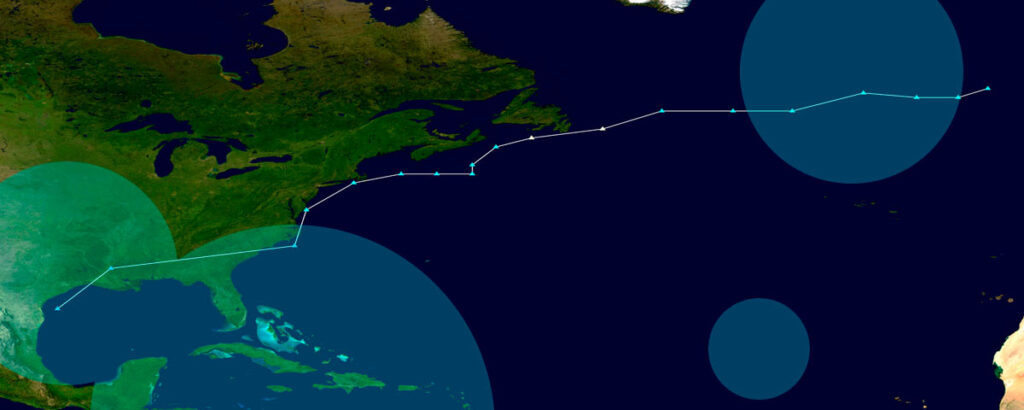
AccuWeather estimates the weekend winter storm affecting more than 200 mn people across over 30 states will generate total damage and economic losses between $105 bn and $115 bn. The scale reflects broad disruption rather than isolated physical damage.
The preliminary estimate covers damage to residential and commercial property, interruptions to commerce and supply chain logistics, and lost tourism revenue.
It also includes shipping disruption at major transport hubs, financial losses tied to prolonged power outages, widespread travel delays, and damage to critical infrastructure, according to the forecaster.
AccuWeather relies on independent analytical methods to assess both direct and indirect storm impacts.
These calculations include insured and uninsured losses spanning property damage, wage and job losses, agricultural impacts, infrastructure repair, supply chain interruption, auxiliary business losses, aviation delays, and storm-related secondary costs.
Loss data shows this pattern isn’t new. Winter storms generated nearly $6 bn in insured losses nationwide during 2022, marking the second-highest annual total for winter storm claims over the past decade, according to Aon.
Winter Storm Fern: Insured losses
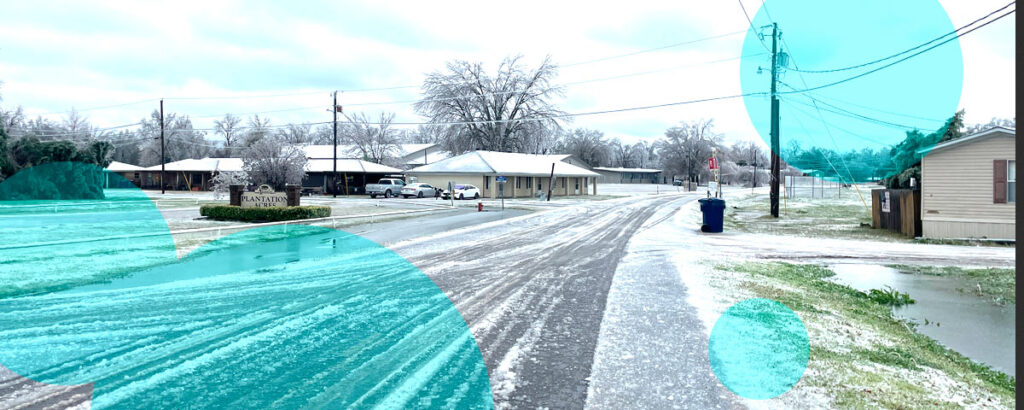
Losses of this scale fall within current rating sensitivities, supported by strong capital positions, diversified underwriting portfolios, and insurers’ ongoing ability to reprice risk, according to Fitch.
For rated insurers, the storm is expected to pressure near-term earnings rather than balance sheets. Claims exposure spans homeowners, personal auto, commercial property, and business interruption lines. Fitch said capital adequacy should remain intact, even for carriers with elevated regional exposure.
Loss absorption is expected to sit primarily with primary insurers. Fern did not reach the severity required to breach most reinsurance attachment points, leaving reinsurance recoveries limited.
As a result, catastrophe losses for first-quarter 2026 are expected to remain within industry expectations.
However, Winter Storm Fern will create significant insurance obligations, affecting homeowners, personal auto, and commercial property, leading to potentially higher premiums and stricter underwriting pertaining to weather risk.
Karen Clark & Co estimated privately insured losses from Winter Storm Fern at $6.7 bn. The storm spread snow and ice across more than 30 US states, producing wide-ranging property damage during late January.
The estimate draws on the firm’s high-resolution US Winter Storm Model. It covers privately insured losses to residential, commercial, and industrial properties, including damage from freeze conditions, snow and ice accumulation, and wind.
KCC traced the event back to January 23, when an Arctic air mass pushed south and drove temperatures sharply lower across the Great Plains and Midwest.
Along the boundary between that cold air and warm, moisture-heavy flow from the Gulf, a low-pressure system formed and developed into Winter Storm Fern.
Largest U.S. Winter Storms by Insured Losses
| Date | Storm | Insured loss | Impact |
| Feb. 2021 | Uri | $17.9 bn | Primarily affected Texas and the deep south, causing massive power grid failures and historic deep freezes. |
| Dec. 2022 | Elliott | $8.2 bn | Nationwide “bomb cyclone” with life-threatening cold and blizzard conditions |
| Jan. 2026 | Fern | $4-7 bn | Major event affecting 30 states causing widespread freeze and snow damage. |
| Mar. 1993 | Superstorm | $4.4 bn | Massive blizzard that stretched from the Gulf Coast to Canada |
| Feb. 2015 | Winter Storm | $2.8 bn | Impacted the Mid-Atlantic and Northeast, particularly hard-hitting in Massachusetts and New York. |
Freeze-related damage is projected to account for the largest share of insured losses.
Southern and southeastern states face disproportionate impact, especially Texas and Tennessee, where building stock typically lacks protection against sustained freezing temperatures, snow accumulation, and ice.
Insurers Could See Heavier Insurance Claims Pressure
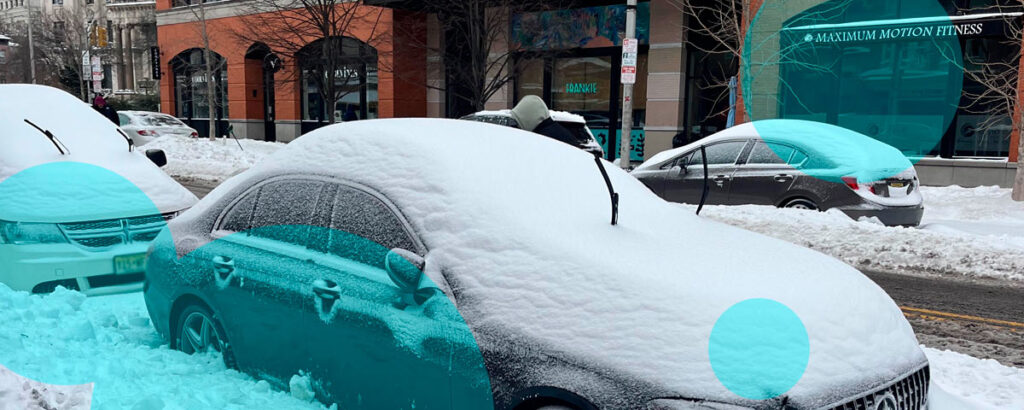
Fitch noted that insurers with concentrated geographic or product exposure could see heavier claims pressure. The storm is also likely to influence pricing and underwriting behavior, with higher premiums and tighter terms expected for weather-sensitive risks.
The human and infrastructure toll remains significant. News reports cite at least 140 confirmed fatalities and more than one million utility customers losing power.
Even so, widespread grid failure was largely avoided. Public power systems maintained stability, limiting cascading losses.
Regional grid operators and federal agencies took preemptive measures to preserve system reliability. Fitch said overall grid performance proved more resilient than during Winter Storm Uri in 2021 and Winter Storm Elliott in 2022, a factor that helped contain insured losses.
Southern and southeastern states, including Texas and Tennessee, experienced elevated damage due to building stock not designed for sustained freezing temperatures and ice accumulation. Freeze damage represented the largest loss driver.
Texas Homeowners’ Insurance Market Share
TOP 10 insurers have 76% market share of direct written premium
| Rank | Insurer | Direct written premium, $ mn | Market share, % |
| 1 | State Farm | 3,699 | 19% |
| 2 | Allstate Corp | 2,967 | 15% |
| 3 | USAA | 2,032 | 11% |
| 4 | Liberty Mutual | 1,396 | 7% |
| 5 | Farmers Insurance | 1,291 | 7% |
| 6 | Travelers | 1,149 | 6% |
| 7 | American Familly Insurance | 648 | 3% |
| 8 | Progressive | 495 | 3% |
| 9 | Texas Farm Bureau | 456 | 2% |
| 10 | Iron Family Holdings | 411 | 2% |
| All Others | 4,696 | 24% | |
| Total | Total | 19,239 | 100% |
Tennessee Homeowners’ Insurance Market Share
TOP 10 insurers have 81% market share of direct written premium
| Rank | Insurer | Direct written premium, $ mn | Market share, % |
| 1 | State Farm | 773 | 22% |
| 2 | Tennessee Farmers | 635 | 18% |
| 3 | Allstate Corp | 317 | 9% |
| 4 | USAA | 268 | 8% |
| 5 | Erie Insurance | 206 | 6% |
| 6 | Liberty Mutual | 185 | 5% |
| 7 | Travelers | 160 | 5% |
| 8 | Farmers Insurance | 139 | 4% |
| 9 | Progressive | 99 | 3% |
| 10 | Auto Owners Insurance | 89 | 3% |
| All Others | 683 | 19% | |
| Total | Total | 3,554 | 100% |
Winter Storm Fern: Facts
Winter Storm Fern affected large portions of the United States between January 23 and January 27, 2026. The storm system brought prolonged subfreezing temperatures, heavy snowfall, sleet, and freezing rain across the Midwest, South, and Eastern US. Impacts were reported in more than 30 states.
The storm caused widespread power outages, with over one million utility customers losing electricity at peak impact. At least 140 fatalities were reported nationwide, primarily linked to exposure, traffic accidents, and storm-related medical emergencies.
The storm did not reach the scale required to trigger widespread catastrophe reinsurance recoveries. Most losses are expected to be retained by primary insurers. Reinsurance attachment points were generally not met.
Despite the severity of weather conditions, the US power grid avoided systemic failure. Grid operators and federal agencies implemented preventative measures, and overall grid performance was reported to be more stable than during Winter Storm Uri in 2021 and Winter Storm Elliott in 2022.
FAQ
Fitch estimates insured losses between $4 bn and $7 bn, driven mainly by freeze-related damage across more than 30 US states
No. Fitch said losses remain within rating sensitivities due to strong capital levels, diversified exposure, and insurers’ ability to reprice risk
Fern’s losses are well below Winter Storm Uri in 2021 at about $18 bn and Winter Storm Elliott in 2022 at roughly $8 bn
Homeowners and personal auto lines took the largest share of losses, followed by commercial property and limited business interruption claims
The storm did not reach severity levels needed to breach most catastrophe reinsurance attachment points, limiting reinsurance recoveries.
Southern and southeastern states, especially Texas and Tennessee, faced elevated losses due to building stock not designed for sustained freezing temperatures and ice.
Despite over one million power outages and at least 140 fatalities, the US grid avoided systemic failure, helping contain insured losses compared with prior winter storms.
……………………
AUTHORS: Gerry Glombicki, CPA, CISSP, CCSP, CISA, ARM – Senior Director, North American Insurance at Fitch Ratings (Chicago), Laura Kaster, CFA – Senior Director, Risk for North and South American Financial Institutions, Credit Commentary & Research at Fitch Ratings
Edited by Yana Keller – Re/Insurance Editor at Beinsure Media