- Generative AI exclusions create a non-obvious risk for contractors
- What the GenAI exclusions remove
- ISO created three versions addressing different exposures
- ISO generative AI exclusion forms for contractor insurance
- No admitted insurance product replaces excluded AI coverage
- Insurers and programs by filed form adoption count
- Commercial insurance lines affected by GenAI exclusions
Contractors who use generative AI on a job may find that their liability coverage does not apply if an AI-related error contributes to a claim. Insurers are rapidly filing exclusion forms for use with the general liability, umbrella, excess, and package policies that contractors typically carry.
A nationwide review of state insurance filings found carriers have introduced generative AI exclusions across standard commercial insurance lines used by contractors. No comparable filings appeared in mid-2025.
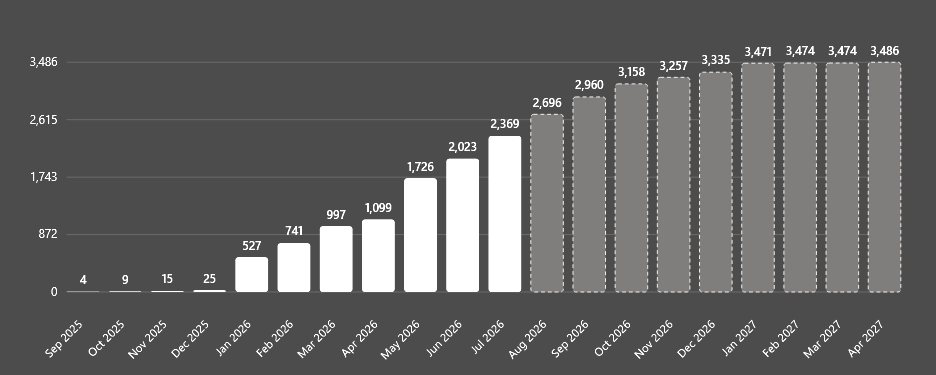
Trades Coverage identified 4,078 state-level records across 49 states and the District of Columbia through July 31. Among those filings, 2,369 had already taken effect.
The exclusions originate from six standard forms published by the Insurance Services Office, or ISO, in July 2025. ISO develops policy language widely used across the US property and casualty insurance market (see Global RiskScan 2026: Cyber, Climate & AI Reshape Insurance Risks).
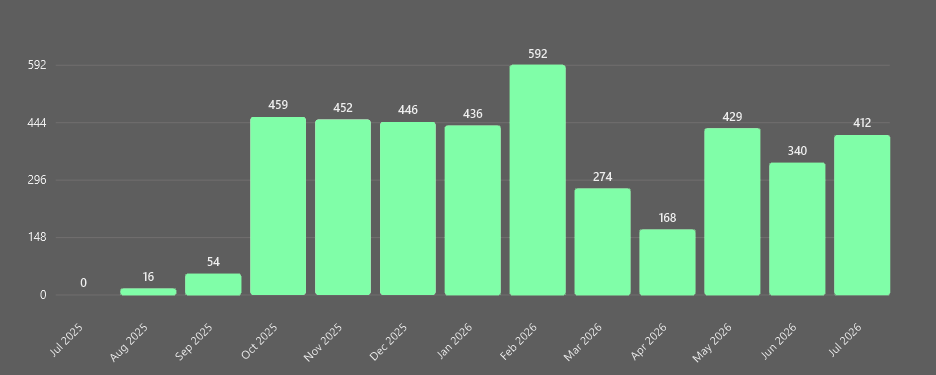
Carriers started filing the forms one month after publication. Filing activity accelerated quickly, with monthly supporting filings reaching a peak of 413 in February, according to the Trades Coverage report.
Generative AI exclusions create a non-obvious risk for contractors

Generative AI exclusions create a non-obvious risk for contractors: using AI for one small part of a job can affect coverage for a later claim arising from physical work.
Insurers have filed these exclusions in almost every state for several kinds of ordinary liability policies, including the primary, umbrella, and excess policies contractors rely on for injury and property-damage claims.
These forms are optional endorsements unless a carrier’s program rules require them. The filings do not show whether a carrier attached an exclusion to an issued policy.
- A contractor might use AI to prepare an estimate, compare plans, diagnose equipment, or draft marketing copy, then complete the physical work by hand. If that AI-assisted step contributes to an injury, property damage, an advertising claim, or a problem discovered after the work is finished, the exclusion may give the carrier a basis to deny coverage.
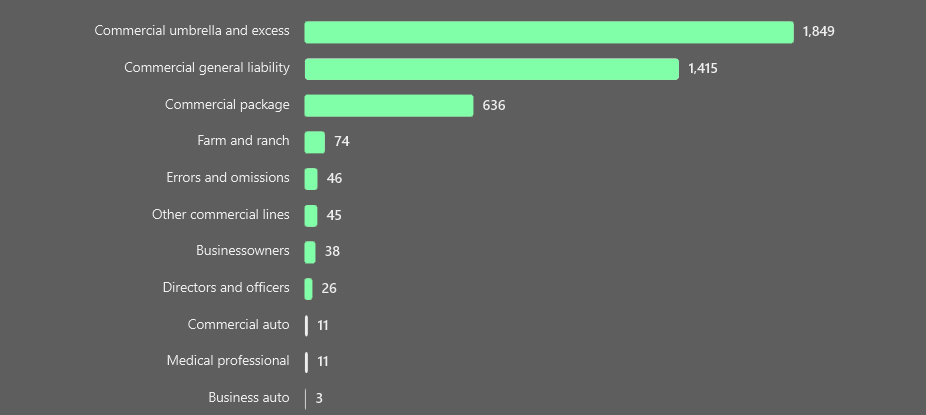
- 3,955 of the 4,078 filed form adoptions involve coverage lines contractors and small businesses commonly hold. They include general liability, umbrella and excess, commercial package, businessowners, errors and omissions, and related lines. The report shows exclusions appearing broadly across much of a contractor’s commercial liability program.
- There are 4,078 filed form adoptions across 49 states and the District of Columbia with generative AI exclusions. Each adoption represents one carrier or program filing one generative AI exclusion form for use in one state.
- 2,369 records had reached their filed effective dates by July 311,117 are scheduled for later dates. There are also 222 pending filings and 370 filed adoptions where the effective timing was not established.
- Generative AI coverage exclusions are different than what happened with cyber insurance 15-20 years ago. Insurers added cyber exclusions to standard policies, but a separate cyber-insurance market had developed to cover that risk so businesses could “buy back” that coverage separately. There are currently no admitted standalone generative AI products that fill the coverage gap these exclusions create for contractors, creating a potential uncoverable gap for millions of businesses.
What the GenAI exclusions remove
Most filings affect insurance lines routinely purchased by contractors and smaller businesses.
Trades Coverage searched all 106,812 commercial insurance filings available through public filing systems in all 50 states and the District of Columbia from July 2025 through July 31, 2026. Carriers often adopt standard industry forms and sometimes file their own forms.
The analysis counted one filed form adoption for each carrier or program filing one specific generative AI exclusion form for use in one state.
Generative AI insurance exclusion filings across the US
| Filing metric | Data |
| State-level GenAI exclusion records | 4,078 |
| Records already in force | 2,369 |
| Records covering common contractor lines | 3,955 |
| States with at least one record | 49 |
The first adoptions appeared in August 2025, one month after the Insurance Services Office, which develops standard insurance policy forms, published six generative AI exclusion forms.
Of the 4,078 filed form adoptions, 3,955 involved coverage lines contractors and small businesses commonly buy, including commercial general liability, umbrella and excess, commercial package, businessowners, errors and omissions, and related lines. By July 31, 2026, 2,369 had taken effect.
The exclusions therefore reach several parts of a contractor’s insurance program rather than one specialized product.
Filed form adoptions by first filing month
Established effective dates reach 3,486 by April 2027
ISO created three versions addressing different exposures
- CG 40 47 carries the broadest wording. It removes coverage for bodily injury, property damage and advertising injury claims arising from generative AI.
- CG 40 48 takes a narrower approach and excludes advertising injury. CG 35 08 addresses completed operations, which contractors depend on for certain claims emerging after work has finished.
The wording of the broadest form creates substantial exposure for businesses using AI in limited parts of a project.
A claim only needs to arise out of generative AI for the exclusion to become relevant. The wording doesn’t depend on how much of the project involved AI.
A contractor might use an AI system for a single estimate, takeoff or design decision while completing everything else through conventional processes. If the AI-assisted work later contributes to a covered loss, the exclusion might remove coverage for the resulting claim.
ISO generative AI exclusion forms for contractor insurance
| ISO form | Coverage affected | Main effect |
| CG 40 47 | Commercial general liability | Excludes bodily injury, property damage and advertising injury arising from generative AI |
| CG 40 48 | Commercial general liability | Excludes advertising injury arising from generative AI |
| CG 35 08 | Completed operations | Targets claims arising after a contractor finishes a job |
“A contractor might use AI for one estimate, takeoff or design decision and do the rest of the job without it,” said Matt Levin, head of research at Trades Coverage. “If that work contributes to a later claim, the exclusion could apply even though AI was used for only a small part of the project.”
Filed form adoptions by coverage line
Contractor use of AI is increasing at the same time
ServiceTitan’s 2026 Commercial Specialty Contractor Industry Report surveyed more than 1,000 industry leaders. The research found 38% of contractors reported measurable business impact from AI, compared with 17% in 2025.
Cost estimating ranked as the most common application at 24%. Bid management followed at 22%.
Those uses place AI directly inside operational decisions tied to pricing, project scope and construction work. Contractors adopting such tools therefore face a growing need to examine policy exclusions during placement and renewal.
Contractor adoption of AI in 2026
| Contractor AI use | Share |
| Contractors reporting measurable business impact from AI | 38% |
| Cost estimating | 24% |
| Bid management | 22% |
| Contractors reporting measurable AI impact in 2025 | 17% |
No admitted insurance product replaces excluded AI coverage
The absence of a replacement insurance product separates the GenAI exclusion rollout from earlier coverage shifts.
When ISO addressed cyber exposure under standard commercial general liability policies, businesses already had access to standalone cyber insurance. Companies losing cyber protection under CGL policies had another market available for purchasing separate coverage.
Trades Coverage found no admitted standalone insurance product for contractors replacing the generative AI exposure removed by these exclusions.
Insurers introducing AI exclusions are using an approach similar to the industry’s treatment of silent cyber risk. Carriers have discussed the comparison openly, yet contractors don’t currently have an equivalent admitted product for buying back the excluded exposure.
Insurers and programs by filed form adoption count
| Carrier or program | Filed form adoptions | Jurisdictions |
| National Union Fire Insurance Company of Pittsburgh, Pa. | 313 | 40 jurisdictions |
| Allianz Global Risks US Insurance Company | 234 | 39 jurisdictions |
| Atlantic Specialty Insurance Company | 200 | 40 jurisdictions |
| Star Insurance Company | 152 | 40 jurisdictions |
| XL Insurance America, Inc. | 146 | 39 jurisdictions |
| Accident Fund Insurance Company of America / United Wisconsin Insurance Company | 96 | 24 jurisdictions |
| Great American Insurance Group | 87 | 40 jurisdictions |
| AF Group | 76 | 20 jurisdictions |
The filing totals also cover only admitted-market SERFF records and Florida I-File data. Exclusion activity in non-admitted insurance markets therefore sits outside much of the dataset and could extend beyond the reported figures.
Commercial insurance lines affected by GenAI exclusions
| Insurance line | GenAI exclusion exposure |
| Commercial general liability | Liability claims connected to AI use face exclusion risk |
| Umbrella and excess | Exclusions affect higher liability layers |
| Commercial package | AI exclusions can appear in bundled commercial policies |
| Businessowners policies | Smaller contractors face exposure through standard BOP coverage |
| Errors and omissions | Professional liability claims tied to AI-assisted work face exclusion risk |
| Higher inventory levels | Updated property values |
| More expensive materials | Replacement-cost assumptions |
| Fixed-price contracts | Contractor margins and cost escalation terms |
| Cross-border customer credit | Buyer finances and payment terms |
| New sourcing jurisdictions | Origin documentation and customs controls |
| Tariff-driven shutdowns | BI and CBI policy wording |
Geography offers little protection
Every state except Minnesota had at least one exclusion record through July 31. Brokers reviewing contractor coverage therefore need to focus on policy wording rather than assume certain states remain unaffected.
Policies renewed since August 2025 might include one of ISO’s generative AI forms or separate wording developed by individual carriers.
Large construction companies often employ risk managers responsible for tracking filing activity and changes in insurance contracts. Smaller contractors rarely maintain the same internal resources.
For those businesses, brokers increasingly carry responsibility for identifying AI exclusions, comparing policy forms and determining where routine use of generative AI creates uninsured exposure.
Methodology and limits
This report measures carrier filing activity through July 31, 2026. Its main dataset contains one filed form adoption for each carrier or program, generative AI exclusion form, and state. Each adoption must be supported by evidence showing both a real exclusion and a carrier filing action. The result is not a count of policies, policyholders, insured businesses, claims, or claim denials.
A filed form adoption is one carrier or program filing one generative AI exclusion form for use in one state. Related regulatory submissions are combined into that adoption.
Pending filings count because they show that a carrier filed the exclusion form. They are kept separate from records whose filed effective date had passed or was scheduled for a known later date.
Every included adoption must be supported by evidence showing both a real generative AI exclusion and a carrier filing action. Bureau publications, generic AI questions, unrelated exclusions, and rejected or withdrawn filings are excluded.
FAQ
What is a generative AI insurance exclusion?
A generative AI exclusion removes coverage for certain claims connected to the use of GenAI tools. Depending on the form, exclusions affect bodily injury, property damage, advertising injury or completed operations.
How many GenAI insurance exclusion filings have insurers submitted?
Trades Coverage identified 4,078 state-level records through July 31, 2026. Of those, 2,369 had already taken effect.
Which contractor insurance policies are affected?
Filings cover commercial general liability, umbrella and excess insurance, commercial package policies, businessowners policies and errors and omissions coverage.
What does ISO form CG 40 47 exclude?
CG 40 47 excludes bodily injury, property damage and advertising injury claims arising from generative AI. Its wording focuses on whether AI contributed to the claim, rather than how much AI was used.
Does limited use of AI still create an exclusion risk?
Yes. A contractor using AI for a single estimate, takeoff or design decision might still face an exclusion if that work contributes to a later claim.
Is there standalone insurance available to replace excluded GenAI coverage?
The Trades Coverage review found no admitted standalone product for contractors that replaces the excluded generative AI exposure.
What should brokers and contractors review at renewal?
They should examine policies renewed since August 2025 for ISO GenAI forms or carrier-drafted equivalents. Smaller contractors often depend on brokers to identify these exclusions and assess resulting coverage gaps.