Follow Beinsure
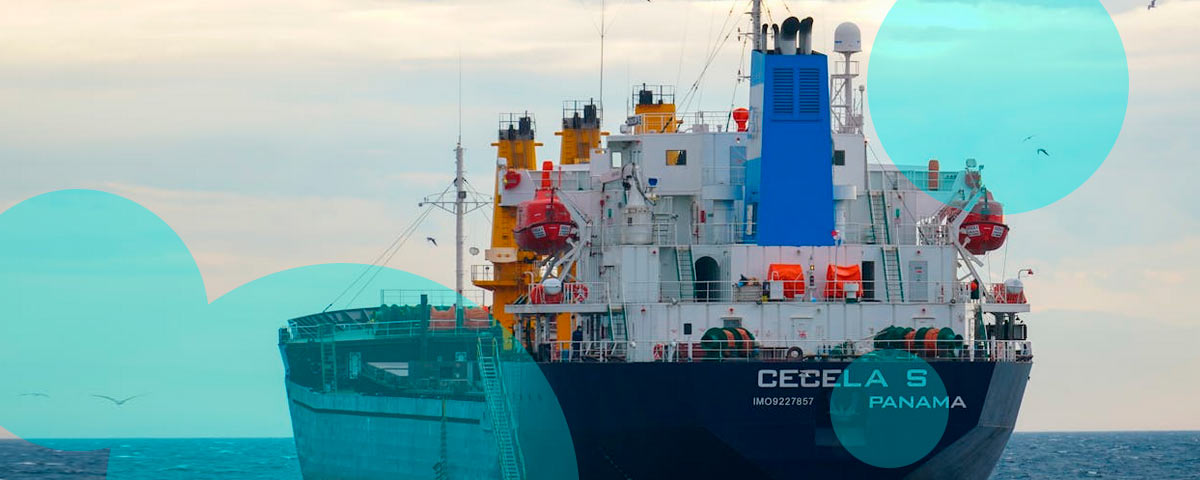
The fragile U.S.-Iran ceasefire came under new pressure on Memorial Day after American forces carried out fresh strikes in southern Iran. The strikes took place as President Donald Trump attended a ceremony at Arlington National Cemetery honoring 13 service members killed during Operation Epic Fury, according to Insurance Business Mag.
U.S. Central Command said the strikes were defensive. Spokesman Capt. Timothy Hawkins said U.S. forces targeted missile launch sites and Iranian boats attempting to place mines.
The action occurred near Bandar Abbas, Iran’s main naval base and a central point in the standoff over the Strait of Hormuz. The passage normally carries about 20% of the world’s seaborne oil supply.
For marine insurers, the wording matters. A ceasefire that includes self-defense strikes still leaves underwriters pricing active operational risk rather than post-conflict recovery.
That problem has shaped the market since the conflict began on Feb. 28. U.S. and Israeli forces launched coordinated strikes on Iran, including attacks on nuclear and missile infrastructure and the assassination of Supreme Leader Ali Khamenei.
The Strait of Hormuz effectively closed before Iran’s Revolutionary Guard had formally laid mines. Within 48 hours, war risk premiums rose fivefold, major marine insurers cancelled some existing coverage, and the Lloyd’s Market Association’s Joint War Committee redesignated the Arabian Gulf as a conflict zone.
Tanker traffic fell more than 80% before Iran formally declared a physical blockade. The market moved before the blockade fully materialized.
Insurers reported that the market response has often been misunderstood. Three weeks into the war, the Lloyd’s Market Association pushed back against claims that vessels were avoiding Hormuz because insurance had disappeared or become unavailable.
The LMA said that was inaccurate. Its survey of major Lloyd’s market participants found 88% still had appetite to underwrite international hull war risks, while more than 90% continued offering cargo coverage.
By early March, premiums for Strait of Hormuz transits had climbed to 1.5% to 3% of hull value. U.S., UK, and Israeli-linked vessels were paying closer to 5%.
For a Very Large Crude Carrier worth about $138 mn, that means indicative voyage premiums of $10 mn to $14 mn per trip. Before the war, comparable costs were measured in hundreds of thousands of dollars.
Calvin Gray, global head of marine at Intact Insurance, told that the strait may be officially open, but normality has not returned. Monday’s strikes near Bandar Abbas support that view.
The LMA’s position remains that ships are not staying away because of a lack of insurance. They are staying away because crew and vessel safety risks remain high.
Those safety concerns move with events on the water. U.S. forces targeting Iranian boats allegedly placing mines is exactly the kind of incident that keeps marine risk pricing elevated.
Underwriters also face a second complication from Tehran’s Hormuz Safe platform. The state-backed digital insurance system accepts cryptocurrency payments for vessels transiting under Iran’s newly declared Persian Gulf Strait Authority.
Coverage through a sanctioned state entity raises problems for brokers and insureds. Questions include policy validity, sanctions compliance, enforceability, and whether claims could be paid without triggering legal exposure.
The U.S. government has also launched its own war-risk backstop for compliant vessels. The program had attracted no takers, partly because its conditions do not match the market’s actual insurance problem.
The new strikes came during a delicate diplomatic moment. Pakistan-mediated talks stalled in April, but U.S. officials had recently indicated movement toward an interim framework.
Trump also shifted his position on Iran’s enriched uranium. He said the material could be turned over to the U.S. for destruction or destroyed in place, or at another acceptable location, with the Atomic Energy Commission or an equivalent body witnessing the process.
That marks a change from Trump’s earlier demand that all nuclear material be transferred to U.S. custody. He had previously said the U.S. would get all nuclear dust and that no money would change hands.
For insurance markets, the diplomatic shift does not yet reset the risk. Until mine threats, military strikes, sanctions exposure, and transit safety stabilize, Hormuz cover will remain priced for managed uncertainty rather than peace.