Wall Street is moving war into its risk models, and catastrophe specialists are now helping investors, banks, and insurers estimate where military conflict might emerge next. The same modelling discipline used for hurricanes, earthquakes, and other natural catastrophes is being adapted for political violence, transport chokepoints, regime change, and armed conflict, according to Bloomberg.
Since 2008, the number of countries involved in external conflicts has nearly doubled to slightly more than 100, according to the Institute for Economics and Peace. The economic impact of violence now stands near $22 tn, equal to more than 10% of global gross domestic product.
Wars now distort financial assumptions across energy, shipping, credit, mortgages, and insurance. They also expose a weakness in older risk models built mainly around historical data.
Citigroup has warned against “rear-view mirror” models, while Morgan Stanley says financial firms need to rethink geopolitical risk across a broader set of exposures.
Verisk has released a model that it says would have helped financial professionals anticipate the Iran war. The firm’s Predictive War Index, released to clients in late May, uses machine learning to forecast the probability of war in a country over the next 12 months.
The model was trained on political, economic, and social datasets covering 1995 to 2022, so it did not include the current Iran war.
Even so, Verisk said back-testing showed that if the model had existed in early January, it would have assigned a 66% probability of war breaking out in Iran about one and a half months later.
Verisk has also built a Geopolitical Relations Index, which tracks changes in tension between pairs of countries. The model reviews factors such as prior military clashes, government-system similarity, and geographic proximity for power projection.
Another Verisk model, launched in October 2023, has correctly predicted six of seven government collapses since release. Those predictions included the ouster of Bashar al-Assad in Syria in 2024 and the sudden removal of Venezuela’s Nicolas Maduro in January.
In Maduro’s case, economic stress and a history of political instability lifted the risk score, said Chris Boylan, a data science expert at Verisk Maplecroft.
Rand Corporation has developed an artificial intelligence model that turns uncertain questions, including regime change, into probability estimates. The model partly uses aggregated views from people who aren’t subject-matter experts to forecast future scenarios. In mid-May, it showed a 20% likelihood that Iran’s regime would not survive into 2027.
The results are designed not just to describe what might happen, but to show policymakers how specific actions – sanctions pressure, diplomatic engagement, or support for civil society – would shift those probabilities in practice.
Traditional financial models often fail under current geopolitical conditions because shocks such as trade blockades or sanctions do not behave like ordinary moves inside a normal distribution.
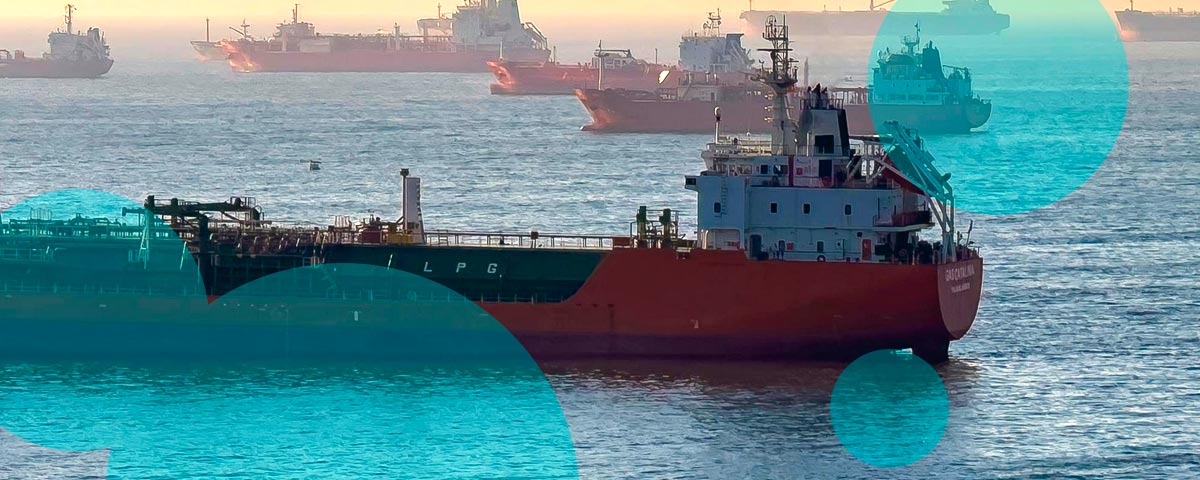
The Strait of Hormuz shipping disruption has renewed attention on transport chokepoints and their vulnerability across global trade. Those exposures require new algorithms for marine insurance, logistics, energy pricing, and supply-chain finance.
Shortly after the Iran war began on Feb. 28, Lloyd’s of London quoted marine war-risk premiums in the Strait of Hormuz as high as 1% of a vessel’s value per voyage, according to Moody’s. Before the conflict, pricing sat at only a fraction of 1%.
Iran rejected U.S. President Donald Trump’s claim that the warring countries were close to signing an interim peace deal to reopen the Strait of Hormuz. That kind of uncertainty leaves insurers and traders pricing not only physical danger, but also diplomatic volatility.
Modelling specialists are now treating conflict scenarios more like terrorist attacks, where low-cost actions produce outsized economic losses. Moody’s notes the new models help insurers assess how disruption spreads across shipping routes and supply chains, rather than measuring only physical damage to single assets.
Geopolitical volatility has moved beyond normalization and into acceleration. 2025 saw the acceleration of the supercycle and it marked a wake-up call for the C-suite.
Risk experts are also drawing on methods used to forecast strikes, riots, and civil commotion. That matters for insurers because political violence coverage now extends beyond physical war zones into ports, logistics corridors, energy assets, manufacturing hubs, and urban infrastructure.
Verisk said newer risk models will help insurers bring predictive war views into underwriting and exposure management workflows. For carriers, that means pricing and accumulation control need to account for military escalation, state instability, sanctions, and supply-chain damage.
Morgan Stanley Institute said such tools are becoming necessary in a fragmented, multipolar world. The old system shaped by globalization-driven efficiency is fading, leaving companies with more exposure to political shocks, supply disruption, and regional military escalation.
War has now overtaken civil unrest as the political violence risk that worries companies most when they buy insurance, according to a May risk assessment from Allianz.
According to Beinsure analysts, war modelling is moving from geopolitical commentary into underwriting infrastructure. Insurers, banks, and asset managers need forward-looking scenarios because historical averages no longer capture sanctions, chokepoint closures, cyber spillovers, and rapid regime instability.