Reinsurance market participants increasingly favour life and health (L&H) business when deciding where to allocate capital, according to a Fitch Ratings survey.
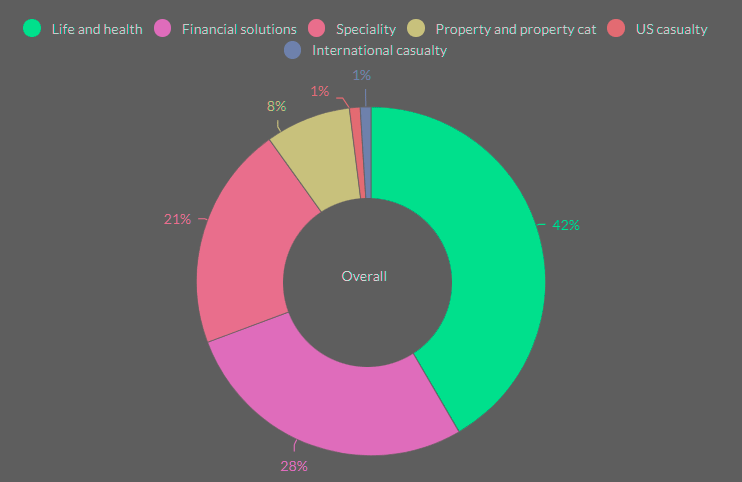
More than 90% of reinsurers ranked L&H, financial solutions or specialty as their highest-priority business line for capital deployment. Fewer than 10% selected property or property catastrophe reinsurance.
The results come as available reinsurance capital continues to exceed demand. Fitch expects excess capacity to prolong buyer-friendly conditions across the property and casualty market, where pricing has softened following several years of stronger rates.
Key highlights
- More than 90% of Fitch survey respondents ranked L&H, financial solutions or specialty as their highest capital allocation priority. Property and property catastrophe received less than 10%.
- L&H led the survey with 42% of responses. Financial solutions followed at 28%, while specialty accounted for 21%.
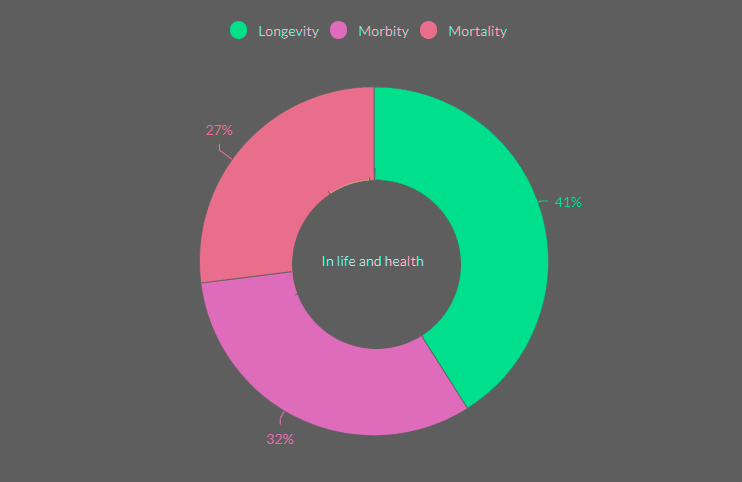
- Longevity attracted the strongest appetite within L&H. Some 41% ranked it first, with reinsurers showing greater interest in longevity than mortality or morbidity risk.
- Property and property catastrophe received 8% of responses. US casualty ranked lowest at 1% as softer P&C pricing reduced the segment’s relative appeal.
- Fitch expects excess reinsurance capital to keep 2027 P&C renewals buyer-friendly. Strong capital buffers and reserve adequacy should help reinsurers absorb weaker margins without materially damaging credit profiles.
This environment puts greater pressure on reinsurers to seek stronger risk-adjusted returns while limiting capital requirements. Capital allocation has therefore shifted toward businesses offering different earnings profiles and lower exposure to property catastrophe volatility.
L&H ranked first among the surveyed business lines

Some 42% of the 93 respondents selected the segment as their leading allocation priority, with longevity business driving much of the interest.
- Financial solutions followed with 28% of responses. Specialty reinsurance ranked next at 21%, showing substantial appetite outside traditional property classes.
- Property and property catastrophe attracted only 8% of respondents despite their long-established position within global reinsurance portfolios. US casualty ranked last, receiving 1% of responses.
Fitch surveyed reinsurers, primary insurers, brokers and other market participants attending the annual Monte Carlo gathering. The allocation results point to a market where abundant capital and softer P&C conditions are pushing reinsurers toward businesses offering more attractive returns relative to required capital.
Reinsurer capital allocation priorities
| Business line | Share ranking it highest |
| Life & health | 42% |
| Financial solutions | 28% |
| Specialty | 21% |
| Property and property catastrophe | 8% |
| US casualty | 1% |
How do you expect terms and conditions to evolve in 2027?
The survey is consistent with Fitch’s view in its Global Reinsurance Outlook 2027 that L&H reinsurance is likely to present more profitable growth opportunities than P&C reinsurance as the P&C market softens.
We expect L&H growth to outpace that in P&C, supported by demand for biometric cover, as well as financially motivated transactions, including capital optimization related to pension risk transfers and asset-intensive structures.
Longevity was the top business line for capital allocation within L&H, with 41% ranking it highest. Fitch’s discussions with leading reinsurers confirm a preference for longevity risk, notably in the US, over more capital-intensive mortality risk and morbidity risk, which also offer more limited return prospects.
L&H capital preferences
| Area | Fitch survey finding |
| Longevity | 41% ranked it highest within L&H |
| Mortality | Lower preference due to greater capital requirements and more limited return prospects |
| Morbidity | Lower preference due to greater capital intensity and weaker expected returns |
| Biometric cover | Expected to support L&H reinsurance growth |
| Pension risk transfer | Supporting demand for financially motivated transactions |
| Asset-intensive structures | Another source of demand for financial solutions |
Specialty remains more attractive than P&C due its lower correlation with the property cycle and less pronounced rate declines. Specialty business lines are diverse and capital allocation preferences vary, but our discussions indicate that, for example, construction and trade credit insurance are favoured over cyber risk and marine.
What are your expectations for Property Cat reinsurance pricing at the 2027 renewals?
We do not expect P&C margin and revenue erosion to materially affect the sector’s very strong capital position. Rising capitalization buffers and strengthened reserve adequacy provide a solid base for the sector to maintain strong credit fundamentals, and the vast majority (88%) of Fitch-rated global reinsurance groups are on Stable Outlooks.
Nevertheless, intelligent cycle management, and navigating the trade-off between growth and profitability at renewals, will increasingly differentiate individual reinsurer performance.
P&C and specialty outlook
| Market factor | Fitch view |
| Reinsurance capital | Supply continues to exceed demand |
| P&C pricing | Softer conditions expected to continue |
| Property cat | Lower capital allocation priority than L&H and specialty |
| Specialty | More attractive than broader P&C due to less severe rate declines |
| Construction | Favoured within specialty discussions |
| Trade credit | Favoured within specialty discussions |
| Cyber and marine | Receiving less preference than construction and trade credit |
| Credit outlook | 88% of Fitch-rated global reinsurance groups carry Stable Outlooks |
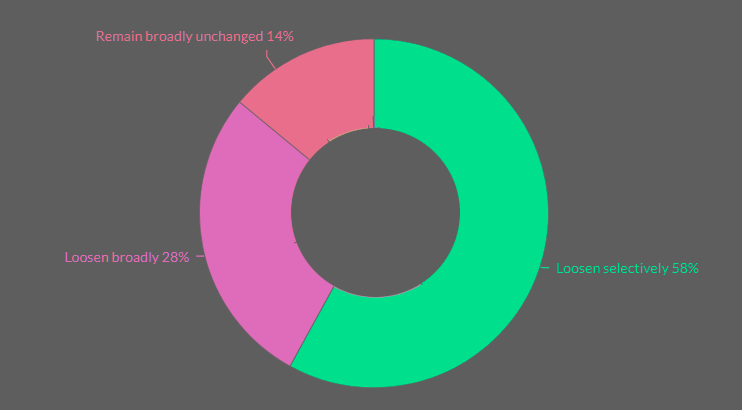
The property reinsurance market is expected to remain soft through 2027 unless the industry absorbs a very large loss event. Fitch also expects selective loosening of terms and conditions to add to rate pressure as reinsurers compete for business.
Casualty pricing should prove more resistant because carriers continue to face reserve uncertainty and rising loss costs. Excess capacity still presents a risk, though, and Fitch warned that competition could eventually push some casualty rates below adequate levels.
Claims costs continue to rise through economic and medical inflation, along with social inflation. Climate-related losses and emerging liabilities connected with geopolitics and AI add further uncertainty to future claims development.
Reinsurers are also expected to retain a larger proportion of industry losses as primary insurers reduce retention levels from the highs reached during the hard market. That change would transfer more claims back into reinsurance programs and increase earnings volatility.
Natural catastrophe risk remains a major source of reinsurance demand. Insured catastrophe losses have been increasing at an annual rate of 5-7%, driven by greater exposure, higher asset values and shifts in hazard patterns.
Swiss Re’s modelling puts a 2026 peak-loss scenario at around $320 bn in insured losses. The estimate shows the scale of protection required for rare events with severe loss potential.
A sequence of hurricanes also creates large annual losses without producing a single record event. Storm clusters similar to Harvey, Irma and Maria in 2017 would push annual insured losses above $120 bn.
Verisk raised its global insured catastrophe loss benchmark to $171 bn, with the US accounting for $117 bn and severe thunderstorms leading modeled risk.
FAQ
Why are reinsurers allocating more capital to life and health?
Fitch sees stronger profitable growth prospects in L&H than in P&C as property and casualty pricing softens. Demand for biometric cover and financially motivated transactions also supports the segment.
Which reinsurance business attracted the most capital interest?
L&H ranked first, with 42% of survey respondents choosing it as their highest-priority business line. Financial solutions followed with 28%.
Why is longevity attractive to reinsurers?
Longevity requires less capital than some mortality and morbidity exposures and offers more attractive return prospects, according to Fitch’s discussions with leading reinsurers. Interest appears especially strong in the US market.
Why is property catastrophe receiving less capital?
Property and property catastrophe received 8% of first-choice responses. Abundant reinsurance capacity and softer pricing have reduced expected returns relative to some L&H, financial solutions and specialty opportunities.
What does excess reinsurance capital mean for buyers?
When available capital exceeds demand, cedants gain greater negotiating power. Fitch expects these conditions to keep the P&C market buyer-friendly as reinsurers compete for attractive business.
Which specialty insurance classes are attracting more interest?
Fitch’s discussions indicate stronger capital appetite for construction and trade credit insurance than for cyber risk or marine. Specialty remains relatively attractive because rate declines have been less pronounced than across broader P&C business.
Will softer P&C pricing weaken reinsurers’ financial strength?
Fitch does not expect weaker P&C margins and revenue to materially damage the sector’s capital position. Capital buffers have increased, reserve adequacy has strengthened and 88% of Fitch-rated global reinsurance groups currently have Stable Outlooks.
…………………
AUTHORS: Manuel Arrivé – CFA, Director at Fitch Ratings, Brian Schneider – CPA, CPCU, Senior Director in Fitch Ratings’ North American insurance rating group
Edited by Yana Keller – Lead Re/Insurance Editor at Beinsure