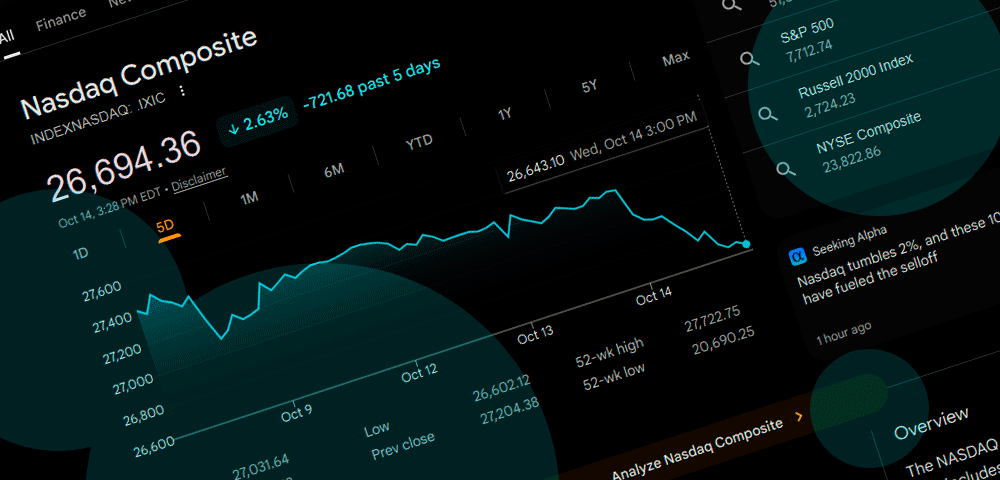
- The Nasdaq Composite fell more than 2% during October 14 trading, while the S&P 500 declined 1.35%, as higher-than-expected US inflation intensified expectations of further Federal Reserve interest rate increases.
- OpenAI’s annualized revenue reached approximately $50 bn at the end of September, below earlier reports of $70 bn, although Bloomberg subsequently reported that the company expects to reach or exceed $70 bn by the end of 2026.
- Gartner warned that more than $3.5 trillion in AI infrastructure investment could face impairment risk by 2030, while Citi now expects a December rate hike and PIMCO sees further upside risk to Treasury yields.
US technology stocks extended their decline on October 14, 2026, as unexpectedly strong inflation data pushed Treasury yields higher and added to investor concerns about the cost and profitability of artificial intelligence infrastructure investment.
The Nasdaq Composite fell 2.02% to 26,654.96 during Wednesday afternoon trading, according to Reuters. The S&P 500 declined 1.35% to 7,700.08, while the Dow Jones Industrial Average lost 0.51% to 51,405.02. These were intraday figures rather than closing levels.
The selloff followed several sessions of volatility driven by uncertainty surrounding OpenAI’s revenue, rising energy prices and a repricing of US government bonds.
The Philadelphia Semiconductor Index declined almost 4%, extending its losing streak to six consecutive sessions, while AI infrastructure companies experienced some of the steepest losses.
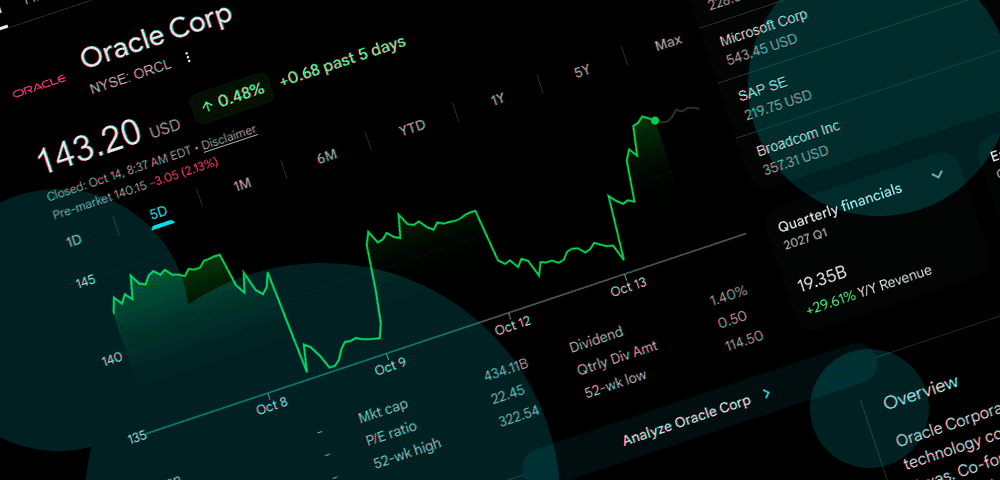
Oracle shares fell 7.3%, CoreWeave declined 15% and Nebius dropped 10%. Dell lost 12% and Hewlett Packard Enterprise fell 7.6% after Barclays downgraded both AI server manufacturers from overweight to equal-weight.
Technology stocks have contributed disproportionately to US equity market gains in 2026. Despite Wednesday’s decline, the S&P 500 remained more than 12% higher for the year, with much of the advance concentrated in AI-related companies.
The median S&P 500 constituent, by comparison, had gained approximately 4%, while more than 200 companies in the index were trading below their levels at the beginning of the year.
The immediate trigger for the latest market decline was September’s Consumer Price Index report, which showed US annual inflation accelerating to 3.7%, compared with 3.4% in August and economists’ expectations of 3.6%.
Core inflation, excluding food and energy, reached 2.6%, above the 2.5% consensus forecast.
The Federal Reserve raised its benchmark interest rate in September to a target range of 3.75% to 4.00%. Further tightening would increase financing costs for companies investing heavily in data centers, semiconductor equipment and other AI infrastructure.
Market expectations shifted sharply following Wednesday’s inflation report. CME FedWatch data cited by Reuters showed the implied probability of an October rate increase climbing from approximately 22% before the release to 47.1% afterward.
Citigroup also revised its monetary policy outlook on October 14, forecasting a 25-basis-point increase in December. The bank had previously expected no additional rate increases during 2026.
Citi now anticipates that the Fed will hold rates steady after December and will not begin reducing borrowing costs until June 2027.
Other economists remain less certain about the timing of additional tightening.
Martin Beck, chief economist at PPHC, said persistent core inflation was a concern, but weaker employment data and fragile consumer sentiment could still allow the Fed to leave rates unchanged in October.
Treasury yields remain another source of pressure on equity valuations. The benchmark 10-year US Treasury yield briefly exceeded 5.32% following the inflation release, compared with less than 5.17% immediately beforehand, before retreating from its intraday high.
The increase followed substantial volatility in the government bond market during the previous week.
On October 8, the 10-year yield declined approximately five basis points to 5.227%, while the 30-year yield fell six basis points to 5.601%, supported by strong demand at a Treasury auction of long-dated bonds.
Ross Mayfield, investment strategist at Baird, attributed much of the pressure on bond yields to energy-driven inflation and the resulting change in Federal Reserve expectations. He nevertheless considered it possible that long-term yields would stabilize between 5% and 6%, reflecting stronger nominal economic growth and persistently higher inflation.
A credible agreement reducing tensions with Iran could lower oil prices and bring Treasury yields down meaningfully.
Dan Ivascyn, group chief investment officer at PIMCO, offered a similarly cautious assessment on October 13.
Ivascyn told Reuters that US Treasury yields could rise further and that the Federal Reserve might deliver another one or two rate increases before completing its tightening cycle.
He expected policymakers to leave rates unchanged in October but saw scope for additional tightening later in the year.
Higher yields directly affect the valuation of growth companies by increasing the discount rate applied to expected future earnings. They also raise debt financing costs for businesses undertaking capital-intensive projects, including large AI data center developments.
Concerns about the economics of AI investment were already affecting technology shares before the latest inflation figures.
On October 8, the Nasdaq Composite declined 1.25% to close at 27,193.34, while the S&P 500 fell 0.47% to 7,765.36. The Dow gained 51.77 points, or 0.1%, to finish at 51,231.64.
Oracle lost more than 5%, Nvidia declined nearly 3% and Advanced Micro Devices dropped almost 4% following reports that OpenAI’s annualized revenue was lower than previously suggested.
The initial reports indicated that OpenAI’s annualized revenue was approximately $50 bn at the end of September, rather than the roughly $70 bn figure previously reported by some media outlets.
Subsequent reporting provided an important distinction.
On October 9, Bloomberg reported that OpenAI expected to reach or exceed $70 bn in annualized revenue by the end of 2026, with enterprise business growth supporting that target.
The approximately $50 bn figure referred to OpenAI’s revenue run rate at the end of September, rather than necessarily representing a reduction in its year-end expectations.
Differences in revenue accounting also complicated comparisons between OpenAI and competing AI developers. OpenAI’s net revenue reporting excludes certain partner proceeds, whereas other companies may include gross revenue generated through cloud partnerships.
The distinction matters for investors attempting to evaluate future demand for semiconductor chips, cloud computing capacity and data center infrastructure.
OpenAI’s commercial performance influences expectations for companies including Nvidia, Oracle, Microsoft and specialized cloud infrastructure providers whose growth depends partly on continued investment in AI computing.
More fundamental concerns about investment returns emerged on October 14 when Gartner published research examining the financial sustainability of AI infrastructure development.
Gartner estimated that AI providers would invest nearly $1 trillion in infrastructure during 2026, followed by another $6 trillion between 2027 and 2030.
According to Will Sommer, senior director analyst at Gartner, AI data center owners would need to generate approximately $8.5 trillion in cumulative revenue through 2030 to cover planned investment, financing costs and an assumed 12% return on invested capital.
Gartner forecast that enterprise and consumer AI revenue attributable to data centers would reach no more than $3.6 trillion over the same period.
Under its assumptions, more than $3.5 trillion in AI infrastructure investment could face impairment risk by the end of 2030. The firm also identified more than $4 trillion in potential asset write-down exposure through 2032 if investment continues at its current pace without sufficient revenue generation.
The forecast is conditional rather than a prediction that all the identified investment will result in losses.
Gartner also projected that more than 80% of specialized AI cloud providers, commonly known as neoclouds, could cease operating independently by 2030 because of financing pressures and insufficient business differentiation.
These concerns are particularly relevant to companies that depend heavily on AI computing revenue and lack the diversified income sources available to large technology groups.
Within the software sector, Goldman Sachs has identified opportunities that may benefit from a different phase of AI adoption.
On October 8, Goldman analyst Gabriela Borges upgraded Palantir Technologies stock from neutral to buy and set a 12-month price target of $230.
The investment bank argued that demand for sovereign AI systems, customized enterprise applications and industry-specific deployments could materially expand Palantir’s addressable market.
Palantir shares gained approximately 2% that Thursday, outperforming several major technology companies during the broader AI-related selloff.
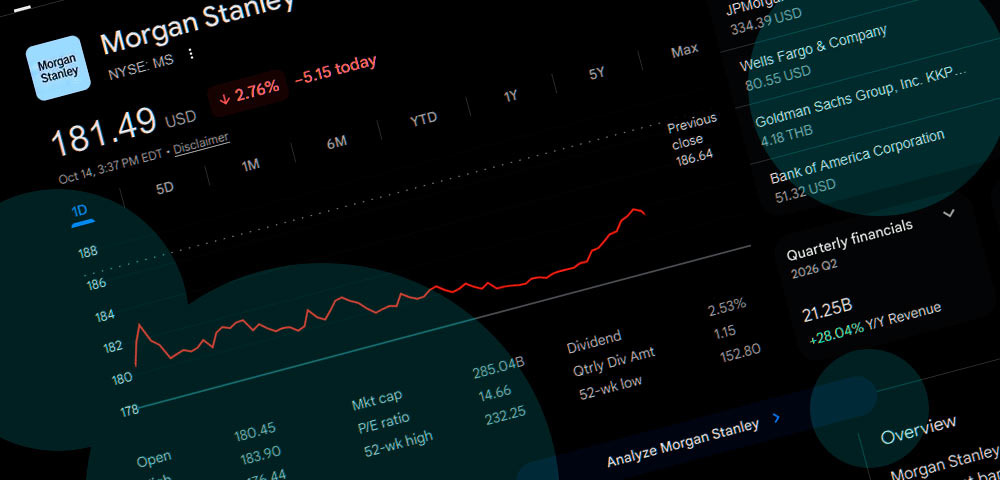
Bank of America shares declined after the lender reported weaker third-quarter profitability and recorded a $1.2 bn charge related to regulatory penalties. Morgan Stanley also fell despite reporting higher quarterly profit.
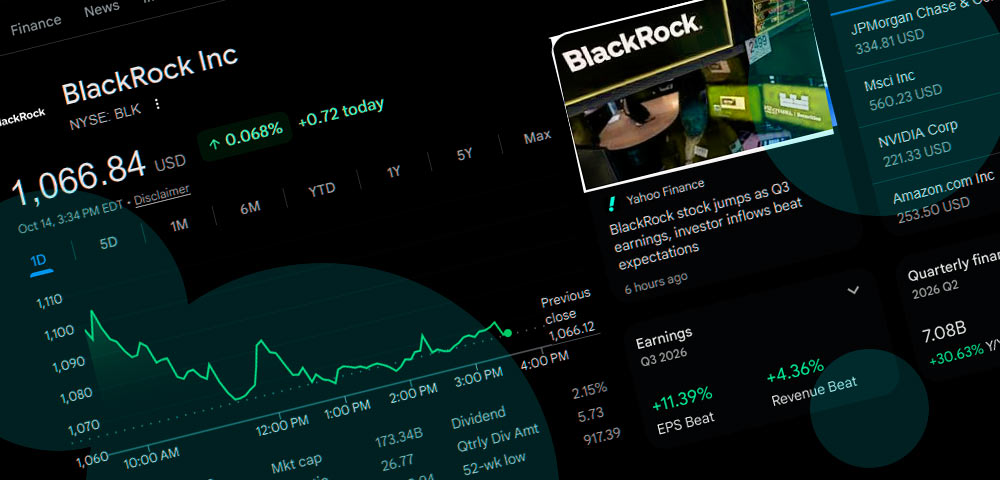
BlackRock reported stronger third-quarter results, supported by $205 bn in client inflows, demonstrating that some financial businesses continued to benefit from investor activity despite volatile markets.
For technology investors, the next developments center on the Federal Reserve’s October 27-28 meeting, additional quarterly earnings and evidence that AI revenue growth can support the sector’s increasing infrastructure spending.
As of October 14, the market faces competing signals: sustained demand for advanced semiconductor equipment, substantial AI investment commitments, higher financing costs and greater scrutiny of the revenue assumptions supporting technology valuations.