Hurricane Katrina, which struck the Gulf Coast on August 29, 2005, remains the defining benchmark for natural disasters in the United States. Making landfall near Buras-Triumph, Louisiana, as a Category 3 storm, Katrina claimed more than 1,000 lives and displaced over a million residents. Its economic toll exceeded hundreds of billions of dollars, while insured losses reached $104.5 bn in 2024-adjusted values—the costliest hurricane in U.S. history.
That figure nearly doubles the $60bn in insured losses from Hurricane Ian in 2022, making Katrina the costliest U.S. hurricane on record.
Beyond the staggering figures, Katrina exposed structural vulnerabilities: the failure of New Orleans’ levees, the fragility of aging infrastructure, and the inadequate reach of insurance protection, particularly for flood risk.
- For insurers, it was a turning point that transformed catastrophe modeling, underwriting practices, and capital management.
- For policymakers, it became a catalyst for reform in building codes, flood defenses, and disaster preparedness.
Beinsure analyzed the market trends and highlighted the key points.
Key Highlights
- Hurricane Katrina (2005) remains the costliest U.S. hurricane with $104.5 bn in insured losses (2024-adjusted), far surpassing all modern storms.
- Private insurers expanded from 12% market share in 2014 to 30% in 2023, supported by better mapping and analytics.
- AI, IoT, and satellite imagery enhance modeling, proactive protection, and claims processing, offering insurers precision and customers faster recovery.
- Experts project $100 bn insured-loss years will become standard by the 2030s, reflecting structural exposure, not just rare “black swans.”
Katrina was not simply a storm; it was a stress test for urban resilience, public policy, and the insurance industry. Two decades later, its lessons continue to shape how the U.S. prepares for and recovers from extreme weather events in an era of rising climate volatility, Beinsure noted.
Global insured losses from NatCat
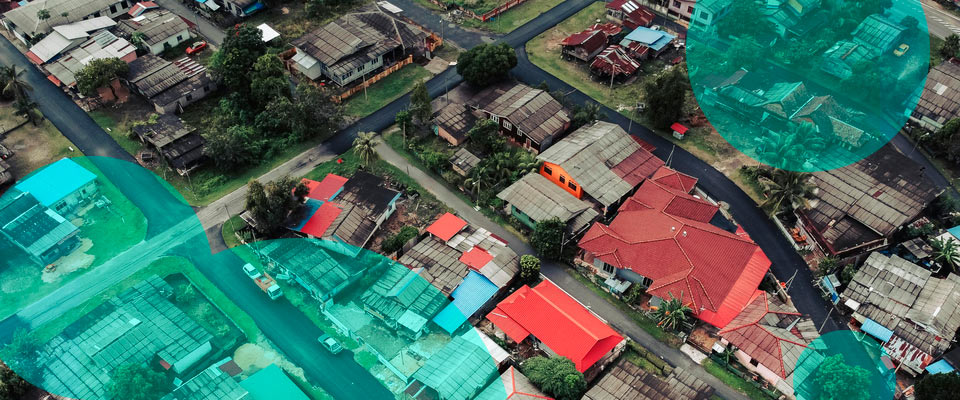
Global insured losses from natural catastrophes reach $80 bn in the first half of 2025. This is almost double the 10-year average and more than half of the $150 bn (in 2025 prices) projected for the full year, following the long-term annual growth trend of 5–7%, according to Swiss Re`s report.
Since 2015, severe storms have caused tens of billions of dollars in damage in the United States, showing how vulnerable both coastal and inland areas are, according to US Hurricanes statistics since 2015.
Their combined effect highlights how climate change, rapid urbanization, and aging infrastructure contribute to rising damage totals, Beinsure noted.
Economic losses often exceed insured payouts, reflecting gaps in coverage—particularly for flood risk.
- For instance, Harvey inflicted more than $80 bn in economic damage but only around $19 bn in insured losses, underlining the persistent underinsurance problem.
- By contrast, Ian and Irma generated higher insured losses, straining reinsurance markets and triggering insolvencies among smaller carriers.
Catastrophic Risk Transformed by Recent Disaster
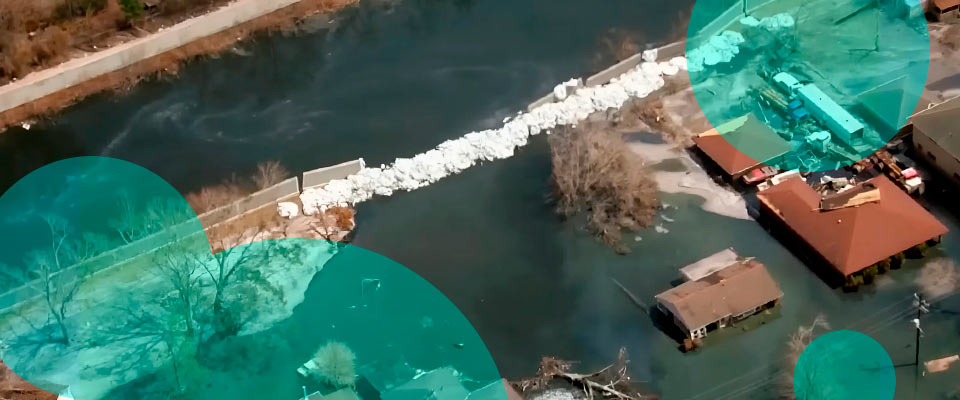
The disaster also redrew the industry’s view of catastrophic risk. “Katrina was a watershed moment for the insurance industry,” said Mohit Pande, chief underwriting officer for property at Swiss Re.
It redefined how we understand and manage catastrophe risk and has changed catastrophe underwriting, risk management, and capital management.
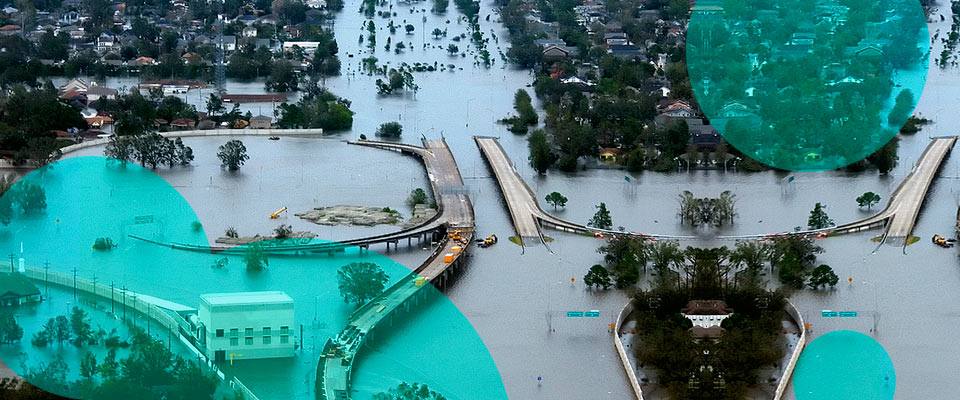
One of the sharpest lessons came from the failure of New Orleans’ levees, which magnified destruction beyond modeled expectations.
These cascading “super cat” effects are now built into catastrophe models. The industry also began treating once-rare storms as recurring possibilities, shifting risk models and pricing strategies across the value chain.
In the US, two major hurricanes and frequent severe thunderstorms accounted for at least two-thirds of the year’s global insured losses, which currently exceed $135 bn.
Balz Grollimund, Head of Catastrophe Perils at Swiss Re, highlighted: “For the fifth consecutive year, insured losses from natural catastrophes have surpassed $100 bn. Rising losses are driven by growing value concentration in urban areas, economic expansion, and higher rebuilding costs”.
Climate Change Increases Catastrophe Risks
Climate change is increasingly contributing to catastrophe risks, underscoring the need to prioritize mitigation and adaptation measures.” Hurricanes, severe thunderstorms and floods drive $100 bn insured losses.
- Estimated insured losses from natural catastrophes on track to exceed $135 bn in 2024
- Hurricane Helene and Hurricane Milton severely impacted the US, resulting in estimated insured losses approaching $50 bn, Beinsure noted
- Major floods hit Europe and the Middle East, causing estimated insured losses of close to $13 bn as of today
Key Legal Battles Over Wind vs. Flood Damage
Litigation following Katrina focused on the boundary between wind and flood damage. This pushed insurers to clarify policy language, refine claims handling, and expand customer education.
The sector adopted hurricane deductibles tied to a percentage of property values rather than flat amounts, while many companies now use multiple modeling vendors to guide underwriting choices.
Swiss Re Institute estimates a Katrina-scale storm today would still cause close to $100bn in insured losses. The drivers, however, differ from 2005.
“This reduced physical devastation from a repeat of Katrina is a result largely of new flood defense and modern building codes that have been implemented in and around New Orleans,” Pande said.
Still, he pointed out that only 35% of U.S. jurisdictions enforce modern building codes, despite studies showing a six-to-12-times return on investment from their adoption.
Growth in Private Flood Insurance Coverage
Private flood insurance coverage has also expanded. Private insurers accounted for 30% of the market in 2023, compared with just 12% in 2014, according to David Blades, associate director at AM Best.
The U.S. private flood insurance market has grown rapidly in recent years with generally favorable underwriting performance but remains a small segment relative to the overall property and casualty insurance industry.
In the US, flood insurance historically had low participation, with most policies purchased to meet mortgage requirements in high-risk areas, predominantly through the National Flood Insurance Program (NFIP), Beinsure noted.
The report, US Private Flood Insurance: Trends and Insights, notes that growth in the private flood insurance market has been driven by improved technology and analytics, changes in federal flood insurance policies, and new legislative measures.
- The US private flood insurance market has expanded steadily, with private residential policies growing at a 20% annual rate from 2020 to 2024. Underwriting results have been favourable, with loss ratios for residential flood below 50% in all but one year over the past five.
- Flood remains one of the costliest risks for US homeowners, yet underinsurance persists. Only about 4% of homeowners carry flood insurance, and insured losses from major events remain far below economic losses. For example, Texas flooding in 2025 caused estimated losses of $18 bn–$22 bn, most of which were uninsured.
- The National Flood Insurance Program (NFIP) continues to dominate the market, especially in high-risk zones where mortgage requirements mandate coverage. However, frequent short-term extensions by Congress and low coverage limits ($250,000 for homes) limit its effectiveness.
- Advances in flood risk analytics, mapping, and technology, along with regulatory and policy changes—including risk-based NFIP pricing—have made private flood insurance more attractive to insurers and consumers, driving gradual market expansion.
Long-term projections remain sobering
Robert Hartwig, professor of finance at the University of South Carolina and director of the Risk and Uncertainty Management Center, expects $100bn-loss years to become standard by the 2030s.
“There’s simply no turning back,” he said, noting aggregate insured losses have exceeded $100 bn multiple times since the 2017 hurricane season that included hurricanes Harvey, Irma and Maria.
Insurance Technology is Offering Some Relief
Technology is altering the equation. Artificial intelligence, satellite imaging, and IoT sensors now allow insurers to anticipate risks with far greater precision. Yet no algorithm can erase the human dimension: the lives uprooted, the communities destabilized, and the long-term recovery paths that stretch far beyond balance sheets.
Insurers are applying artificial intelligence and IoT devices to improve storm preparedness and risk assessment. These tools allow both companies and policyholders to anticipate and mitigate damage more effectively.
We’ve learned from the aftermath of Katrina that adaptation works. But it will require collective efforts, so we all have to play our part in building a more resilient future.
Insurers now rely on AI and IoT to help anticipate, assess, and even prevent storm‑related losses.
IoT-enabled services of the insurance industry also support the implementation of the UN Sustainable Development Goals (SDGs) in several respects: fostering innovation and building resilient infrastructure, promoting good health and well-being, supporting sustainable cities, and fighting poverty by offering affordable insurance coverage and enhancing financial wellness.
IoT-driven risk prevention services are at an early stage of maturity. Knowledge is limited to a few experts and most companies are still at the experimental stage – there is evidence of only a handful of commercially successful approaches internationally (see How IoT, ML and AI Technology are Changing Insurance?).
IoT Devices Boost Proactive Protection
Products like Ting, which monitors electrical outlets for arc detection and temperature fluctuations using AI, lowered fire claims by an estimated 63%, yielding an $81 per‑customer benefit for insurers.
Businesses also adopt IoT sensors to cut water‑damage costs: one property owner reported spending $6,000 on sensors that helped avoid average losses of $75,000.
More broadly, hyper‑localized environmental sensors collect real‑time data on weather exposure, giving insurers and policyholders a clearer, earlier warning of extreme conditions.
61% of enterprises already use IoT applications, giving insurers the opportunity to integrate the data generated into insurance services for corporate customers.
There are many different estimates about the size of the IoT market, ranging from 10 billion to 22 billion connected devices.
AI Enhances Risk Modeling
It moves beyond broad ZIP‑code assumptions and outdated proxies. Insurers now model property‑specific features—like roof shape, material, age, and penetrations—to better estimate hail and storm damage.
This refined view offers up to 60× better risk segmentation, improving underwriting accuracy and pricing fairness.
Generative AI Enriches Insights
Generative AI further enriches insights by merging imagery, historical climate trends, property details, and socioeconomic data to forecast losses and tailor pricing.
This approach boosts operational efficiency and customer satisfaction while opening new market opportunities.
In catastrophe modeling, AI and real‑time data sources (like satellite imagery or sensor feeds) support fast, precise simulations.
Carriers can use these tools to set more equitable premiums, determine reserves quickly, and respond more effectively after storms.
Aerial and AI Tech for Insurance Claims Assessment
Innovations also include aerial and AI tech for insurance claims assessment. Suncorp in Australia combines AI with aerial imagery and a digital control center to compare pre‑ and post‑disaster damage, streamlining claim decisions and helping homeowners understand risks faster.
Meanwhile, the U.S. startup Near Space Labs deploys AI‑equipped stratospheric balloons over disaster areas to capture high‑resolution imagery. Insurers can query that data directly, enhancing claims accuracy in underserved regions.
FAQs: Hurricane Katrina and Evolving Catastrophe Risk
Katrina caused over 1,000 deaths, displaced a million residents, and generated $104.5 bn in insured losses (2024-adjusted), the costliest hurricane in U.S. history. It exposed levee failures, underinsurance, and fragile infrastructure, reshaping risk management and public policy.
It transformed catastrophe modeling and underwriting. Insurers began incorporating “super cat” scenarios like cascading levee failures into models, introduced hurricane deductibles tied to property values, and expanded reliance on multiple modeling vendors.
Harvey (2017) caused $81–100+ bn in damage but only ~$19 bn was insured, reflecting low flood coverage. Ian (2022) had higher insured losses of $42–63 bn, destabilizing Florida’s market. Such gaps highlight persistent underinsurance.
Private flood coverage grew from 12% market share in 2014 to 30% in 2023. Advances in analytics and mapping improved risk-based pricing, but penetration remains low—only 4% of U.S. homeowners carry flood insurance.
Global reinsurers like Munich Re, Swiss Re, and Lloyd’s provide capital and catastrophe models. The NFIP also transferred over $3 bn of risk through reinsurance and catastrophe bonds since 2018, spreading U.S. hurricane risk globally.
AI, IoT, and satellite imaging enable more precise risk modeling, proactive loss prevention, and faster claims assessment. Tools like IoT sensors reduce fire and water claims, while generative AI improves storm loss forecasting.
For the fifth consecutive year, global insured NatCat losses topped $100 bn. U.S. experts predict $100 bn-loss years will become standard by the 2030s due to climate change, urban growth, and rising rebuilding costs.
……………..
QUOTTES: Mohit Pande – chief underwriting officer for property at Swiss Re, Balz Grollimund – Head of Catastrophe Perils at Swiss Re, David Blades – associate director at AM Best, Robert Hartwig – a clinical associate professor of finance in the University of South Carolina’s Darla Moore School of Business and director of the Risk and Uncertainty Management Center
by Nataly Kramer — Lead Insurance Editor of Beinsure Media