Global Insured Catastrophe Losses Reach $171 bn Annual Benchmark
Verisk raised its global insured catastrophe loss benchmark to $171 bn, with the US accounting for $117 bn and severe thunderstorms leading modeled risk
What is the meaning of natural catastrophe? A natural disaster is characterized by the abnormal intensity of a natural agent when the usual measures to be taken to prevent this damage were not able to prevent their emergence or were not able to be taken.
Examples of natural hazards include: avalanche, coastal flooding, cold wave, drought, earthquake, hail, heat wave, hurricane (tropical cyclone), ice storm, landslide, lightning, riverine flooding, strong wind, tornado, typhoon, tsunami, volcanic activity, wildfire, winter weather.
Disasters are classified into natural disasters, man-made disasters, and hybrid disasters.
In this section, we have collected the most current articles and reviews on the topic of the Natural Catastrophes.
Verisk raised its global insured catastrophe loss benchmark to $171 bn, with the US accounting for $117 bn and severe thunderstorms leading modeled risk

Wealthy clients think about market swings, insurance gap, global instability, cyber intrusions, extreme weather, and the financial fallout of lawsuits, often all at once

Hurricane Katrina struck Louisiana on 2005. Katrina generated $104.5bn in insured losses, according to the Insurance Information Institute

Global insured losses from natural catastrophes reach $80 bn in the first half of 2025. This is almost double the 10-year average and more than half of the $150 bn

Worldwide, natural disasters caused overall losses of around $131 bn in the first half of 2025 (previous year, adjusted for inflation: $155 bn), of which $80bn was insured (in 2024: $64 bn)

Severe weather in Kentucky drives up insurance rates, strains carriers, and prompts regulatory changes as tornadoes and hailstorms increase in frequency and cost

Global insured losses from natural disaster events in Q1 2025 were preliminarily estimated to reach at least $53 bn, the highest Q1 insured losses since Q1 2011 ($81 bn)

Wider natural catastrophe exposure continues to pressure financial results across the property and casualty (P&C) insurance industry

Fitch Ratings projects that the property and casualty (P&C) insurance sector will continue to face difficulties in 2025 due to volatile natural catastrophe risks

The insurance-linked securities (ILS) market hit $107 bn in capacity by the end of 2024, driven by strong investor returns and increased catastrophe bond issuance

WTW has analyzed natural disasters, key lessons, and emerging trends. The assessment will focus on physical and vulnerability NatCat factors

Insured catastrophe losses in Canada reached a record C$8.5 bn in 2024, nearly tripling the prior year’s total and standing 12 times higher than the annual average

In 2024, global natural perils resulted in total direct economic costs of $417 bn. Of this, $154 bn was covered by private insurers and public insurance entities
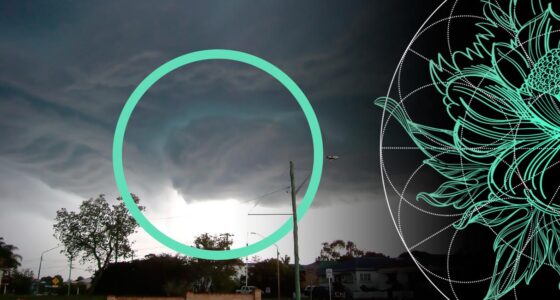
In the US, two major hurricanes and frequent severe thunderstorms accounted for at least two-thirds of the year’s global insured losses, which currently exceed $135 bn

Economic losses from natural catastrophes in the EU are rising due to increased economic exposure and the growing severity of climate-related disasters

Government-backed catastrophe insurance schemes play a vital role in managing the financial impact of natural disasters across Europe

PERILS has released its third insurance industry loss estimate for the floods that hit southern Germany from May 31 to June 6, 2024

2024 is on track to become the hottest year recorded. A warming climate has intensified natural catastrophes, especially in Europe, which faced severe flooding

Cyber incidents, changes in climate, and business interruption are the chief risk concerns among key marketplace segments in the insurance industry

Inland areas are increasingly vulnerable to flooding from both tropical storms and severe convective storms, yet the number of homeowners who purchase flood insurance

Q3 2024 saw a number of significant disaster events, which drove total economic losses from natural catastrophes above at least $258 bn

Economic and insured losses from Hurricane Milton remain uncertain, Milton is the second major storm to hit the U.S. within two weeks, following Hurricane Helene

Higher property values, urbanization, and increased repair costs are likely to drive demand for property re/insurance, particularly in regions facing heightened natural catastrophe

Global natural disaster losses in the first half of 2024 reached $120 bn, down from 2023, which saw $140 bn in losses due to a severe earthquake in Turkey and Syria

Natural disasters amplified by climate change continue to take a bitter toll on the global economy, caused $350 bn in economic losses, with insurance covering just over $100 bn

1H 2024 saw multiple notable natural catastrophe events, which drove total year-to-date economic losses above at least $117 bn

The 2024 Atlantic hurricane season officially began and has already been active. Business owners found that 91% identified specific weather or natural hazards as risk

The total economic loss from global natural catastrophes for H1 2024 was estimated at $128 bn, insured losses totalled at $61 bn

The global financial cost of natural catastrophes starting in 2024 was manageable for federal governments and the insurance industry

Insured losses from the 7.6 magnitude earthquake that struck the Ishikawa prefecture on the Noto Peninsula, Japan, on 1 January 2024 are likely to be small

The past year was once again characterised by extremely high insured losses from natural disasters, despite the fact that there were no extreme individual losses

Natural catastrophes will once again break several insured loss records in 2023. A high number of low-to-medium-severity events will aggregate to insured losses

US P&C insurance industry continued to generate significant underwriting losses in 2024 despite strong premium growth

Moody’s RMS overview of North Atlantic seasonal activity forecasts and summarized the key oceanic and meteorological drivers behind the predictions

Most natural disaster databases show a significant decline in the number of annual global events prior to 1980. While the biggest natural catastrophe events are typically captured

U.S. property catastrophe reinsurance rates rose by as much as 50% at a key July renewal date, with states such as California and Florida increasingly hit

Catastrophes and natural disasters in the Asia Pacific (APAC) region amounted to a total economic loss of $80 bn. A substantial protection gap of 86%

Insured losses from major natural catastrophes in the second quarter of 2023 are estimated to be less than $10 bn, in H1 totaled $23 bn

The current environment is complex: inflation has stayed higher for longer than expected, natural catastrophes cause increased losses

Florida Hurricane Catastrophe Fund plays a vital role in Florida’s property-insurance system as it provides relatively low-cost reinsurance

The P&C insurance industry has experienced challenges in recent years due, in large part, to increases in the frequency and severity of natural catastrophes

The past year and half have seen major changes in the global Reinsurance Property Catastrophe (CAT) market

Re/Insurers poorly prepared for the increased loss frequency and intensity wrought by flooding and climate change as this year’s North Atlantic hurricane season

Political Violence (Re)Insurance Risks are escalating as the world navigates a succession of crises. Economic and geopolitical shocks have dominated agendas
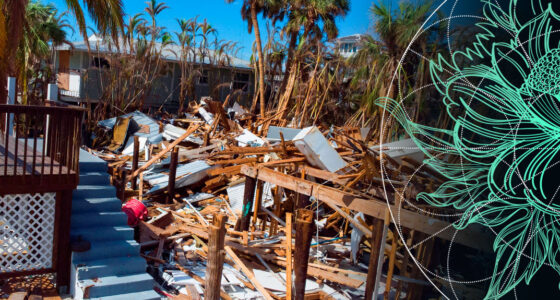
Q1 severe weather insured losses should come in at a range of $7 bn to $9.5 bn of insured severe thunderstorm storm losses from hail

Policyholders should contact their insurer to obtain the assistance they need. Many claims-filing services are available via either a mobile app or online

Property reinsurance rates rose significantly at the renewals. The losses from Hurricane Ian last year were a contributory factor
The natural disasters demonstrate that economic factors, in the last two years augmented by inflation, are the main driver of elevated insured losses from natural catastrophes

ILS plays a key role in allowing catastrophe risk to be transferred from the commercial insurance market to investors, providing additional (re)insurance capacity

While there was sufficient capacity to meet the reinsurance needs of cedants at 1.1, it is also true that the amount of reinsurance capital being deployed was diminished in 2022

Climate change is taking an increasing toll. The natural disaster figures are dominated by events that are more intense or are occurring more frequently

The world saw another year of impactful natural catastrophe events that once again emphasized the need to better account for the growing risks that hazards bring

The most challenging January 1 renewal in a generation as the reinsurance market underwent a fundamental shift in pricing and risk appetite

Global natural disasters resulted in near-average economic losses totaling $313 bn. Half of losses occurred in the United States and were driven by Hurricane Ian

Natural and man-made disasters resulted in global economic losses of $280 bn. Insurance covered $119 bn economic losses

Emerging capabilities including telematics, artificial intelligence, machine learning, and automation have transformed nearly every aspect of the insurance value chain

2022 is the second consecutive year in which the estimated insured losses total more than USD 100 billion

Even as countries across the globe grapple with climate change, alternate risk transfer mechanisms like parametric solutions are emerging as the best option

Weather-related Events drove economic losses of $65 bn, which is down on last year’s $105 bn, with insured losses staying roughly the same at approximately $34 bn

In the 2022-2023 were highly active in many territories around the world. Natural hazard events occurred in Europe, Australia and USA