- Nvidia and chipmakers lead AI stock recovery
- AI infrastructure companies also recover
- Jefferies sees a market reaction rather than a fundamental reversal
- UBS warns investors to monitor AI revenue and financing
- Bank of America sees further risks for AI valuations
- US election results add uncertainty to data centre expansion
- AI stocks remain sensitive to spending and earnings expectations
US artificial intelligence stocks rebounded on Friday, November 6, recovering part of their losses after a sharp sell-off driven by concerns over data centre investment, tighter regulation and the financial sustainability of the AI boom.
Nvidia, AMD, Intel, Broadcom and Micron Technology were among the semiconductor companies trading higher as investors reassessed the previous session’s steep declines.
- US AI stocks rebounded on Friday, November 6, with Nvidia gaining approximately 4% and the Philadelphia Semiconductor Index advancing around 4%.
- Semiconductor manufacturers and AI infrastructure companies recovered part of their losses after concerns about data centre investment and tighter regulation triggered a global sell-off.
- Jefferies, UBS and Bank of America see different risks and opportunities, with attention shifting towards AI spending, profitability and financing conditions.
US stocks traded mixed on November 6, 2026, as technology shares recovered from Thursday’s heavy losses while stronger-than-expected employment data raised concerns about the Federal Reserve’s interest-rate outlook.
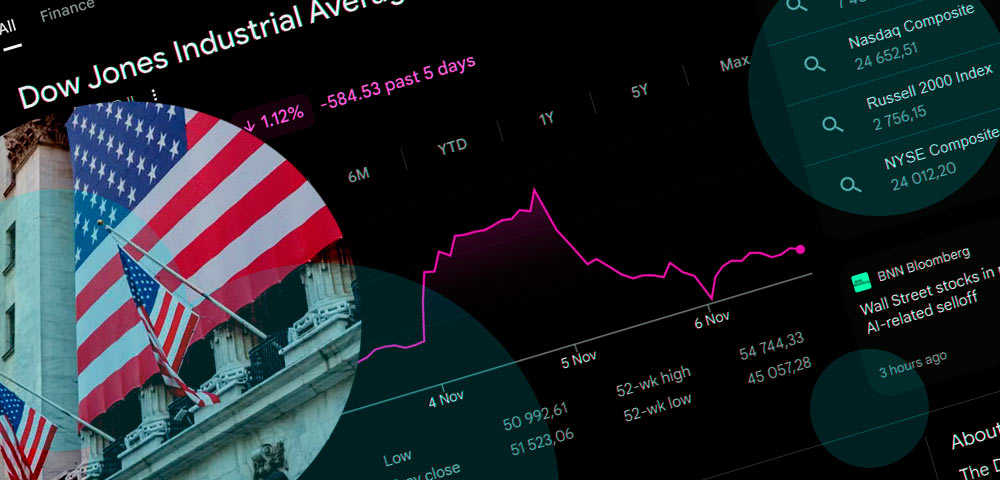
At approximately 11:20 a.m. ET, the Nasdaq Composite was up 1.1%, while the S&P 500 gained 0.6%. The Dow Jones Industrial Average remained slightly lower.
The Philadelphia Semiconductor Index advanced around 4%, after suffering one of its sharpest single-session declines in recent years.
Despite the recovery, major US stock indices remained on course for weekly losses following Thursday’s technology-led rout.
Nvidia and chipmakers lead AI stock recovery
Nvidia shares rose approximately 4% during late-morning trading, following a 9.3% decline on Thursday.
The previous session had been the chipmaker’s worst since January 2025, when the emergence of China’s lower-cost DeepSeek AI model raised questions about demand for expensive computing infrastructure.
Other semiconductor companies also recovered. AMD, Intel, Broadcom and Micron Technology recorded gains ranging from approximately 2% to 10% during Friday’s session.
Earlier trading showed particularly strong recoveries in AMD, Intel and Micron, while Broadcom posted a smaller advance.
The rebound followed a steep decline in semiconductor shares on Thursday, when investors sold companies closely associated with the expansion of AI data centres.
The Nasdaq Composite fell approximately 5.5% during that session, entering correction territory after losing more than 10% from its previous peak.
The S&P 500 declined 4.4%, while nearly $3 tn in market value was erased from companies in the index.
Friday’s gains recovered only a portion of those losses.
AI infrastructure companies also recover
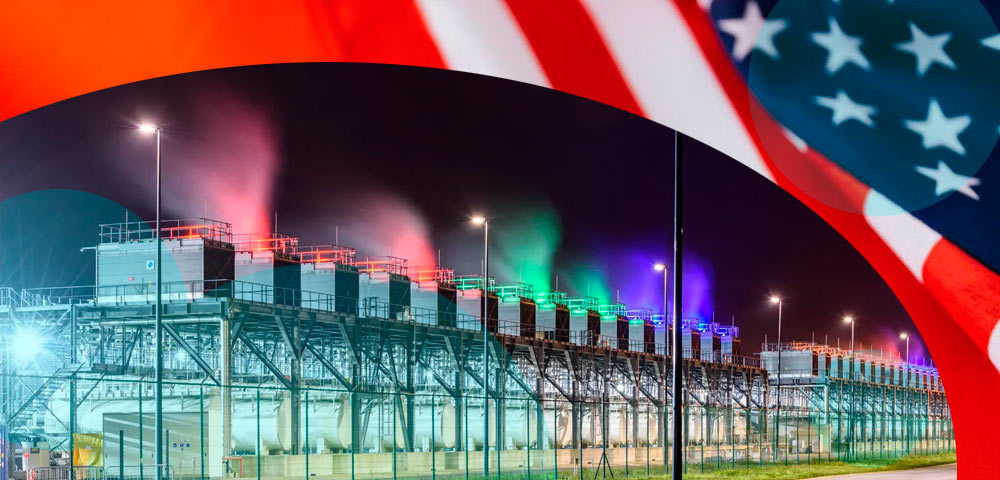
The improvement extended beyond semiconductor manufacturers to businesses providing computing capacity, data centre facilities and electricity infrastructure.
Data center operators IREN and Applied Digital recovered from substantial losses, alongside cloud infrastructure providers CoreWeave and Nebius Group.
Companies supplying energy and equipment to AI facilities, including GE Vernova and Constellation Energy, also participated in the rebound.
These businesses have attracted considerable investor interest as major technology companies increase spending on computing capacity.
However, the scale of their investment requirements has become a source of market concern.
Data center construction involves substantial expenditure on land, electricity supplies, cooling systems, networking equipment and advanced processors.
Some companies have increased borrowing or issued additional equity to finance expansion, raising questions about future profitability and shareholder returns.
The recent sell-off reflected growing investor sensitivity to delays in projects or weaker-than-expected returns from AI services.
Jefferies sees a market reaction rather than a fundamental reversal
Jefferies characterised Thursday’s sell-off as a response to several overlapping concerns rather than evidence of a fundamental breakdown in the AI investment outlook.
The investment bank identified uncertainty surrounding AI capital expenditure, government policy and inflation as important factors behind the decline.
Its assessment suggests that the market reaction may have exceeded the immediate implications of potential regulatory changes.
However, Jefferies also acknowledged that tighter oversight could affect the speed at which new computing infrastructure is developed.
The bank’s analysis indicates that investors are increasingly distinguishing between the long-term demand for AI technology and the near-term financial risks associated with rapid expansion.
UBS warns investors to monitor AI revenue and financing
UBS Global Wealth Management also described the sell-off primarily as a reduction in risk exposure rather than a fundamental reassessment of AI technology. Nevertheless, the bank identified several developments that could signal more persistent weakness in technology shares.
These include slower growth in AI-related revenue, reduced utilisation of cloud computing infrastructure and insufficient demand to absorb additional capacity.
UBS also highlighted the possibility that improvements in AI algorithms could reduce the amount of computing power required for certain tasks.
Another concern is whether substantial investment in new infrastructure will translate into meaningful improvements in AI capabilities and commercial applications.
Tighter financial conditions could also constrain spending by large technology companies and AI developers.
UBS has maintained a neutral position on US technology and communication services equities since February, reflecting uncertainty over valuations and the sustainability of current investment plans.
Bank of America sees further risks for AI valuations
Bank of America has taken a more selective view of the technology sector following the sell-off.
The investment bank identified continued monetary tightening, elevated Treasury yields and high energy prices as obstacles to a sustained equity market recovery.
Its broader market assessment suggested that a more favourable environment would require central banks to stop raising interest rates, the US 10-year Treasury yield to approach 4.5%, and oil prices to fall below $80 a barrel.
The bank also questioned whether some longer-term forecasts for AI infrastructure expenditure may be too optimistic. It expects companies with large, established cloud businesses, including Amazon, Alphabet and Meta, to be better positioned than certain semiconductor manufacturers and specialist cloud infrastructure providers if AI investment growth slows.
At the same time, Bank of America suggested that greater clarity on data centre regulations and company share buybacks could help stabilise semiconductor valuations in the coming months.
The bank sees the potential for market conditions to improve by early 2027, although the outlook remains dependent on policy developments and corporate spending decisions.
US election results add uncertainty to data centre expansion
The recent technology sell-off accelerated following Democratic victories in the US midterm elections.
Investors are concerned that changes in political control could result in stricter regulation of AI infrastructure, particularly in states with substantial data centre development.
Texas has become an important focus after its incoming Democratic administration signalled plans for additional protections for communities affected by data centre construction.
Potential restrictions could involve electricity pricing, water consumption, environmental standards and construction approvals.
However, broad federal restrictions would face political and legislative obstacles. State and local authorities may have greater near-term influence over the approval and development of individual projects.
For semiconductor manufacturers, slower data centre construction could affect the timing of orders for advanced chips and networking equipment.
For infrastructure operators, delays could increase financing costs and postpone expected revenue.
AI stocks remain sensitive to spending and earnings expectations
Friday’s rebound indicates that investors are willing to return to selected AI-related companies following substantial price declines. However, the recovery does not resolve the underlying concerns about investment costs and future profitability.
The financial outlook for Nvidia and other semiconductor manufacturers remains closely linked to demand from large cloud computing companies.
Infrastructure providers face additional challenges involving capital expenditure, borrowing costs and the pace at which new facilities begin generating revenue.
Investment bank assessments suggest that investors will increasingly focus on the relationship between AI spending and measurable financial returns.
For now, the rebound has helped stabilise technology shares after Thursday’s sell-off, but the sustainability of the recovery will depend on corporate earnings, infrastructure investment plans and the regulatory environment.