Follow Beinsure

Amazon (NASDAQ: AMZN) shares fell sharply on Friday, October 30, after the company reported weaker-than-expected third-quarter earnings and revenue, alongside heavy artificial intelligence infrastructure spending that continued to pressure free cash flow.
The technology and e-commerce group reported Q3 2026 revenue of $201.94 bn, up 12% year over year but below analyst forecasts ranging from $202.10 bn to $202.31 bn. Earnings per share reached $1.89, compared with Wall Street expectations of $1.96.
- Amazon (NASDAQ: AMZN) shares fell more than 7% in premarket trading after Q3 revenue of $201.94 bn and earnings of $1.89 per share missed Wall Street expectations.
- Amazon maintained its $220 bn capital expenditure forecast for 2026, while third-quarter spending reached $77.3 bn and trailing 12-month free cash flow fell to negative $42.4 bn.
- Amazon Web Services revenue increased 39.3% to $45.98 bn, its fastest growth in nearly five years, as CEO Andy Jassy projected AWS growth above 40% in 2027 and 2028.
Amazon shares declined more than 7% in late trading following the results and were down approximately 7.5% in premarket trading before paring losses to more than 4% shortly after the US market opened.
The sell-off followed a difficult week for technology stocks, with investors increasingly questioning whether large-scale AI investments will generate sufficient returns to justify rapidly rising infrastructure costs.
Intel (NASDAQ: INTC) shares plunged 29% after the chipmaker issued weaker-than-expected guidance, citing persistent weakness in the personal computer market.
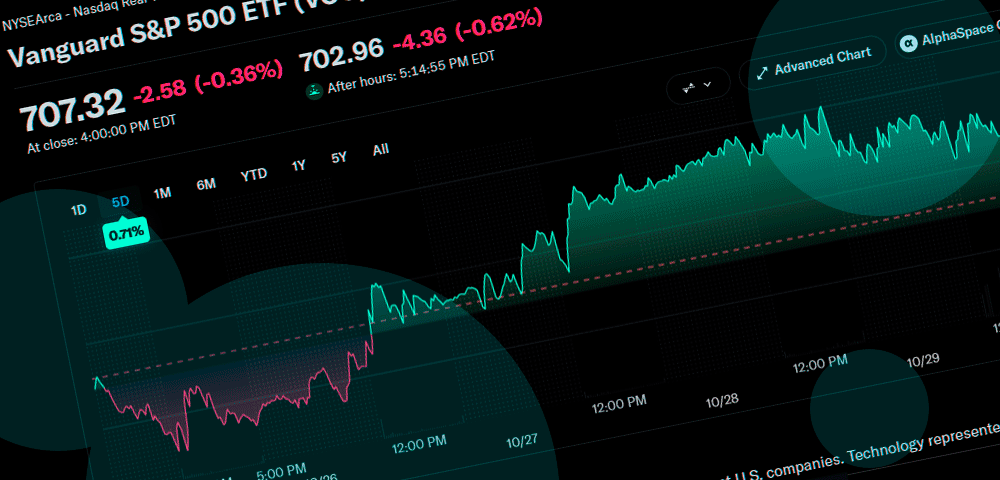
The Nasdaq Composite dropped more than 2% in early Friday trading, falling approximately 572 points to 25,612.5. Semiconductor companies including Nvidia, Micron and Arm also declined, while European chip equipment manufacturers, including ASML, came under selling pressure.
Amazon Q3 2026 earnings miss Wall Street forecasts
Amazon’s quarterly results showed continued revenue expansion, although both earnings and sales fell short of market expectations.
Net income declined to $20.69 bn from $21.19 bn a year earlier. The comparison was affected by a $9.5 bn pretax gain from Amazon’s investment in AI developer Anthropic that was included in non-operating income during the third quarter of 2025.
Without that investment-related gain, the comparison of Amazon’s underlying operating performance was more favorable.
Operating income reached $28.1 bn, exceeding analysts’ forecast of $26.2 bn. The measure excludes gains and losses from investments outside Amazon’s core operating businesses.
Foreign exchange movements also affected the company’s reported revenue, creating an unfavorable year-over-year impact of approximately $900 mn.
Amazon’s retail operations delivered weaker results than analysts had anticipated. Online store sales increased 2% to $68.47 bn, compared with the consensus forecast of $69.68 bn.
That represented a substantial slowdown from the corresponding quarter a year earlier, when online sales increased by nearly 10%. Amazon’s advertising business also fell short of Wall Street expectations.
The results left investors weighing strong performance in Amazon’s cloud operations against slower retail growth and the financial demands of its AI infrastructure expansion.
Amazon maintains $220 bn AI capital expenditure forecast
Amazon Chief Financial Officer Brian Olsavsky reaffirmed the company’s forecast of approximately $220 bn in capital expenditure for 2026, despite spending significantly more than analysts expected during the September quarter.
Third-quarter capital expenditure reached $77.3 bn, compared with Wall Street’s estimate of $58.7 bn. The figure was more than double the $35.1 bn spent during the same period in 2025.
Much of the increase was associated with purchases of property and equipment supporting Amazon’s expanding AI infrastructure, including data centers and computing capacity.
The scale of investment has become a central concern for shareholders as Amazon competes with Microsoft, Alphabet, Meta Platforms and Oracle to provide the infrastructure required to train and operate increasingly demanding AI systems.
Other major technology companies have adjusted their investment expectations. Microsoft reduced its annual capital expenditure forecast to $170 bn from $175 bn, while Alphabet maintained its projected spending range of $195 bn to $205 bn.
Amazon’s decision to retain its $220 bn target did little to reassure investors after the substantially higher-than-expected quarterly spending.
Chief Executive Andy Jassy told analysts that the company expects to “spend more meaningfully in 2027”, arguing that Amazon has a “clear line of sight to attractive financial returns” from its infrastructure investments.
The company’s free cash flow figures nevertheless raised questions about the timing of those returns.
Amazon reported negative free cash flow for the second consecutive quarter, with the quarterly deficit considerably larger than in the previous period.
For the trailing 12 months, free cash flow was negative $42.4 bn, primarily reflecting a $94.8 bn year-over-year increase in purchases of property and equipment, largely associated with AI investment.
Amazon AWS revenue jumps 39.3% to $45.98 bn
Amazon Web Services remained the strongest part of the company’s quarterly performance.
AWS revenue increased 39.3% year over year to $45.98 bn, slightly exceeding analysts’ estimate of $45.9 bn. It was the cloud division’s fastest growth rate in nearly five years and represented an annualized revenue run rate of approximately $184 bn.
Jassy attributed the acceleration to investment in cloud functionality, computing infrastructure and growing enterprise demand for AI services.
“Our AWS investment in functionality and infrastructure is working, with over 39% year-over-year revenue growth in Q3 ($184 bn revenue run rate) and projected revenue growth rates of over 40% both in 2027 and in 2028,” Jassy said.
The CEO also projected that AWS could generate more than $1 tn in annual revenue within the next five to ten years.
Amazon is investing in data center capacity, AI computing chips and services intended to support enterprise customers developing and deploying artificial intelligence applications.
Jassy pointed to increased adoption of Amazon Bedrock, the company’s platform for accessing and building applications with AI foundation models, as evidence of commercial demand. He also cited stronger sales of Amazon’s proprietary Graviton and Trainium processors, which are designed to support cloud computing and AI workloads.
According to Jassy, the chip business continues to record triple-digit percentage revenue growth year over year. Amazon also plans to make Trainium chips available to external customers toward the end of 2027.
The company has established a substantial position in the AI sector through its multibillion-dollar investments in Anthropic, developer of the Claude family of AI models. Anthropic filed for an initial public offering earlier in the week, targeting what could become one of the largest stock market debuts in history.
The investment connects Amazon’s cloud infrastructure strategy with demand for frontier AI models and the computing capacity required to operate them.
Forrester analyst Tracy Woo said AWS’s performance demonstrated the strength of enterprise demand despite Amazon’s exceptionally large infrastructure investment programme.
Amazon Q4 2026 revenue guidance falls below expectations
Amazon projected fourth-quarter revenue of $240 bn to $247 bn, implying a midpoint of approximately $243.5 bn. That was below analyst consensus estimates of between $244.3 bn and $244.5 bn, adding to concerns about near-term growth.
The fourth quarter is traditionally Amazon’s largest reporting period because its e-commerce operations benefit from increased consumer spending during the holiday shopping season.
The weaker-than-expected outlook followed slower online retail sales growth in the September quarter, leaving the company’s cloud business responsible for much of the anticipated expansion.
The divergence between AWS and Amazon’s retail operations has become increasingly significant as the company directs substantial capital toward AI infrastructure rather than relying primarily on its established e-commerce business for growth.
Despite the negative near-term effect on cash flow, some analysts continue to support the investment strategy.
We believe mgmt continues to earn the right to invest despite the negative NT FCF impact as these investments are becoming increasingly de-risked.
Truist analysts
The firm described Amazon shares as “one of the best plays on the secular growth of AI/Cloud, eCom, and Ads, all at a compelling valuation.”
Tech stocks fall as investors reassess AI spending returns
Amazon’s earnings disappointment followed sharp declines elsewhere in the technology sector, extending a difficult week for companies investing heavily in AI infrastructure.
Alphabet shares closed 13% lower on Thursday, October 29, marking the company’s largest single-day percentage decline in its history, after reporting significantly negative free cash flow associated with expanding investment requirements.
Microsoft shares advanced following its earnings announcement, supported by positive free cash flow during the September quarter.
The contrasting market reactions illustrated investors’ increasing focus on the financial consequences of AI investment, particularly the relationship between capital expenditure, revenue growth and cash generation.
The sell-off also affected semiconductor companies that have benefited from demand for AI infrastructure, including Nvidia, Micron and Arm, alongside European suppliers such as ASML.
Despite the recent decline, the Nasdaq Composite remained more than 12% higher for 2026 as of Thursday’s close.
For Amazon, the immediate financial trade-off is clear in its quarterly results: AWS is expanding at its fastest rate in nearly five years, but the infrastructure spending supporting that growth is substantially exceeding current cash generation.